Social Commerce Impact: US Consumer Buying Decisions 2026

The Profound Impact of Social Commerce on US Consumer Buying Decisions: 3 Key Metrics for 2026
The retail landscape is in a constant state of flux, driven by technological advancements and evolving consumer behaviors. Among the most transformative forces is social commerce – the seamless integration of e-commerce functionalities within social media platforms. For businesses operating in the United States, understanding the profound social commerce impact on consumer buying decisions is not merely advantageous; it’s existential. As we hurtle towards 2026, this dynamic fusion of social interaction and direct purchasing is set to redefine how Americans discover, evaluate, and ultimately buy products and services.
Gone are the days when social media was solely a platform for connection and content sharing. Today, it’s a bustling marketplace where brands engage directly with consumers, influencers drive trends, and purchases are made with just a few taps. The US market, with its tech-savvy population and high social media penetration, is a fertile ground for social commerce to flourish. This article will delve deep into this evolving phenomenon, dissecting its influence and highlighting three critical metrics that will serve as benchmarks for success in 2026.
Navigating this new frontier requires a strategic approach, keen insight into consumer psychology, and a robust understanding of the technological underpinnings. From shoppable posts to live stream selling, the avenues for engagement are diversifying rapidly. Businesses that fail to adapt risk being left behind in the wake of this digital transformation. Conversely, those that embrace and master social commerce stand to unlock unprecedented growth and build deeper, more meaningful relationships with their customer base.
What Exactly is Social Commerce and Why Does it Matter?
At its core, social commerce refers to the direct selling of products within social media platforms. Unlike traditional e-commerce, which often directs users away from social channels to a separate website, social commerce keeps the entire buying journey – from discovery to checkout – within the social media environment. This integration reduces friction, streamlines the purchasing process, and leverages the inherent social dynamics of these platforms.
The significance of social commerce cannot be overstated. It taps into several fundamental aspects of modern consumer behavior:
- Discovery and Inspiration: Many consumers today discover new products not through traditional advertising, but through their social feeds, influencer recommendations, or peer endorsements. Social commerce capitalizes on this organic discovery process.
- Trust and Authenticity: Recommendations from friends, family, or trusted influencers carry significant weight. Social proof, reviews, and user-generated content directly within the shopping experience build trust and reduce perceived risk.
- Convenience and Immediacy: The ability to purchase an item directly from a post or a live stream, without navigating to another site, offers unparalleled convenience. This immediacy caters to the modern consumer’s desire for instant gratification.
- Personalization: Social media algorithms are highly adept at understanding user preferences. This allows for highly personalized product recommendations, enhancing the relevance and appeal of offerings.
- Community and Engagement: Social commerce fosters a sense of community around brands and products. Live shopping events, interactive polls, and direct messaging with sellers create a more engaging and humanized shopping experience.
For US consumers, who spend an average of over two hours daily on social media, the allure of integrated shopping is immense. This shift represents a fundamental evolution in how brands connect with their audience and convert interest into sales. The social commerce impact is reshaping marketing budgets, retail strategies, and customer relationship management across industries.
The US Market: A Hotbed for Social Commerce Growth
The United States is a critical battleground for social commerce. With a large, affluent, and digitally connected population, the potential for growth is enormous. Key factors contributing to this include:
- High Smartphone Penetration: The vast majority of US consumers own smartphones, making mobile-first social commerce experiences highly accessible.
- Mature Social Media Ecosystem: Platforms like Facebook, Instagram, TikTok, and Pinterest have deeply embedded themselves into the daily lives of Americans, offering established user bases for brands to tap into.
- Influencer Culture: The US has a highly developed influencer marketing industry, with creators wielding significant sway over their followers’ purchasing decisions.
- Demand for Seamless Experiences: US consumers increasingly expect frictionless online experiences, and social commerce delivers precisely that by minimizing steps between inspiration and purchase.
Understanding these underlying dynamics is crucial before diving into the specific metrics that will define success in 2026. Businesses must recognize that social commerce is not just another sales channel; it’s a paradigm shift in consumer interaction and transaction.
Key Metric 1: Social Conversion Rate (SCR)
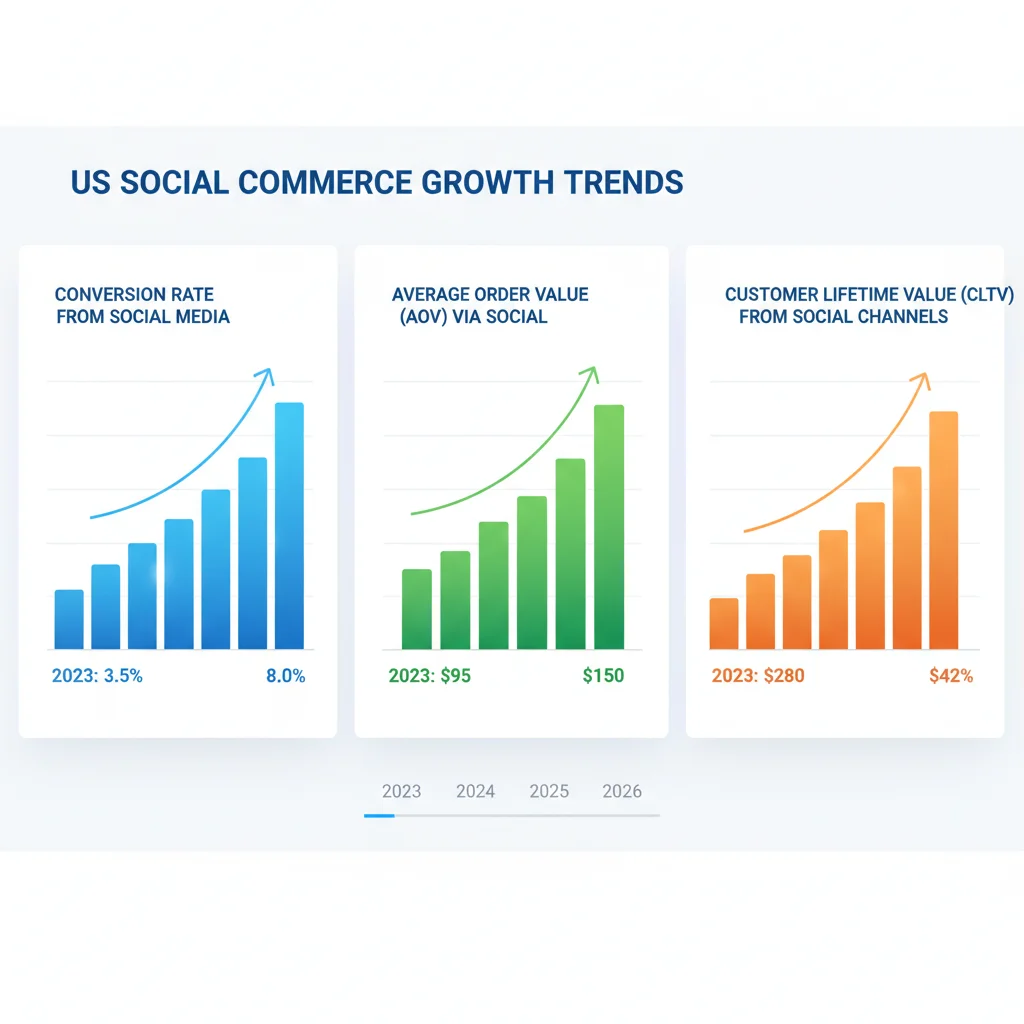
One of the most direct indicators of the effectiveness of social commerce efforts will be the Social Conversion Rate (SCR). This metric measures the percentage of social media users who complete a desired action, such as making a purchase, after interacting with a brand’s content on a social platform. While traditional e-commerce conversion rates typically hover around 1-3%, social conversion rates can vary widely depending on the platform, product, and strategy.
Why SCR is Crucial for 2026
By 2026, the maturity of social commerce platforms will lead to more sophisticated tracking and optimization capabilities. A higher SCR will signify:
- Effective Content Strategy: Brands that understand their audience and create compelling, shoppable content will see better conversion. This includes high-quality visuals, engaging product descriptions, and clear calls to action.
- Seamless User Experience: Platforms will have refined their in-app checkout processes, making purchases quicker and more intuitive. Brands leveraging these features effectively will benefit.
- Stronger Trust and Social Proof: The integration of user reviews, testimonials, and influencer endorsements directly into product listings will boost consumer confidence and drive conversions.
- Personalized Recommendations: AI-driven algorithms will become even more adept at presenting relevant products to individual users, increasing the likelihood of a purchase.
Businesses must actively monitor their SCR across different social channels and adjust their strategies accordingly. A low SCR might indicate issues with product presentation, pricing, or the overall user journey within the social platform. Optimizing for SCR will involve A/B testing different content formats, calls to action, and targeting strategies. The social commerce impact on direct sales will be most evident through this metric.
Actionable Strategy for SCR Improvement: Invest in high-quality, authentic user-generated content (UGC) and influencer partnerships that enable direct shopping links. Simplify the checkout process within the social platform as much as possible, minimizing the number of clicks required to complete a purchase. Utilize platform-specific features like Instagram Shopping tags, Facebook Shops, and TikTok’s in-app checkout to their fullest potential.
Key Metric 2: Customer Lifetime Value (CLTV) from Social Channels
While immediate sales are important, sustainable growth in social commerce hinges on building lasting customer relationships. This is where Customer Lifetime Value (CLTV) from Social Channels becomes a paramount metric. CLTV measures the total revenue a business can reasonably expect from a single customer account over their relationship with the brand, specifically attributing those customers acquired or significantly influenced by social media interactions.
The Long-Term Social Commerce Impact
By 2026, brands will increasingly recognize that social commerce is not just about transactional efficiency but also about fostering community and brand loyalty. A high CLTV from social channels indicates:
- Effective Relationship Building: Social media is inherently designed for interaction. Brands that leverage this to engage with customers post-purchase, offer support, and create exclusive content will see higher retention rates.
- Strong Brand Advocacy: Satisfied customers acquired through social channels are more likely to become brand advocates, sharing their positive experiences and attracting new customers through word-of-mouth (digital or otherwise).
- Personalized Engagement and Loyalty Programs: Social platforms offer unique opportunities to deliver personalized offers and integrate loyalty programs directly into the user experience, encouraging repeat purchases.
- Data-Driven Retargeting: Insights gained from social interactions can inform highly targeted retargeting campaigns, bringing customers back for subsequent purchases.
Measuring CLTV from social channels requires sophisticated attribution models that can track the entire customer journey, from initial social media touchpoint to multiple repeat purchases. This metric moves beyond the immediate transaction, focusing on the long-term profitability of social commerce efforts. It emphasizes the strategic importance of nurturing relationships over short-term gains.
Actionable Strategy for CLTV Enhancement: Implement robust customer service directly within social media messaging platforms. Create exclusive social media communities or groups for customers to foster a sense of belonging. Run loyalty programs that offer social-specific rewards or early access to products for active followers. Encourage user-generated content and feature customer stories to strengthen community bonds and reinforce positive brand perception.
Key Metric 3: Live Shopping Engagement and Conversion
Live shopping, or live stream commerce, is rapidly gaining traction and is poised to be a dominant force in US social commerce by 2026. This metric focuses on the level of audience interaction during live shopping events and the subsequent conversion of viewers into buyers. Live Shopping Engagement and Conversion encompasses metrics like peak concurrent viewers, average viewing duration, number of comments/questions, and the direct sales generated during or immediately after a live stream.
The Rise of Interactive Retail
The appeal of live shopping lies in its ability to replicate the interactive experience of in-store shopping with the convenience of online retail. By 2026, its social commerce impact will be undeniable due to:
- Authenticity and Transparency: Live streams offer a raw, unedited view of products, often demonstrated by real people, fostering trust and transparency.
- Urgency and Exclusivity: Limited-time offers, exclusive products, and real-time interaction create a sense of urgency that drives immediate purchases.
- Direct Q&A and Personalized Advice: Viewers can ask questions and receive immediate answers, mimicking the personalized assistance of a sales associate.
- Entertainment Value: Many live shopping events are highly entertaining, blending product demonstrations with influencer personalities, games, and giveaways.
- Community Building: The shared experience of a live stream can create a strong sense of community among viewers, leading to higher engagement and loyalty.
Brands that excel in live shopping will master the art of storytelling, product demonstration, and real-time audience interaction. They will invest in charismatic hosts, high-quality production, and seamless integration of shopping functionalities. The ability to measure not just viewership but also the depth of engagement and direct sales attributed to live streams will be crucial for optimizing these efforts.
Actionable Strategy for Live Shopping Success: Partner with influencers or develop in-house talent who are engaging and knowledgeable about your products. Promote live events extensively across all social channels with compelling teasers. Offer exclusive discounts or product bundles during live streams to incentivize immediate purchases. Ensure a smooth, in-app checkout process and dedicated customer service representatives available during the live event to answer questions and resolve issues in real-time.

The Evolving Landscape of US Consumer Buying Decisions
Beyond these three key metrics, it’s vital to understand the broader shifts in US consumer psychology that social commerce both influences and capitalizes on. Consumers are increasingly seeking:
- Authenticity: They value genuine interactions and transparent brands over highly polished, impersonal advertising.
- Personalization: Generic experiences no longer cut it. Consumers expect brands to understand their individual needs and preferences.
- Convenience: The path to purchase must be as frictionless as possible, integrated into their daily digital routines.
- Community: They want to feel connected to brands and other consumers who share similar interests and values.
- Ethical and Sustainable Practices: A growing segment of consumers considers a brand’s social and environmental impact before making a purchase, and social platforms are often where these discussions happen.
Social commerce platforms are uniquely positioned to address these desires. They facilitate direct conversations, enable personalized content delivery, and simplify the buying process. Brands that align their social commerce strategies with these underlying consumer values will gain a significant competitive edge by 2026. The social commerce impact is not just about sales; it’s about building a brand’s narrative and fostering a loyal community.
Challenges and Opportunities
While the opportunities presented by social commerce are immense, businesses must also be prepared for challenges:
- Platform Fragmentation: Managing presences and strategies across multiple social platforms can be complex.
- Data Privacy Concerns: Navigating evolving data privacy regulations and consumer expectations will be critical for maintaining trust.
- Attribution Complexity: Accurately attributing sales and CLTV to specific social touchpoints requires advanced analytics.
- Content Overload: Standing out in a crowded social feed demands highly creative, engaging, and relevant content.
- Returns and Customer Service: Seamless post-purchase support within the social ecosystem is essential for customer satisfaction.
Despite these challenges, the trajectory of social commerce in the US is undeniably upward. Businesses that proactively address these hurdles and embrace innovation will be well-positioned to capitalize on the growing market. The social commerce impact on retail will continue to expand, making it an indispensable component of any successful business strategy.
Preparing for 2026: A Strategic Roadmap
To thrive in the social commerce era leading up to and beyond 2026, businesses should consider the following strategic imperatives:
- Develop a Holistic Social Commerce Strategy: Integrate social commerce into your overall marketing and sales strategy, rather than treating it as an isolated channel. This means aligning content, promotions, and customer service across all touchpoints.
- Invest in Platform-Specific Expertise: Each social platform has its nuances. Develop expertise in the specific features and best practices for the platforms most relevant to your target audience (e.g., Instagram Shopping, TikTok Shop, Pinterest Buyable Pins, Facebook Marketplace).
- Prioritize High-Quality, Shoppable Content: Content is king, but shoppable content is paramount. Invest in professional photography, engaging video production, and interactive formats that encourage direct purchases.
- Embrace Influencer Marketing Authentically: Forge genuine partnerships with influencers whose values align with your brand. Focus on long-term collaborations that build trust and deliver consistent value to their audience.
- Leverage Data and Analytics: Implement robust analytics tools to track SCR, CLTV, and live shopping metrics. Use these insights to continuously optimize your strategies and personalize customer experiences.
- Streamline the Customer Journey: From product discovery to post-purchase support, ensure every step of the social commerce journey is as seamless and frictionless as possible.
- Focus on Community Building: Social media is about connection. Cultivate a loyal community around your brand through engaging content, exclusive offers, and direct interaction.
- Stay Agile and Adaptable: The social media landscape is constantly evolving. Be prepared to experiment with new features, adapt to algorithm changes, and pivot your strategy as consumer behaviors shift.
The social commerce impact on US consumer buying decisions is a powerful current that will only strengthen over time. By understanding its mechanisms, preparing for its challenges, and strategically leveraging its opportunities, businesses can not only survive but truly flourish in the dynamic retail environment of 2026 and beyond.
Conclusion
The trajectory of social commerce in the US market is clear: it’s not just a trend but a fundamental shift in how consumers interact with brands and make purchasing decisions. By 2026, the success of businesses will be profoundly influenced by their ability to master this evolving landscape. The three key metrics – Social Conversion Rate (SCR), Customer Lifetime Value (CLTV) from Social Channels, and Live Shopping Engagement and Conversion – will serve as critical barometers for performance.
Brands that prioritize seamless, authentic, and engaging social commerce experiences will be the ones that capture market share and cultivate enduring customer loyalty. The integration of social interaction with direct purchasing offers an unparalleled opportunity to connect with consumers on a deeper level, transforming passive browsing into active buying. As the digital and social fabric of our lives continues to intertwine, the social commerce impact will only grow, making it an indispensable pillar of modern retail strategy.
Embrace the change, understand the metrics, and innovate relentlessly. The future of retail in the US is undeniably social.