AI’s Impact on US Consumer Preferences: 2026 Insights & Strategies

The Role of AI in Shaping US Consumer Preferences: Insights for 2026
The landscape of commerce and consumer behavior is in a constant state of flux, but few forces have exerted as profound and rapid an influence as Artificial Intelligence (AI). As we inch closer to 2026, understanding the intricate role of AI in shaping US consumer preferences becomes not just a strategic advantage, but a fundamental necessity for businesses aiming to thrive. This comprehensive exploration delves into how AI is revolutionizing everything from product discovery and purchasing decisions to brand loyalty and ethical considerations, offering a roadmap for navigating this evolving digital frontier.
The era of generic marketing and one-size-fits-all product offerings is rapidly fading into obscurity. Today, consumers expect experiences that are not just personalized, but predictive, intuitive, and seamlessly integrated into their daily lives. This heightened expectation is largely a direct consequence of AI’s burgeoning capabilities. From sophisticated recommendation engines that suggest your next favorite movie or product, to intelligent chatbots that provide instant, tailored customer support, AI is meticulously crafting the contours of modern consumer desires. By 2026, this influence will only deepen, making AI consumer preferences a critical area of focus for every sector.
Our journey into the future of US consumer preferences, driven by AI, will cover several pivotal areas. We will examine the mechanisms through which AI gathers and analyzes data to predict individual needs, the impact of hyper-personalization on purchasing decisions, the rise of AI-powered virtual assistants, and the growing importance of ethical AI in building consumer trust. Furthermore, we will explore the challenges and opportunities that this AI-driven evolution presents for businesses, from small startups to multinational corporations. The ability to anticipate and respond to these shifts will define market leaders in the coming years.
The Foundation: AI’s Data-Driven Understanding of Consumers
At the heart of AI’s ability to shape US consumer preferences lies its unparalleled capacity for data collection, processing, and analysis. Every click, every search, every purchase, and even every social media interaction generates a digital breadcrumb that AI systems meticulously gather. This vast ocean of data, often referred to as ‘big data,’ is then subjected to advanced machine learning algorithms, which identify patterns, predict behaviors, and infer preferences with astonishing accuracy. This data-driven understanding is the bedrock upon which all AI-powered consumer experiences are built.
Consider the typical online shopping experience. When a consumer browses an e-commerce site, AI tracks their viewed items, search queries, time spent on pages, and even their scrolling behavior. This real-time data is then cross-referenced with their past purchase history, demographic information, and even data from external sources. The result is a highly granular profile of the individual consumer, far more detailed than anything achievable through traditional market research methods. This profile allows AI to understand not just what a consumer has bought, but what they might want to buy next, what their price sensitivity is, and what kind of messaging resonates with them.
This sophisticated data analysis extends beyond mere product recommendations. AI also analyzes consumer sentiment through natural language processing (NLP) of reviews, social media comments, and customer service interactions. This provides businesses with invaluable insights into what consumers like, dislike, and what their pain points are. Such insights can drive product development, refine marketing campaigns, and improve customer service, all contributing to a more responsive and consumer-centric market. By 2026, the depth and breadth of this AI-driven understanding will be even more pervasive, with AI consumer preferences being influenced at every touchpoint.
Hyper-Personalization: Tailoring Experiences to the Individual
One of the most immediate and tangible impacts of AI on US consumer preferences is the rise of hyper-personalization. Gone are the days when personalization meant simply addressing a customer by their first name in an email. Today, AI enables businesses to create truly bespoke experiences, tailoring everything from product recommendations and website layouts to pricing and promotional offers to the individual consumer. This level of customization fosters a sense of being understood and valued, significantly influencing purchasing decisions and brand loyalty.
E-commerce platforms are prime examples of hyper-personalization in action. AI algorithms analyze browsing history, purchase patterns, and even explicit feedback to present a curated selection of products. This isn’t just about showing related items; it’s about anticipating needs and desires before the consumer is even consciously aware of them. For instance, if AI detects a pattern of purchasing sustainable products, it will prioritize eco-friendly alternatives in future recommendations. This proactive approach significantly enhances the shopping experience and increases conversion rates, directly shaping AI consumer preferences.
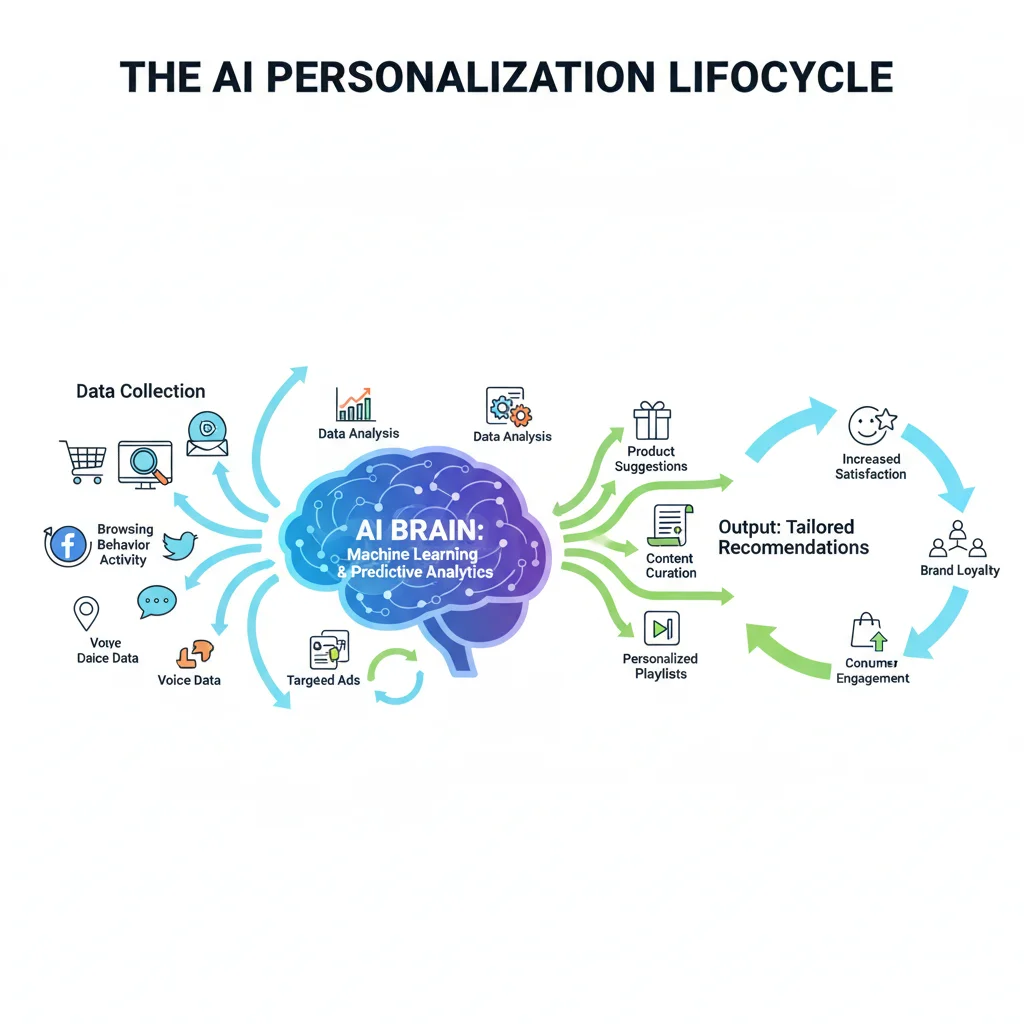
Beyond e-commerce, hyper-personalization is transforming various sectors. In media and entertainment, streaming services use AI to recommend movies, shows, and music based on viewing habits and genre preferences. In healthcare, AI can personalize health recommendations and treatment plans. Financial services leverage AI to offer customized investment advice and loan products. By 2026, consumers will not just expect personalization; they will demand it as a fundamental aspect of their interactions with brands. Businesses that fail to implement robust AI-driven personalization strategies risk falling behind, as AI consumer preferences gravitate towards those offering the most relevant and engaging experiences.
The Rise of AI-Powered Virtual Assistants and Conversational Commerce
The proliferation of AI-powered virtual assistants like Siri, Alexa, and Google Assistant has profoundly altered how US consumers interact with technology and, by extension, with brands. These intelligent agents are moving beyond simple queries to become integral parts of the purchasing journey, driving the growth of conversational commerce. By 2026, AI consumer preferences will be heavily influenced by these interfaces, which offer convenience and efficiency previously unimaginable.
Consumers are increasingly using voice commands to research products, compare prices, add items to shopping carts, and even complete purchases. This hands-free, intuitive interaction streamlines the shopping process, reducing friction and making impulse buys more common. For businesses, optimizing for voice search and ensuring seamless integration with virtual assistants is becoming paramount. This includes providing clear, concise product information that can be easily retrieved by AI, and developing conversational interfaces that guide consumers through their purchasing decisions.
Beyond voice assistants, AI-powered chatbots are revolutionizing customer service. These bots can handle a vast array of inquiries, from tracking orders and answering FAQs to troubleshooting problems and even processing returns. While human interaction remains crucial for complex issues, chatbots provide instant support 24/7, significantly improving customer satisfaction. The ability of these chatbots to learn from interactions and provide increasingly accurate and personalized responses means they will play an even more critical role in shaping AI consumer preferences by 2026, influencing perceptions of brand responsiveness and reliability.
Ethical AI and Consumer Trust: A Growing Imperative
While the benefits of AI in shaping US consumer preferences are undeniable, the ethical implications and concerns surrounding data privacy and algorithmic bias are also growing. As AI becomes more deeply embedded in daily life, consumers are becoming more aware of how their data is collected, used, and protected. By 2026, building and maintaining consumer trust through ethical AI practices will be a non-negotiable aspect of successful business strategy.
Data privacy is perhaps the most prominent concern. Consumers are increasingly wary of companies collecting vast amounts of their personal information, especially in the wake of high-profile data breaches. Businesses must be transparent about their data collection practices, provide clear opt-out options, and ensure robust security measures are in place. Adherence to regulations like the California Consumer Privacy Act (CCPA) and forthcoming federal regulations will be crucial. Brands that prioritize data privacy and demonstrate a clear commitment to protecting consumer information will foster greater trust and loyalty, directly impacting AI consumer preferences.
Algorithmic bias is another significant ethical challenge. If the data used to train AI models is biased, the algorithms themselves can perpetuate and even amplify existing societal biases, leading to unfair or discriminatory outcomes. For example, biased algorithms in lending or hiring can disadvantage certain demographic groups. For consumers, encountering such biases can lead to frustration, distrust, and a negative perception of the brand. Businesses must actively work to identify and mitigate algorithmic bias, ensuring their AI systems are fair, equitable, and transparent in their decision-making processes. This commitment to ethical AI will be a key differentiator in influencing AI consumer preferences by 2026.
The Impact on Brand Loyalty and Engagement
AI’s ability to create highly personalized and seamless experiences has a profound impact on brand loyalty and consumer engagement. In a crowded marketplace, where product differentiation can be challenging, the overall customer experience often becomes the primary differentiator. AI allows brands to cultivate deeper, more meaningful relationships with their customers, fostering loyalty that goes beyond transactional interactions.
Through predictive analytics, AI can anticipate customer churn and proactively offer incentives or personalized interventions to retain valuable customers. Loyalty programs, once generic, are now being supercharged by AI, offering tailored rewards and experiences based on individual preferences and past behaviors. For example, an AI might recommend exclusive access to a product launch based on a customer’s consistent engagement with a specific product category. This level of thoughtful engagement makes consumers feel valued and understood, strengthening their bond with the brand.

Furthermore, AI-powered content creation and curation tools allow brands to deliver highly relevant and engaging content to their target audience. From personalized email campaigns to dynamic website content, AI ensures that consumers are consistently exposed to messages and products that resonate with their specific interests. This constant stream of relevant information and offers keeps brands top-of-mind and encourages sustained engagement. By 2026, brands that effectively leverage AI to personalize engagement and foster loyalty will be the ones that capture and retain the largest share of AI consumer preferences.
Challenges and Opportunities for Businesses by 2026
The rapid evolution of AI consumer preferences presents both significant challenges and unparalleled opportunities for businesses across all sectors. Adapting to this new paradigm requires strategic foresight, technological investment, and a fundamental shift in how companies approach their customers.
One of the primary challenges is the need for robust data infrastructure and skilled talent. Implementing effective AI strategies requires access to high-quality data, the ability to process it efficiently, and a team of data scientists, AI engineers, and marketing professionals who understand how to leverage these technologies. Many businesses, especially smaller ones, may struggle with these resource requirements. However, the increasing availability of AI-as-a-service solutions and cloud-based AI platforms is democratizing access to these powerful tools, creating opportunities for businesses of all sizes.
Another challenge lies in maintaining the human touch in an increasingly automated world. While AI can enhance customer service and personalization, consumers still value authentic human interaction, especially for complex or emotionally charged issues. The key lies in finding the right balance: using AI to handle routine tasks and provide instant support, while empowering human agents to focus on high-value interactions that build deeper relationships. Businesses that successfully blend AI efficiency with human empathy will be well-positioned to meet evolving AI consumer preferences.
The opportunities, however, are immense. For businesses that embrace AI, the potential for increased efficiency, enhanced customer satisfaction, and significant revenue growth is substantial. AI can optimize supply chains, predict demand more accurately, and automate repetitive tasks, freeing up resources for innovation. More importantly, by understanding and proactively responding to AI consumer preferences, businesses can create highly differentiated offerings that stand out in a competitive market.
Early adopters of AI in areas like personalized marketing, predictive analytics, and conversational commerce are already seeing significant returns. By streamlining the customer journey, reducing churn, and increasing conversion rates, AI is proving to be a powerful engine for business growth. As AI technologies become more sophisticated and accessible, the competitive gap between AI-savvy businesses and those that lag behind will only widen. By 2026, integrating AI into core business strategies will no longer be optional but essential for survival and prosperity.
Future Trends and What to Expect Beyond 2026
Looking beyond 2026, the influence of AI on US consumer preferences is expected to continue its exponential growth, driven by several emerging trends. We can anticipate even more sophisticated forms of personalization, the widespread adoption of immersive technologies, and a greater emphasis on ethical AI frameworks.
One significant trend will be the integration of AI with augmented reality (AR) and virtual reality (VR) technologies. Imagine trying on clothes virtually, seeing how furniture looks in your home before purchasing, or experiencing a travel destination from your living room, all powered by AI-driven personalization. These immersive experiences will offer an unprecedented level of engagement and realism, profoundly shaping how consumers discover and evaluate products and services. AI consumer preferences will lean towards brands that offer these cutting-edge, interactive experiences.
Furthermore, the development of more advanced predictive AI will lead to even more proactive and seamless consumer interactions. AI might anticipate a consumer’s need for a product before they even realize it themselves, or automatically reorder household staples based on consumption patterns. This level of predictive convenience will redefine expectations for service and availability, making life simpler for consumers but demanding greater sophistication from businesses.
The focus on ethical AI and transparency will also intensify. As AI systems become more autonomous and influential, consumers and regulators will demand greater accountability. Brands that champion ethical AI development, prioritize data privacy, and ensure algorithmic fairness will gain a significant competitive edge. The concept of ‘AI ethics’ will become a core component of brand reputation, directly influencing AI consumer preferences and trust.
Finally, we can expect AI to play a crucial role in promoting sustainable consumption. By analyzing consumer behavior and product life cycles, AI can recommend eco-friendly alternatives, highlight sustainable brands, and even help consumers track their environmental impact. As environmental consciousness grows, AI’s ability to facilitate sustainable choices will become a powerful driver of AI consumer preferences, aligning consumer values with purchasing decisions.
Conclusion: Navigating the AI-Driven Consumer Landscape
The role of AI in shaping US consumer preferences by 2026 is undeniable and transformative. From hyper-personalization and conversational commerce to ethical considerations and immersive experiences, AI is fundamentally altering how consumers interact with brands and make purchasing decisions. For businesses, this evolution presents a critical juncture: embrace AI and adapt, or risk being left behind.
Success in this AI-driven era hinges on several key pillars: a robust data strategy, a commitment to hyper-personalization, seamless integration with AI-powered interfaces, and an unwavering dedication to ethical AI practices. Businesses must invest in the right technologies, cultivate skilled talent, and foster a culture of innovation that embraces the potential of AI to enhance the customer journey.
As we move towards 2026 and beyond, the brands that truly understand and leverage the power of AI to anticipate, meet, and even exceed consumer expectations will be the ones that not only survive but thrive. The future of commerce is intelligent, personalized, and deeply intertwined with AI, and understanding these shifts in AI consumer preferences is the key to unlocking sustained growth and building lasting customer relationships in the digital age.