US Data Privacy: New Regulations & Your Rights (2026 Updates)

The digital landscape is constantly evolving, and with it, the complexities of safeguarding personal information. For US tech users, a significant shift is on the horizon. Starting January 2026, a new wave of US Data Privacy regulations is set to redefine how personal data is collected, processed, and shared. These updates are not merely minor tweaks; they represent a concerted effort to empower consumers and hold businesses more accountable for their data practices. Understanding these changes is crucial for every individual and organization operating within the digital sphere.
For years, the United States has grappled with a patchwork of state-specific data privacy laws, leading to confusion and inconsistency. While states like California pioneered comprehensive privacy legislation with the CCPA (California Consumer Privacy Act) and CPRA (California Privacy Rights Act), and others like Virginia (VCDPA), Colorado (CPA), Utah (UCPA), and Connecticut (CTDPA) followed suit, a unified federal approach has remained elusive. The impending 2026 regulations aim to bring a greater degree of harmonization and robust protection to American consumers, marking a pivotal moment in the history of US Data Privacy.
This comprehensive guide will delve into the intricacies of these upcoming regulations, dissecting their core components, highlighting the new rights afforded to consumers, and outlining the responsibilities that businesses must now shoulder. Whether you’re a casual internet user, a tech enthusiast, or a business owner, these changes will undoubtedly impact your digital interactions. Staying informed is your first line of defense and your best strategy for navigating this new regulatory environment.
The Evolving Landscape of US Data Privacy: A Historical Context
Before we dive into the specifics of the 2026 regulations, it’s essential to understand the journey that led us here. The concept of US Data Privacy has evolved significantly over the past two decades. Initially, federal privacy efforts were sector-specific, focusing on areas like healthcare (HIPAA) and financial services (GLBA). However, the rise of the internet and the proliferation of data-driven technologies quickly outpaced these early legislative attempts.
The early 2000s saw increasing concerns about online tracking, data breaches, and the opaque practices of tech giants. This led to calls for more comprehensive privacy laws, often drawing inspiration from Europe’s General Data Protection Regulation (GDPR), which set a global benchmark for data protection. The GDPR’s extraterritorial reach also meant that many US companies had to comply with its stringent requirements when dealing with European citizens’ data, indirectly influencing their domestic data handling practices.
California took the lead in the US with the passage of the CCPA in 2018, which granted consumers specific rights over their personal information, including the right to know what data is collected, the right to delete it, and the right to opt out of its sale. The subsequent CPRA, effective in 2023, further expanded these rights and established the California Privacy Protection Agency (CPPA) to enforce the law. This state-level momentum demonstrated a clear demand for stronger privacy protections and put pressure on federal lawmakers to act.
Other states soon followed suit, each enacting laws with subtle differences but a shared core objective: to grant consumers more control over their personal data. This fragmented approach, while beneficial in raising awareness and setting precedents, also created a complex compliance environment for businesses operating nationwide. The 2026 federal regulations aim to address this fragmentation, providing a more cohesive framework for US Data Privacy.
Key Provisions of the New 2026 US Data Privacy Regulations
While the final legislative text is still being refined, the broad strokes of the upcoming US Data Privacy regulations indicate several critical provisions that will significantly impact both consumers and businesses. These provisions are designed to create a more transparent, accountable, and user-centric data ecosystem.
Enhanced Consumer Rights
At the heart of the new regulations are expanded consumer rights, mirroring and in some cases exceeding those found in existing state laws. These rights are fundamental to empowering individuals in the digital age:
- Right to Know: Consumers will have an unequivocal right to know what personal data is being collected about them, the categories of sources from which it is collected, the purpose for collecting it, and the categories of third parties with whom it is shared.
- Right to Access: Beyond knowing, individuals will have the right to access a copy of their specific personal information that a business has collected. This includes the right to receive this information in a portable and readily usable format.
- Right to Delete: The right to request the deletion of personal information collected by a business will be strengthened. Businesses will be required to comply with such requests, with limited exceptions.
- Right to Correct/Rectify: Consumers will gain the right to request the correction of inaccurate personal information held by a business.
- Right to Opt-Out of Sale/Sharing: This crucial right allows consumers to direct businesses not to sell or share their personal information. The definition of ‘sale’ and ‘sharing’ is expected to be broad, encompassing various forms of data monetization.
- Right to Limit Use and Disclosure of Sensitive Personal Information: A new category of ‘sensitive personal information’ (e.g., precise geolocation, health data, racial or ethnic origin, religious beliefs, sexual orientation) will be established, granting consumers the right to limit its use and disclosure for certain purposes.
- Right to Non-Discrimination: Businesses will be prohibited from discriminating against consumers who exercise their privacy rights, for example, by denying goods or services, charging different prices, or providing a different level of quality.
Increased Business Responsibilities and Accountability
The new regulations place a significant burden on businesses to implement robust data privacy practices. Compliance will require a comprehensive overhaul of many organizations’ data handling processes. Key responsibilities include:
- Data Minimization: Businesses will be encouraged, and in some cases required, to collect only the personal information that is necessary for the stated purpose.
- Purpose Limitation: Personal data can only be used for the specific purposes disclosed to the consumer at the time of collection.
- Data Security: Enhanced requirements for implementing reasonable security measures to protect personal information from unauthorized access, loss, or disclosure.
- Privacy Notices and Policies: Businesses must provide clear, conspicuous, and easily understandable privacy notices that inform consumers about their data practices and rights.
- Data Protection Assessments: Organizations engaging in high-risk data processing activities (e.g., targeted advertising, profiling) may be required to conduct data protection assessments to identify and mitigate risks.
- Vendor Management: Businesses will be held accountable for the data privacy practices of their third-party vendors and service providers who process personal information on their behalf. Contracts with such vendors will need to include specific data protection clauses.
- Opt-Out Mechanisms: Businesses must provide easily accessible and user-friendly mechanisms for consumers to exercise their opt-out rights, potentially including universal opt-out signals.
Enforcement and Penalties
To ensure compliance, the new US Data Privacy regulations are expected to establish a federal enforcement authority, potentially augmenting the role of the Federal Trade Commission (FTC) or creating a new dedicated agency. Penalties for non-compliance are anticipated to be substantial, including significant monetary fines, which could be tiered based on the severity and scope of the violation. The regulations may also include a private right of action for consumers in certain circumstances, allowing individuals to sue businesses for privacy violations.
The goal of these enforcement mechanisms is to create a strong deterrent against non-compliance and to ensure that businesses take their data privacy obligations seriously. It signals a move away from a ‘trust us’ model to a ‘show us’ model, where accountability is paramount.
Impact on US Tech Users: What You Need to Know
For the average US tech user, these upcoming US Data Privacy regulations represent a significant step forward in reclaiming control over their digital lives. The changes, while complex for businesses, are designed to simplify and strengthen your ability to manage your personal information. Here’s what you need to know:
Greater Transparency and Control
One of the immediate benefits will be increased transparency. Companies will be legally obligated to be more upfront about their data collection and usage practices. This means privacy policies should become clearer and easier to understand, moving away from dense, legalistic jargon. You’ll have a better understanding of:
- What data is being collected: Beyond just your name and email, you’ll know if they’re tracking your location, browsing history, app usage, or even biometric data.
- Why it’s being collected: Companies will need to articulate the specific purposes for data collection, rather than vague statements about ‘improving services.’
- Who it’s shared with: You’ll have a clearer picture of the third parties, advertisers, and data brokers who receive your information.
More importantly, you’ll have greater control. The expanded rights to access, correct, and delete your data, along with the robust opt-out mechanisms, mean you can actively manage your digital footprint. This is a fundamental shift from passively accepting terms and conditions to actively participating in how your data is handled.
Targeted Advertising and Personalization
The new regulations are likely to significantly impact targeted advertising and personalization. While these practices won’t disappear entirely, your ability to opt out of the ‘sale’ or ‘sharing’ of your data for these purposes will be enhanced. This could lead to:
- Fewer irrelevant ads: By exercising your opt-out rights, you might see a reduction in highly personalized ads that feel intrusive.
- More generic content: Some personalized experiences might become less tailored if you limit data sharing, which could be a trade-off for greater privacy.
- Clearer choices: Companies will need to make it easier to understand how your data contributes to personalization and give you clear options to consent or opt out.
It’s important to remember that ‘opt-out’ doesn’t necessarily mean ‘no ads.’ It means ads that are less based on your specific personal data and browsing habits, potentially relying more on contextual advertising (e.g., seeing ads for cooking supplies on a recipe website).
Protecting Sensitive Information
The introduction of a ‘sensitive personal information’ category is a critical protective measure. Data such as health information, precise geolocation, and sexual orientation will receive heightened protection. This means businesses will likely face stricter requirements, including potentially needing explicit opt-in consent, before collecting or sharing this type of data. This provision aims to prevent the misuse of highly personal and potentially vulnerable information.
Navigating Your New Rights: Practical Steps
As a US tech user, you’ll need to be proactive to fully leverage these new rights. Here are some practical steps:
- Read Privacy Policies (Seriously!): While they can be lengthy, try to skim for key sections on ‘Your Rights’ and ‘How We Use Your Data.’
- Look for Opt-Out Links: Websites and apps will be required to provide clear ‘Do Not Sell or Share My Personal Information’ links or similar mechanisms. Make use of them.
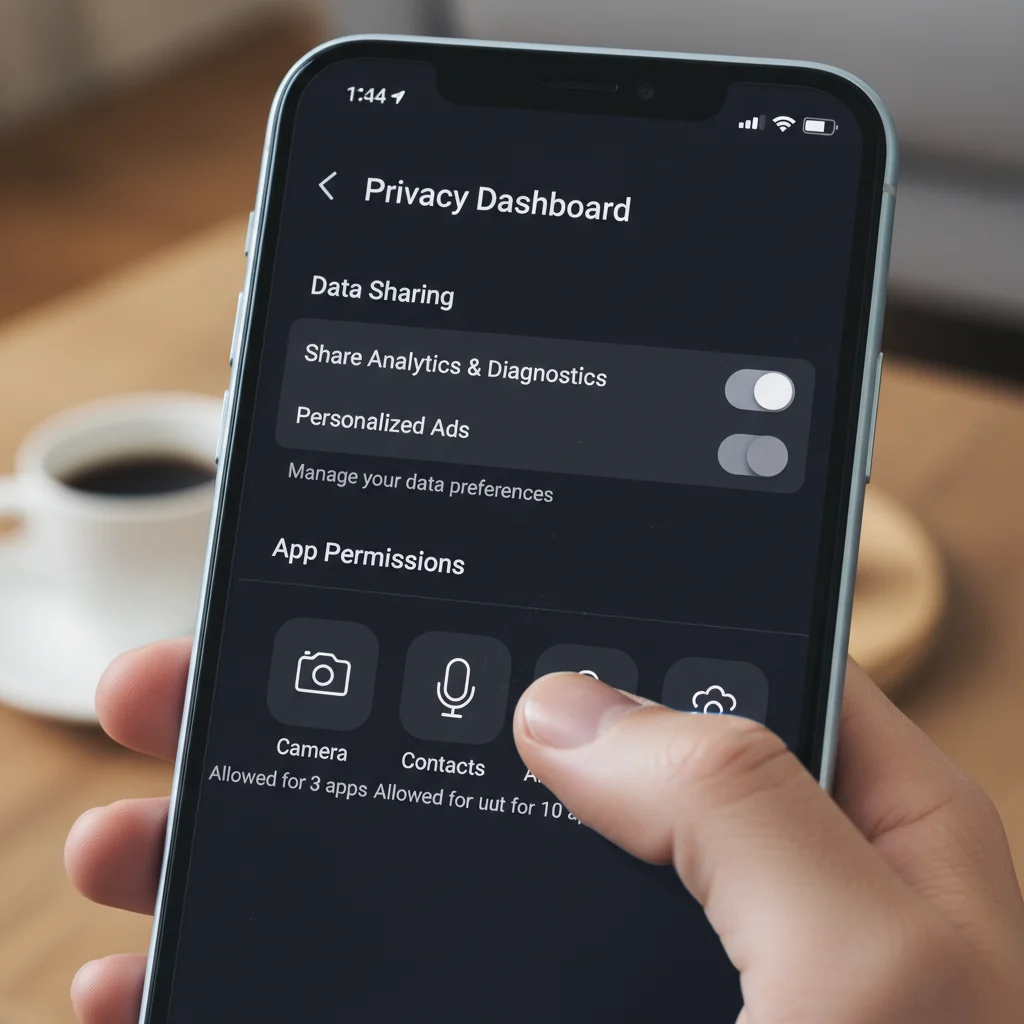
- Utilize Privacy Dashboards: Many services already offer privacy dashboards where you can review and manage your data settings. Expect these to become more comprehensive.
- Consider Universal Opt-Out Signals: Keep an eye out for browser extensions or operating system settings that might offer universal opt-out signals, which could send your privacy preferences to all websites you visit.
- Be Mindful of Permissions: When downloading new apps or visiting websites, pay attention to the permissions they request. Ask yourself if the requested access (e.g., to your camera, microphone, contacts) is truly necessary for the app’s functionality.
- Report Violations: If you believe a company is violating your privacy rights under the new regulations, understand the process for filing a complaint with the relevant enforcement authority.
These regulations empower you, but the responsibility to exercise those powers ultimately lies with you. Being informed and proactive will be key to navigating the new landscape of US Data Privacy.
Implications for Businesses: Navigating the New Regulatory Maze
For businesses operating in the US, the January 2026 deadline for new US Data Privacy regulations signifies a period of significant adaptation and investment. Compliance will not be a ‘set it and forget it’ task; it will require ongoing vigilance, technological adjustments, and a cultural shift towards prioritizing data privacy.
Compliance Challenges and Opportunities
The most immediate challenge for many businesses will be understanding the full scope of the new regulations and translating those legal requirements into actionable operational changes. This includes:
- Data Mapping: Identifying all personal data collected, where it’s stored, how it’s used, and who it’s shared with. This can be a monumental task for large organizations with complex data ecosystems.
- Updating Privacy Policies and Notices: Crafting clear, concise, and compliant privacy notices that accurately reflect data practices and consumer rights.
- Implementing New Technical Controls: Developing systems and processes to handle consumer rights requests (access, deletion, correction, opt-out) efficiently and securely. This might involve building new internal tools or integrating with third-party privacy management platforms.
- Revising Vendor Contracts: Ensuring that all third-party vendors and service providers who process personal data are contractually bound to comply with the new regulations.
- Training Employees: Educating all staff, especially those who handle personal data, on the new privacy policies, procedures, and their role in maintaining compliance.
- Conducting Data Protection Assessments: For businesses engaged in high-risk processing, these assessments will be crucial for identifying and mitigating privacy risks before they lead to violations.
- Adapting Business Models: Companies heavily reliant on data monetization through the sale or sharing of personal information for targeted advertising may need to re-evaluate their business models or develop alternative strategies that are privacy-compliant.
While challenging, these regulations also present opportunities. Companies that prioritize privacy can build greater consumer trust, differentiate themselves in the market, and potentially gain a competitive advantage. Proactive compliance can mitigate the risk of costly fines, reputational damage, and legal challenges.
Financial and Operational Costs
Achieving compliance will come with financial and operational costs. Businesses will need to invest in:
- Technology: Upgrading existing systems, purchasing new privacy management software, and implementing robust data security measures.
- Personnel: Hiring or training dedicated privacy professionals (e.g., Data Protection Officers), legal counsel, and IT security experts.
- Audits and Assessments: Engaging third-party auditors to assess compliance and conduct data protection impact assessments.
- Legal Fees: Consulting with legal experts to interpret the regulations and ensure policies are legally sound.
Small and medium-sized businesses (SMBs) may face particular challenges in allocating resources for compliance. The regulations are expected to include some provisions or thresholds that differentiate requirements based on company size or data volume, but even so, a baseline level of compliance will be necessary for all.
The Role of Data Governance
Strong data governance will become more critical than ever. This involves establishing clear policies, procedures, and roles for managing data throughout its lifecycle, from collection to deletion. Effective data governance ensures that personal information is handled consistently, securely, and in compliance with all relevant regulations. It’s not just about meeting a legal requirement; it’s about embedding privacy into the core of business operations.
Preparing for 2026: A Roadmap for Businesses
Given the January 2026 deadline, businesses should already be taking steps to prepare:
- Appoint a Privacy Lead: Designate an individual or team responsible for overseeing compliance efforts.
- Conduct a Data Audit: Understand what data you collect, where it resides, and how it flows through your organization.
- Review Current Privacy Practices: Compare your existing policies and procedures against the anticipated requirements of the new regulations.
- Engage Legal Counsel: Seek expert advice to interpret the nuances of the law and ensure your compliance strategy is sound.
- Allocate Resources: Budget for necessary technological upgrades, staffing, and training.
- Communicate Internally: Ensure all employees understand the importance of data privacy and their role in compliance.
- Monitor Developments: Stay updated on any further legislative developments, guidance from regulatory bodies, and industry best practices.

The shift in US Data Privacy is not just a regulatory hurdle; it’s an opportunity for businesses to build stronger, more trustworthy relationships with their customers by demonstrating a genuine commitment to protecting their personal information.
The Future of US Data Privacy: Harmonization and Beyond
The upcoming 2026 US Data Privacy regulations represent a significant step towards a more harmonized and robust privacy framework in the United States. While it may not immediately create a single, overarching federal law that preempts all state laws, it is expected to establish a strong federal baseline that reduces the current fragmentation. This federal baseline will likely influence future state legislation, potentially leading to greater consistency across the nation.
Towards a National Standard?
One of the long-term goals of federal privacy legislation has been to create a national standard for data protection, similar to the GDPR in Europe. While the 2026 regulations might not achieve full preemption of all state laws, they are likely to set a high bar that many states will either adopt or align with. This could simplify compliance for businesses operating across state lines and provide a more uniform set of rights for consumers, regardless of where they reside.
The debate around federal preemption is complex, balancing the desire for national consistency with states’ rights to enact stronger protections. The 2026 framework is expected to navigate this by establishing minimum federal standards, potentially allowing states to implement more stringent provisions where appropriate, as long as they don’t contradict the federal law.
Continuous Evolution and Adaptation
Data privacy is not a static field. The rapid pace of technological innovation, from artificial intelligence and machine learning to the Internet of Things (IoT) and virtual reality, constantly introduces new challenges and ethical considerations related to personal data. Therefore, the 2026 regulations should be viewed not as a final destination, but as a crucial milestone in an ongoing journey.
Future legislative efforts will likely focus on:
- Emerging Technologies: Addressing the privacy implications of new technologies that weren’t fully envisioned when current laws were drafted. This includes biometric data, AI ethics, and the privacy of data collected through connected devices.
- International Data Transfers: Developing clearer rules for how US companies can transfer personal data across international borders, especially in light of evolving global privacy standards.
- Data Broker Accountability: Increasing scrutiny and regulation of data brokers, who often collect and sell vast amounts of personal information without direct consumer interaction.
- Algorithmic Transparency and Fairness: Exploring how to ensure that algorithmic decision-making, which often relies on personal data, is transparent, fair, and free from bias.
The enforcement bodies will also play a critical role in interpreting and applying the new regulations to novel situations. Their guidance, enforcement actions, and rulings will shape the practical implementation of US Data Privacy for years to come.
The Importance of Public Engagement
Ultimately, the success of these and future privacy regulations hinges on ongoing public engagement. Consumers need to understand their rights and exercise them. Businesses need to embrace a culture of privacy by design, embedding privacy considerations into every stage of product development and service delivery. Policymakers must remain responsive to technological advancements and societal expectations regarding privacy.
The 2026 US Data Privacy regulations are a testament to the growing recognition that personal data is a valuable asset that deserves robust protection. They represent a collective effort to build a more secure, transparent, and trustworthy digital environment for all US tech users. By staying informed, exercising your rights, and holding organizations accountable, you contribute to shaping a better future for data privacy in the United States.