AI-Powered Productivity: Reshaping Workflows for 15% More Efficiency by 2026

Unlocking 15% More Efficiency: How New AI-Powered Productivity Tools are Reshaping Workflows in 2026
In an era defined by rapid technological advancement, the quest for enhanced productivity has become a cornerstone of business strategy. As we approach 2026, the landscape of work is undergoing a profound transformation, driven largely by the proliferation of advanced AI productivity tools. These intelligent solutions are not merely augmenting human capabilities; they are fundamentally reshaping workflows, promising an unprecedented surge in efficiency. Industry experts predict that by 2026, organizations effectively integrating these tools could see an average increase of 15% in overall operational efficiency. This isn’t just a marginal improvement; it represents a significant competitive advantage and a paradigm shift in how work gets done.
The concept of AI productivity tools encompasses a broad spectrum of applications, from sophisticated automation platforms and intelligent assistants to predictive analytics and hyper-personalized learning systems. Their impact spans every facet of an organization, from streamlining mundane administrative tasks to revolutionizing complex decision-making processes. For businesses looking to stay ahead, understanding and strategically implementing these tools is no longer optional – it’s imperative. This comprehensive guide will delve into the transformative power of AI in the workplace, explore the key trends shaping its evolution, and provide actionable insights for businesses to harness its full potential and achieve remarkable gains in productivity.
The Dawn of a New Era: Understanding AI in the Workplace
Artificial Intelligence (AI) has moved beyond the realm of science fiction and is now a tangible, impactful force in our daily professional lives. At its core, AI refers to the simulation of human intelligence in machines that are programmed to think like humans and mimic their actions. In the context of productivity, AI manifests in algorithms and software designed to perform tasks that typically require human intelligence, but with greater speed, accuracy, and scalability. This includes learning from data, recognizing patterns, making decisions, and even understanding natural language.
The evolution of AI has been exponential. What started as rule-based expert systems has blossomed into sophisticated machine learning models, deep learning networks, and generative AI capable of creating original content. These advancements have paved the way for a new generation of AI productivity tools that are more intuitive, adaptable, and powerful than ever before. Unlike traditional automation, which often follows rigid pre-programmed instructions, AI-powered tools can learn, adapt, and even anticipate needs, making them invaluable assets in dynamic work environments.
Key Pillars of AI-Driven Productivity
- Automation of Repetitive Tasks: AI excels at handling high-volume, repetitive tasks, freeing up human employees for more strategic and creative work. This includes data entry, report generation, email sorting, and scheduling.
- Enhanced Decision-Making: Through advanced analytics and predictive modeling, AI can process vast amounts of data to identify trends, forecast outcomes, and provide actionable insights, enabling better and faster decision-making.
- Personalization and Customization: AI tools can tailor experiences and information to individual users, optimizing workflows and improving engagement. This is evident in personalized dashboards, content recommendations, and adaptive learning platforms.
- Intelligent Communication and Collaboration: AI-powered assistants, natural language processing (NLP) tools, and smart meeting platforms are transforming how teams communicate and collaborate, breaking down barriers and improving information flow.
- Predictive Maintenance and Resource Optimization: In operational contexts, AI can predict equipment failures, optimize resource allocation, and manage supply chains more efficiently, leading to significant cost savings and reduced downtime.
The integration of these pillars forms the bedrock of a highly efficient, AI-augmented workplace. By understanding these fundamental capabilities, organizations can begin to identify areas where AI productivity tools can deliver the most significant impact.
The 15% Efficiency Boost: Where AI Makes the Difference by 2026
The projected 15% increase in efficiency by 2026 isn’t a mere aspiration; it’s a quantifiable outcome driven by specific applications of AI productivity tools across various business functions. This efficiency gain stems from AI’s ability to tackle bottlenecks, reduce errors, and accelerate processes that traditionally consumed significant human time and resources.
Streamlining Administrative and Operational Tasks
One of the most immediate and impactful areas for AI is the automation of administrative and operational tasks. Consider the time spent on scheduling meetings, responding to routine inquiries, or organizing documents. AI-powered virtual assistants and intelligent automation platforms can handle these tasks autonomously. For instance, an AI scheduler can analyze calendars, suggest optimal meeting times, and send invitations without human intervention. Similarly, AI can categorize and route incoming emails, extracting key information and even drafting responses for common queries. This not only saves countless hours but also minimizes human error, ensuring consistency and accuracy.
In operations, AI is revolutionizing supply chain management, inventory optimization, and logistics. Predictive analytics can forecast demand with greater accuracy, reducing overstocking or stockouts. AI-driven route optimization for delivery services can cut fuel costs and delivery times significantly. These seemingly small improvements accumulate to substantial efficiency gains across an organization’s entire operational footprint.
Enhancing Data Analysis and Insights
In today’s data-rich environment, the ability to quickly and accurately analyze information is paramount. Traditional data analysis can be time-consuming and prone to human bias. AI productivity tools, particularly those leveraging machine learning, can process petabytes of data in seconds, identifying patterns, correlations, and anomalies that would be impossible for humans to detect. This leads to faster, more informed decision-making across all levels of an organization.
For marketing teams, AI can analyze customer behavior to personalize campaigns, leading to higher conversion rates. Financial analysts can use AI to detect fraudulent transactions or predict market trends. HR departments can leverage AI to analyze employee data, identify skill gaps, and optimize talent acquisition strategies. The insights generated by AI are not just descriptive; they are often prescriptive, recommending actions based on predicted outcomes, thereby accelerating strategic initiatives and improving their success rates.
Revolutionizing Communication and Collaboration
Effective communication and collaboration are the lifeblood of any successful organization. However, miscommunication, information overload, and inefficient meeting practices can severely hamper productivity. AI productivity tools are addressing these challenges head-on.
Natural Language Processing (NLP) is at the forefront, powering tools that can summarize long documents, transcribe meetings, and even translate languages in real-time. This ensures that information is easily accessible and understood by all team members, regardless of location or linguistic background. AI-powered meeting assistants can take notes, highlight key decisions, and assign action items, ensuring accountability and follow-through. Furthermore, AI can analyze communication patterns to identify potential bottlenecks or areas where team collaboration could be improved, offering proactive solutions.
Beyond internal communication, AI is transforming customer interactions through intelligent chatbots and virtual agents. These tools can handle a vast volume of customer inquiries, provide instant support, and even escalate complex issues to human agents only when necessary. This not only improves customer satisfaction but also frees up customer service representatives to focus on more nuanced and high-value interactions.
Key AI-Powered Productivity Tools Reshaping Workflows
The market is awash with innovative AI productivity tools, each designed to address specific pain points and unlock new levels of efficiency. Understanding the categories and examples of these tools is crucial for strategic implementation.
Intelligent Automation Platforms (IAP)
IAPs combine Robotic Process Automation (RPA) with AI capabilities like machine learning and natural language processing. They are designed to automate end-to-end business processes, not just individual tasks. Examples include:
- UiPath: Offers a comprehensive platform for enterprise automation, leveraging AI for document understanding, process mining, and intelligent decision-making.
- Automation Anywhere: Provides an AI-powered digital workforce platform that automates processes across various industries, from finance to healthcare.
- Microsoft Power Automate: Integrates with Microsoft 365 and other services to create automated workflows, enhanced by AI Builder for tasks like form processing and prediction.
AI-Powered Virtual Assistants and Chatbots
These tools act as intelligent interfaces, assisting users with tasks, providing information, and streamlining communication.
- ChatGPT/Google Bard (now Gemini): Generative AI models that can assist with content creation, summarization, brainstorming, and complex query answering.
- Microsoft Copilot: Integrates AI capabilities into Microsoft 365 applications, acting as a smart assistant for document creation, data analysis in Excel, and email management.
- Slack AI: Summarizes channels, threads, and answers questions, making communication more efficient in team collaboration platforms.
Advanced Analytics and Business Intelligence
These tools leverage AI to transform raw data into actionable insights, driving smarter business decisions.
- Tableau with Einstein Analytics: Salesforce’s AI-powered analytics platform that provides predictive insights and recommendations.
- Google Cloud AI Platform: Offers a suite of machine learning services for data analysis, custom model building, and deploying AI applications.
- IBM Watson: A comprehensive AI platform offering services for natural language processing, visual recognition, and data analysis to uncover hidden insights.
Project Management and Task Optimization Tools
AI is making project management more predictive, adaptive, and efficient.
- Jira with AI Integrations: While Jira itself isn’t AI, many plugins and integrations use AI to estimate task completion, identify risks, and optimize resource allocation.
- ClickUp with AI: Incorporates AI writing, summarization, and task generation directly into its project management platform.
- Asana with AI Features: Offers AI-powered insights into project progress, identifies potential bottlenecks, and suggests optimal task assignments.
Content Generation and Marketing AI
For marketing, sales, and content teams, AI is a game-changer for speed and personalization.
- Jasper AI: Generates high-quality marketing copy, blog posts, and other content based on user prompts.
- Midjourney/DALL-E 3: AI image generators that create unique visuals for marketing, presentations, and digital media, significantly reducing design time.
- Salesforce Einstein: Provides AI-driven insights for sales forecasting, lead scoring, and personalized customer engagement.
This diverse range of AI productivity tools demonstrates the breadth of AI’s application and its potential to optimize virtually every aspect of a business workflow.
Strategic Implementation: Maximizing Your AI Investment
Simply adopting AI productivity tools is not enough; strategic implementation is key to realizing the promised 15% efficiency gain. Organizations must approach AI integration with a clear vision, a phased strategy, and a focus on both technological and human aspects.
1. Identify Pain Points and Opportunities
Before investing in any AI tool, conduct a thorough analysis of current workflows to identify inefficiencies, bottlenecks, and areas where human effort is heavily concentrated on repetitive tasks. This data-driven approach ensures that AI is applied where it will have the most significant impact. For example, if your customer service team is overwhelmed with routine inquiries, an AI chatbot might be the ideal solution. If data analysis is slow, advanced AI analytics could accelerate insights.
2. Start Small, Scale Gradually
Rather than a complete overhaul, begin with pilot projects in specific departments or for particular processes. This allows teams to familiarize themselves with the technology, gather feedback, and demonstrate tangible ROI before scaling up. A phased approach minimizes disruption and allows for iterative improvements.
3. Data Quality is Paramount
AI models are only as good as the data they are trained on. Ensure that your organization has clean, accurate, and relevant data. Invest in data governance strategies to maintain data integrity, which is crucial for the effective functioning of any AI productivity tool.
4. Foster a Culture of AI Adoption and Continuous Learning
Employee resistance to new technologies is a common challenge. Address this by communicating the benefits of AI – not as a job replacement, but as a tool to augment human capabilities, reduce mundane tasks, and enable more fulfilling work. Provide comprehensive training and opportunities for upskilling. Encourage experimentation and create a culture where employees feel empowered to explore how AI can help them.

5. Prioritize Integration and Interoperability
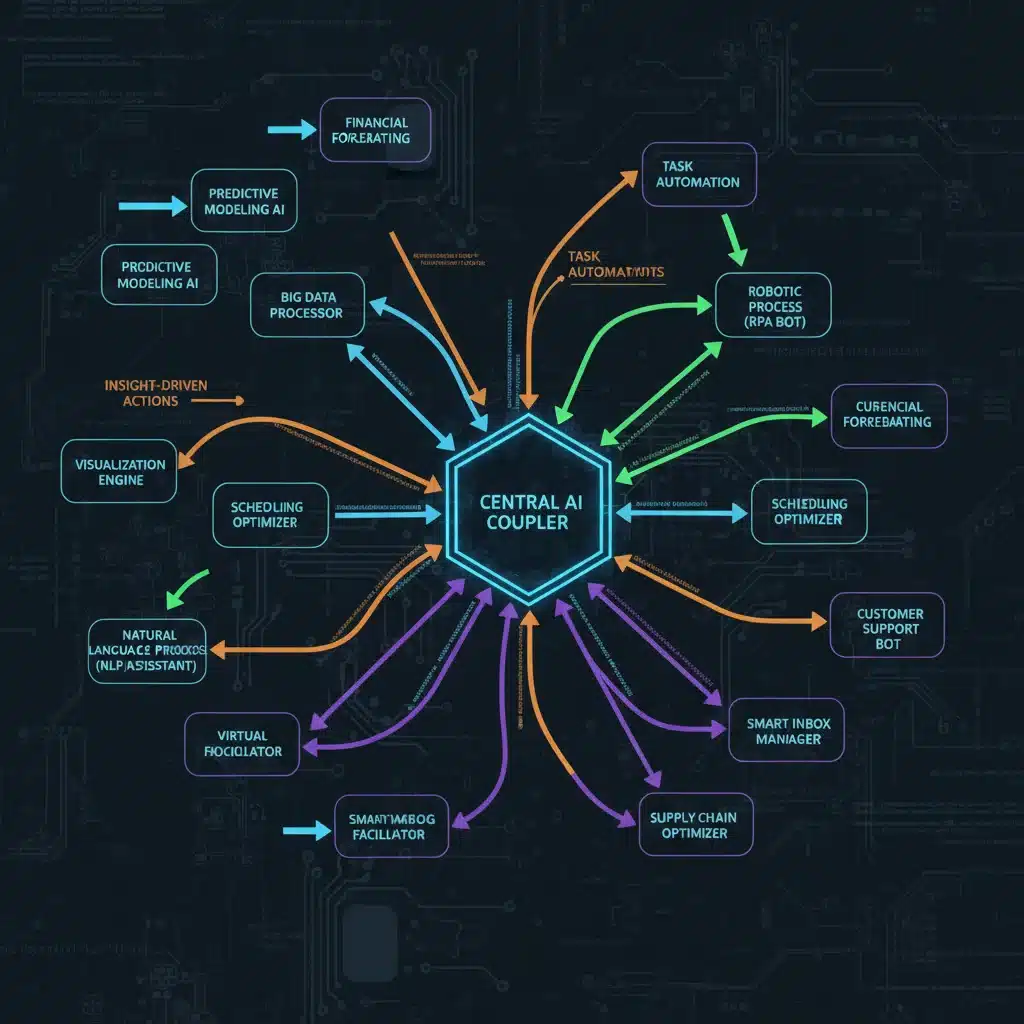
The true power of AI comes from its ability to connect and share data across different systems. Choose AI productivity tools that can seamlessly integrate with your existing software ecosystem (CRM, ERP, project management tools, etc.). This avoids data silos and ensures a unified, efficient workflow.
6. Measure and Iterate
Establish clear metrics to measure the impact of AI tools on efficiency, cost savings, and employee satisfaction. Regularly review these metrics and be prepared to iterate, adjust strategies, and explore new tools as your organization’s needs evolve and AI technology advances.
Challenges and Considerations in AI Adoption
While the benefits of AI productivity tools are compelling, organizations must also be mindful of potential challenges:
- Data Privacy and Security: AI systems often process sensitive data. Robust security measures and adherence to data privacy regulations (e.g., GDPR, CCPA) are non-negotiable.
- Ethical AI Use: Bias in AI algorithms can lead to unfair or discriminatory outcomes. Organizations must ensure their AI systems are developed and used ethically, with regular audits for fairness and transparency.
- Job Displacement and Reskilling: While AI creates new job roles, it can also automate existing ones. Proactive strategies for reskilling and upskilling the workforce are essential to manage this transition smoothly.
- Cost of Implementation: Initial investment in AI tools, infrastructure, and training can be substantial. A clear ROI projection is critical before committing resources.
- Complexity of Integration: Integrating AI tools into legacy systems can be complex. Expert guidance and careful planning are required to ensure smooth transitions.
Addressing these challenges proactively will ensure a more successful and sustainable AI integration journey, paving the way for the envisioned 15% efficiency boost by 2026.
The Future of Work: A Human-AI Partnership
Looking ahead to 2026 and beyond, the narrative surrounding AI productivity tools is not one of machines replacing humans, but rather of a powerful human-AI partnership. AI will increasingly handle the routine, data-intensive, and predictive aspects of work, allowing human employees to focus on tasks that require uniquely human attributes: creativity, critical thinking, emotional intelligence, complex problem-solving, and interpersonal communication.
This synergy will unlock unprecedented levels of innovation and job satisfaction. Employees, freed from mundane tasks, will have more time and mental energy to engage in strategic initiatives, develop new skills, and contribute to higher-value activities. The workplace will become more dynamic, adaptive, and fulfilling. The 15% efficiency gain by 2026 is just the beginning; as AI continues to evolve, its potential to transform work for the better is virtually limitless.
Organizations that embrace this future, investing in both AI technology and their human capital, will be the ones that thrive. They will not only achieve greater efficiency but also foster a more innovative, resilient, and engaged workforce, ready to tackle the challenges and opportunities of the coming decades.
Conclusion: Embracing the AI-Powered Future of Productivity
The advent of sophisticated AI productivity tools marks a pivotal moment in the evolution of work. The promise of unlocking 15% more efficiency by 2026 is a powerful testament to AI’s transformative potential. From automating repetitive tasks and enhancing data-driven decision-making to revolutionizing communication and collaboration, AI is fundamentally reshaping how businesses operate and succeed.
For organizations aiming to remain competitive and agile, strategic adoption of these tools is no longer a luxury but a necessity. By carefully identifying opportunities, implementing solutions incrementally, prioritizing data quality, and fostering a supportive culture, businesses can effectively navigate the complexities of AI integration. While challenges such as data privacy and ethical considerations demand careful attention, the overarching benefits of increased efficiency, innovation, and a more engaged workforce far outweigh the hurdles.
The future of productivity is a collaborative one, where human ingenuity is amplified by the power of artificial intelligence. By embracing this human-AI partnership, businesses can not only achieve significant operational gains but also pave the way for a more innovative, sustainable, and prosperous future. The time to invest in AI productivity tools and reshape your workflows for tomorrow is now.