Decoding Latest 5G Advancements: US Mobile Connectivity 2026
Decoding the Latest 5G Advancements: How They’re Impacting Mobile Connectivity Across the United States in 2026
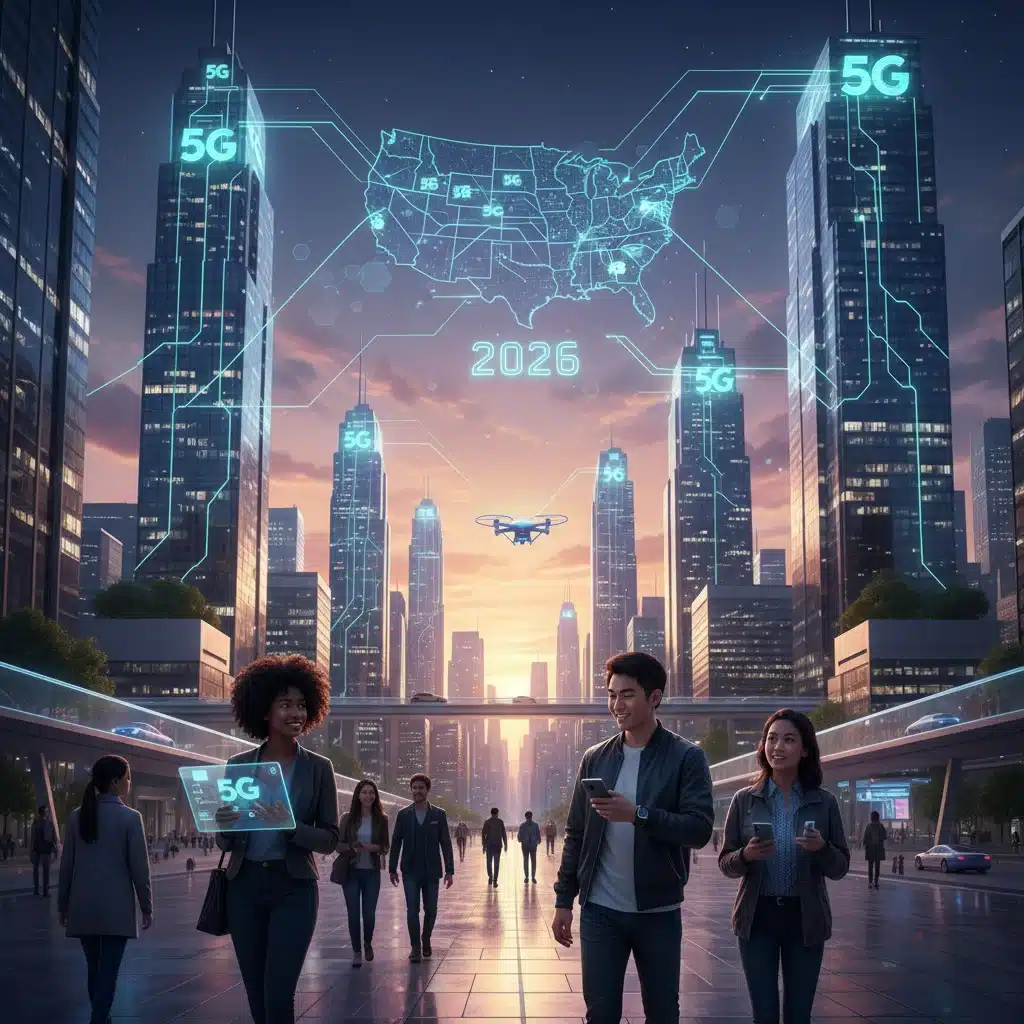
The year is 2026, and the landscape of mobile connectivity in the United States has undergone a revolutionary transformation, largely thanks to the relentless march of 5G technology. What once seemed like a futuristic dream is now an integral part of daily life, reshaping industries, empowering individuals, and forging unprecedented levels of digital interaction. This article delves deep into the 5G US Connectivity 2026 paradigm, exploring the critical advancements, their wide-ranging impacts, and what lies ahead for this pivotal technology.
From enhanced mobile broadband to ultra-low latency applications and massive machine-type communications, 5G has evolved beyond mere speed upgrades. It has become the foundational layer for a truly interconnected society, enabling innovations that were previously unimaginable. As we navigate the intricacies of 5G US Connectivity 2026, we will uncover how these advancements are not just incremental improvements but fundamental shifts in how we live, work, and communicate.
The Evolution of 5G: From Promise to Pervasive Reality
The journey of 5G began with ambitious promises of lightning-fast speeds and transformative capabilities. In 2026, many of those promises have materialized into tangible realities, profoundly influencing 5G US Connectivity 2026. The initial rollout focused on urban centers, but by now, coverage has expanded significantly, reaching a much broader swathe of the American population. This widespread availability is a testament to massive investments in infrastructure and the continuous refinement of 5G standards and technologies.
One of the most significant advancements lies in the deployment of millimeter-wave (mmWave) technology. While initially challenged by its limited range and susceptibility to obstructions, continuous research and development have led to more efficient beamforming techniques and smaller, more powerful antenna arrays. This has allowed mmWave to deliver its promised multi-gigabit speeds in dense urban environments and specific enterprise settings, unlocking new possibilities for high-bandwidth applications. Complementing mmWave, mid-band (C-band) 5G has become the workhorse of the network, offering a balance of speed and coverage that forms the backbone of widespread 5G US Connectivity 2026. Low-band 5G continues to provide broad foundational coverage, ensuring basic 5G services even in rural and remote areas.
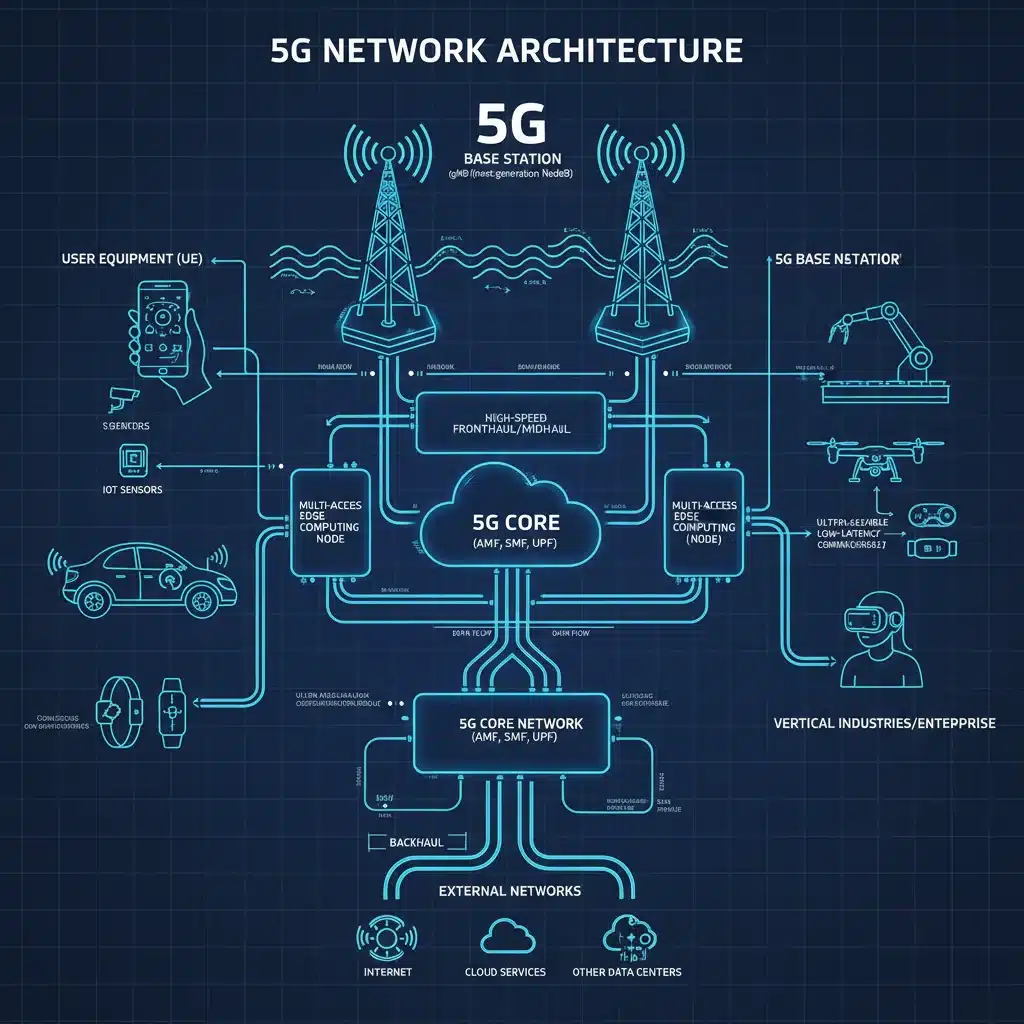
The concept of network slicing has also moved from theoretical discussion to practical implementation. Network slicing allows mobile operators to create multiple virtual networks atop a single physical 5G infrastructure, each tailored to specific service requirements. For instance, a slice could be optimized for ultra-low latency for autonomous vehicles, while another could be designed for massive IoT connectivity with high reliability. This granular control over network resources is a game-changer for diverse applications and is a key enabler for the advanced capabilities seen in 5G US Connectivity 2026.
Key Technological Pillars Driving 5G Advancement
- Enhanced Mobile Broadband (eMBB): This remains a cornerstone of 5G, providing significantly higher data speeds and capacity compared to 4G. Users in 2026 experience seamless streaming of 8K video, instant downloads, and lag-free cloud gaming, even in crowded areas.
- Ultra-Reliable Low-Latency Communications (URLLC): Critical for applications demanding instantaneous response times and extreme reliability. URLLC is the driving force behind advancements in autonomous systems, remote surgery, and industrial automation, fundamentally altering industries within the scope of 5G US Connectivity 2026.
- Massive Machine-Type Communications (mMTC): Designed to connect a vast number of IoT devices simultaneously, mMTC is enabling smart cities, smart agriculture, and advanced environmental monitoring. Billions of sensors and devices are now seamlessly integrated into the 5G ecosystem across the US.
- Edge Computing Integration: The synergy between 5G and edge computing is profound. By bringing computation and data storage closer to the data source, edge computing minimizes latency and reduces the strain on centralized cloud servers. This is crucial for real-time applications and is a defining characteristic of advanced 5G US Connectivity 2026.
Impact on Industries: A Digital Renaissance
The transformative power of 5G US Connectivity 2026 extends far beyond individual consumer experiences. Industries across the spectrum are undergoing a profound digital renaissance, leveraging 5G’s capabilities to innovate, optimize, and create new business models.
Healthcare Transformed: Precision and Remote Care
In healthcare, 5G has ushered in an era of precision medicine and advanced remote care. Ultra-low latency and high bandwidth enable real-time transmission of high-resolution medical imaging, facilitating quicker diagnoses and collaborative consultations between specialists regardless of their physical location. Remote surgeries, once a distant concept, are becoming increasingly viable, with surgeons controlling robotic instruments with near-zero delay. Wearable health monitors, powered by mMTC, continuously track vital signs and alert medical professionals to anomalies, allowing for proactive intervention. This level of connectivity is revolutionizing patient care and accessibility across the US, a direct benefit of robust 5G US Connectivity 2026.
Manufacturing and Industry 4.0: Smart Factories and Automation
The manufacturing sector has embraced 5G to realize the vision of Industry 4.0. Smart factories, equipped with interconnected sensors, robots, and AI-powered systems, operate with unprecedented levels of automation and efficiency. 5G’s URLLC capabilities are critical for controlling robotic arms with precision and coordinating complex industrial processes in real-time. Predictive maintenance, powered by IoT sensors transmitting vast amounts of data over 5G networks, minimizes downtime and optimizes production schedules. The ability to deploy private 5G networks within factory premises offers enhanced security and dedicated bandwidth, accelerating the adoption of advanced manufacturing techniques and solidifying 5G US Connectivity 2026 as a pillar of industrial innovation.
Transportation and Logistics: Autonomous Futures
Autonomous vehicles, smart traffic management systems, and advanced logistics solutions are all becoming a reality thanks to 5G. Self-driving cars rely heavily on URLLC to communicate with each other, roadside infrastructure, and centralized traffic control systems, ensuring safety and efficiency. Real-time data from traffic sensors transmitted over 5G helps optimize traffic flow, reduce congestion, and even predict potential hazards. In logistics, 5G-enabled tracking devices provide granular visibility into supply chains, optimizing routes, reducing delivery times, and improving overall operational efficiency. The vision of smart cities, with interconnected public transport and intelligent infrastructure, is largely built upon the robust framework of 5G US Connectivity 2026.
Entertainment and Media: Immersive Experiences
For consumers, 5G has unlocked new frontiers in entertainment and media. High-bandwidth capabilities allow for seamless streaming of immersive virtual reality (VR) and augmented reality (AR) content, transforming gaming, live events, and educational experiences. Cloud gaming, where processing power resides in the cloud and games are streamed to devices, is now indistinguishable from local play due to low latency. Live broadcasting of high-definition events from remote locations has become more flexible and cost-effective, leveraging 5G for reliable and high-quality uplink. These advancements contribute significantly to the rich digital lives supported by 5G US Connectivity 2026.
Challenges and Opportunities in 5G Deployment
While the progress of 5G in the US by 2026 is undeniable, its deployment has not been without its challenges, and new opportunities continue to emerge. Overcoming these hurdles is crucial for realizing the full potential of 5G US Connectivity 2026.
Infrastructure Expansion and Rural Coverage
Despite significant strides, expanding 5G infrastructure to genuinely cover all rural and remote areas of the United States remains a considerable challenge. The economics of deploying fiber backhaul and numerous small cells in sparsely populated regions are complex. Government initiatives and public-private partnerships are playing a vital role in bridging this digital divide, ensuring that the benefits of 5G US Connectivity 2026 are accessible to everyone, not just urban dwellers. Innovative approaches like fixed wireless access (FWA) using 5G are also proving effective in delivering high-speed internet to underserved communities.
Security and Privacy Concerns
As more devices connect to 5G networks and more critical infrastructure relies on it, security and privacy become paramount concerns. The sheer volume of data transmitted and the distributed nature of 5G networks (especially with edge computing) present new attack vectors. Robust cybersecurity measures, including advanced encryption, AI-driven threat detection, and secure network slicing, are continuously being developed and implemented. Ensuring data privacy for consumers and businesses in the age of pervasive connectivity is an ongoing priority for the future of 5G US Connectivity 2026.
Spectrum Availability and Allocation
The availability and efficient allocation of radio spectrum are fundamental to 5G’s performance. While significant spectrum auctions have occurred, the demand for more bandwidth continues to grow. Policymakers and regulators face the ongoing task of identifying and releasing additional spectrum bands to support the ever-increasing data traffic and new 5G applications. Harmonizing spectrum use across different regions and ensuring fair competition among carriers are critical for the continued health and expansion of 5G US Connectivity 2026.
Energy Consumption and Sustainability
The extensive deployment of 5G infrastructure, with its numerous small cells and complex network architecture, raises concerns about energy consumption. Telecommunication companies are actively investing in more energy-efficient hardware, optimizing network operations through AI, and exploring renewable energy sources to power their networks. Sustainable 5G deployment is not just an environmental imperative but also an economic one, as operational costs can be significantly impacted by energy expenditure. This focus on sustainability is a growing trend within the development of 5G US Connectivity 2026.
The Future of 5G: Beyond 2026
Even as 5G matures and becomes ubiquitous, the telecommunications industry is already looking towards the next generation. The foundational work laid by 5G US Connectivity 2026 is setting the stage for future innovations, including early discussions around 6G.
6G: The Next Horizon
While 6G is still in its nascent research phases, early concepts suggest even higher frequencies, terahertz communication, and the integration of AI and machine learning at a much deeper level within the network itself. The vision for 6G includes truly holographic communication, pervasive intelligent environments, and even direct brain-computer interfaces. The advancements made in 5G, particularly in areas like network slicing, edge computing, and massive IoT, will serve as crucial building blocks for these future technologies. The journey of 5G US Connectivity 2026 is a stepping stone towards an even more interconnected and intelligent future.
Continued Expansion of Private 5G Networks
The trend of enterprises deploying their own private 5G networks is expected to accelerate beyond 2026. These dedicated networks offer enhanced security, customized performance, and greater control for businesses, particularly in sectors like manufacturing, logistics, and healthcare. This allows organizations to tailor their connectivity precisely to their operational needs, further driving innovation and efficiency within their specific domains, leveraging the power of 5G US Connectivity 2026.
Enhanced Human-Machine Interfaces
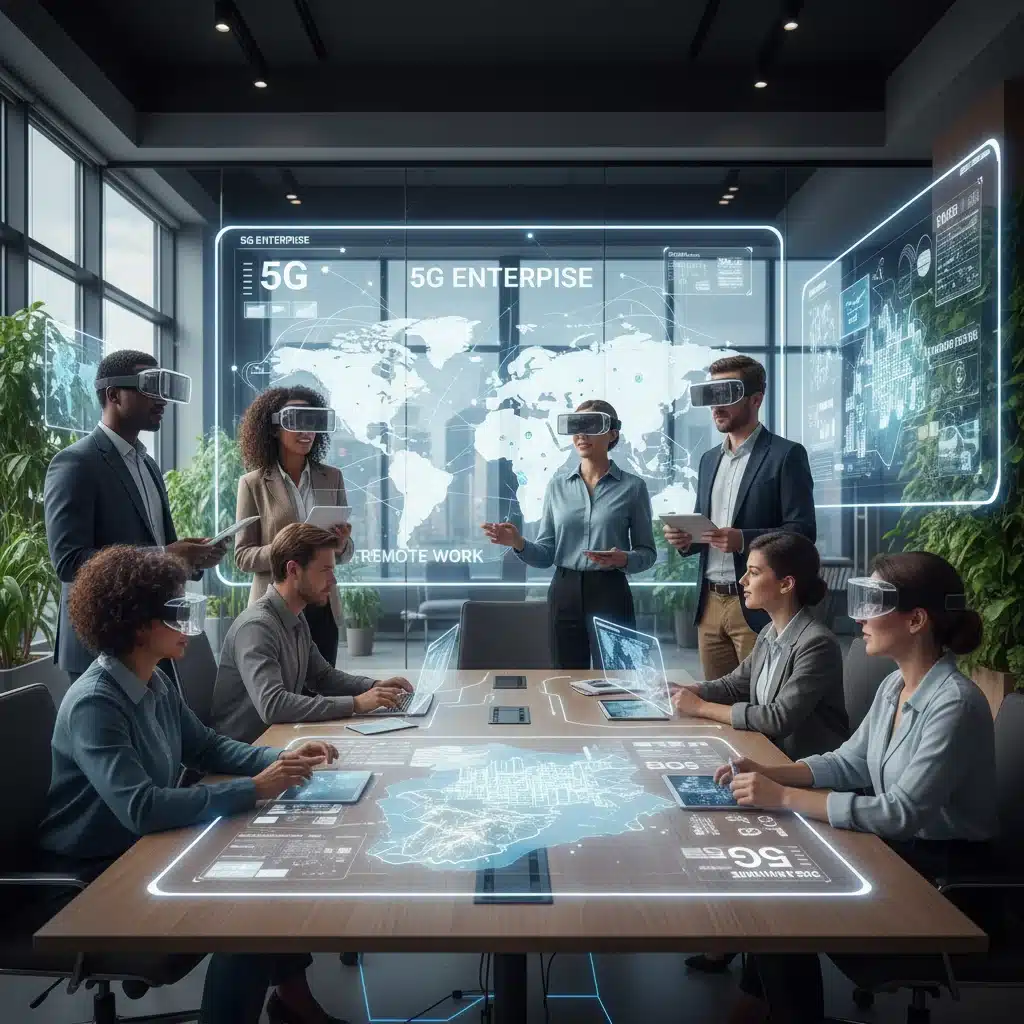
The low latency and high bandwidth of 5G are enabling more natural and intuitive human-machine interfaces. Augmented reality (AR) and virtual reality (VR) technologies are becoming more sophisticated, moving beyond entertainment to practical applications in training, design, and remote collaboration. Imagine engineers collaborating on a 3D model in a virtual space, or doctors performing remote diagnostics with real-time haptic feedback. These immersive experiences, powered by robust 5G US Connectivity 2026, are set to redefine how humans interact with digital information and each other.
Conclusion: The Enduring Legacy of 5G in 2026
By 2026, 5G has firmly established itself as a transformative force in the United States, fundamentally altering the landscape of mobile connectivity. From revolutionizing industries like healthcare and manufacturing to enhancing everyday consumer experiences, its impact is profound and far-reaching. The journey from initial rollout to widespread pervasive reality has been marked by continuous innovation, overcoming technical challenges, and strategic investments in infrastructure.
The advancements in mmWave, mid-band, network slicing, and edge computing have collectively propelled 5G US Connectivity 2026 to a level of sophistication that empowers a new generation of digital services and applications. While challenges remain in areas such as rural coverage, security, and sustainability, the commitment to addressing these issues ensures that the growth and evolution of 5G will continue unabated.
As we look beyond 2026, the legacy of 5G will be seen not just in faster download speeds, but in the creation of a truly intelligent, interconnected, and responsive digital ecosystem. It is the bedrock upon which future technological marvels, including 6G, will be built, promising an even more integrated and immersive world. The ongoing evolution of 5G US Connectivity 2026 is thus a critical chapter in the broader narrative of human technological progress, continuously pushing the boundaries of what is possible in the digital age.