The Unstoppable Rise of Peer Reviews: Why 85% of US Consumers Trust Online Recommendations by 2026

The Unstoppable Rise of Peer Reviews: Why 85% of US Consumers Trust Online Recommendations by 2026
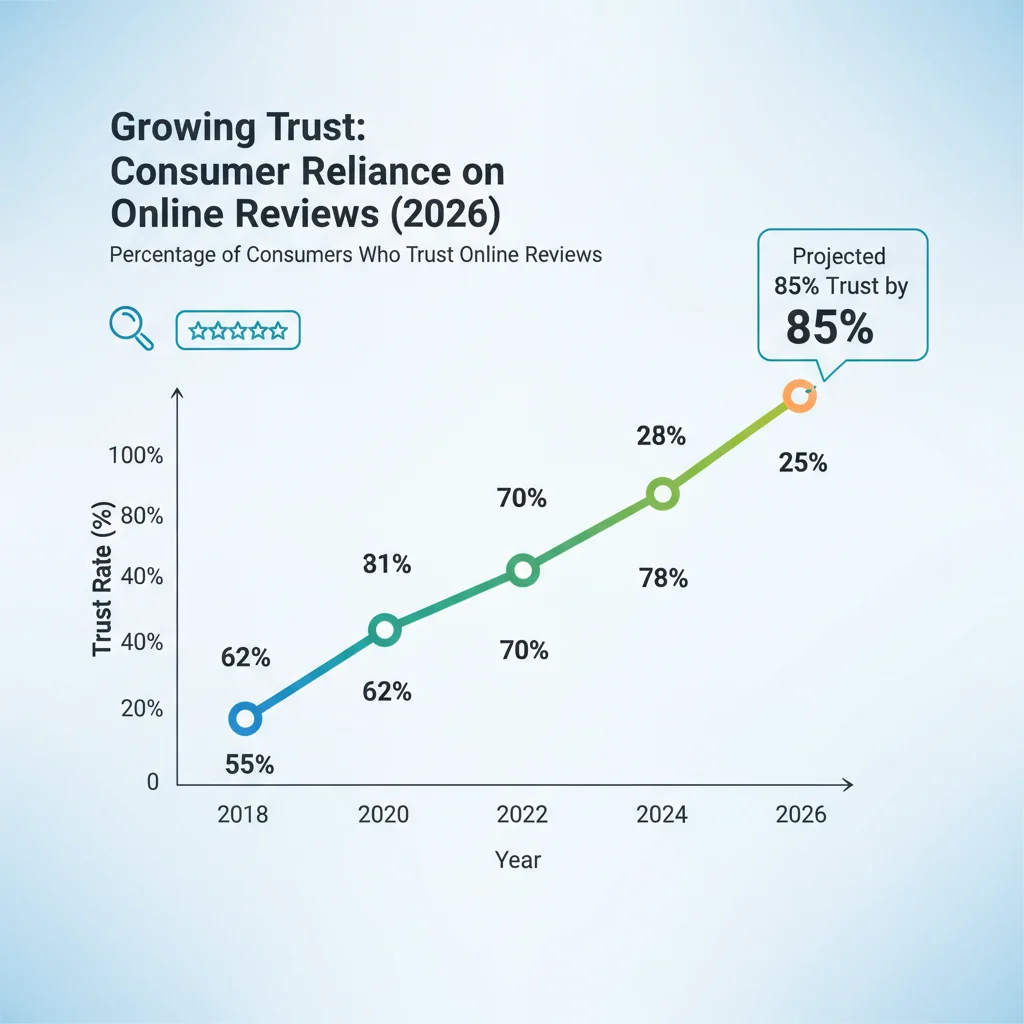
In an increasingly digital world, the way consumers make purchasing decisions has undergone a profound transformation. Gone are the days when traditional advertising held undisputed sway. Today, the most powerful force influencing buying choices isn’t a glossy magazine ad or a prime-time TV commercial; it’s the authentic voice of fellow consumers. We’re talking, of course, about peer reviews and online recommendations. These digital word-of-mouth endorsements have become the bedrock of consumer trust, and their influence is only set to grow. By 2026, a staggering 85% of US consumers are projected to place their trust in online recommendations, a statistic that underscores a fundamental shift in market dynamics. This isn’t just a trend; it’s the new standard for building brand credibility and driving sales. Understanding this monumental shift, and adapting to it, is no longer optional for businesses; it’s absolutely essential for survival and growth.
The Evolution of Consumer Trust: From Ads to Advocates
For decades, advertising was king. Brands poured billions into crafting compelling messages, believing that a well-placed ad could sway public opinion and open wallets. While advertising still plays a role in brand awareness, its direct impact on purchase decisions has waned significantly. Consumers, now more discerning and skeptical than ever, have learned to filter out overt marketing messages. Instead, they seek authenticity, transparency, and unbiased opinions. This quest for genuine insights has led them directly to peer reviews.
The internet, with its democratizing power, gave rise to platforms where ordinary individuals could share their experiences with products and services. What started as niche forums and early e-commerce review sections has blossomed into a sophisticated ecosystem of review sites, social media platforms, and specialized recommendation engines. Consumers now have an unprecedented ability to research, compare, and validate their purchasing decisions through the collective wisdom of their peers. This shift represents a fundamental re-evaluation of what constitutes ‘authority’ in the consumer landscape. It’s no longer the brand telling its story; it’s the community validating it. This is where the power of consumer trust reviews truly shines.
Why Peer Reviews Resonate So Deeply
Several psychological and sociological factors contribute to the profound impact of peer reviews:
- Credibility and Authenticity: Unlike marketing copy, reviews come from individuals who have genuinely used a product or service. This lived experience lends an inherent credibility that branded content often lacks. Consumers perceive these reviews as more honest and less biased.
- Relatability: People naturally trust others who are ‘like them.’ When a consumer reads a review from someone who shares similar needs, preferences, or demographics, they are more likely to identify with that experience and trust the recommendation.
- Social Proof: Humans are social creatures, and we often look to others for cues on how to behave or what to believe. A large volume of positive reviews acts as powerful social proof, signaling that a product or service is popular, reliable, and worth investing in.
- Risk Reduction: Making a purchase always involves a degree of risk. Peer reviews help mitigate this risk by providing insights into potential pitfalls, product performance, and customer service quality. They offer a sense of security before committing to a purchase.
- Transparency: Review platforms foster an environment of transparency. Both positive and negative feedback are typically visible, allowing consumers to get a balanced view and make informed decisions. This openness builds trust in the platform and, by extension, the products reviewed.
The Staggering Statistic: 85% Trust by 2026
The projection that 85% of US consumers will trust online recommendations by 2026 is not merely an arbitrary number; it’s a testament to the cumulative effect of these underlying factors. This figure signifies a near-universal reliance on peer-generated content as a primary decision-making tool. What does this mean for businesses? It means that your online reputation, shaped by consumer trust reviews, will be one of your most valuable assets, if not the most valuable.
Consider the implications: if eight out of ten potential customers are looking to their peers for guidance, then failing to cultivate a strong, positive review presence is akin to operating with one hand tied behind your back. It means that traditional marketing efforts, while still necessary for initial awareness, will increasingly serve as a gateway to the review ecosystem, rather than the final arbiter of purchase.
The Landscape of Online Recommendations
The channels through which consumers seek and share recommendations are diverse and ever-expanding:
- E-commerce Platforms: Amazon, eBay, Etsy, and countless other online stores integrate customer reviews directly into product pages. These are often the first point of contact for many consumers.
- Dedicated Review Sites: Yelp for local businesses, TripAdvisor for travel, Rotten Tomatoes for movies, and Glassdoor for employers are just a few examples of platforms built entirely around user-generated reviews.
- Social Media: Facebook, Instagram, TikTok, and even LinkedIn have become fertile ground for recommendations, whether through direct posts, stories, or influencer endorsements. A friend’s casual mention of a product on their feed can carry immense weight.
- Forums and Communities: Niche forums, Reddit subreddits, and private online groups often feature in-depth discussions and recommendations from highly engaged users, influencing specific segments.
- Google Reviews: Increasingly vital for local businesses, Google reviews appear prominently in search results and Google Maps, directly impacting local search visibility and customer perception.
Each platform serves a slightly different purpose and caters to different demographics, but they all contribute to the overarching narrative of consumer trust reviews.
Strategies for Businesses in a Review-Driven World
Given the inexorable rise of peer reviews, businesses must proactively adapt their strategies to not only collect reviews but also to manage, respond to, and leverage them effectively. This is no longer a peripheral activity but a core component of digital strategy.
1. Prioritize an Exceptional Customer Experience
This might seem obvious, but it’s the foundation of all positive reviews. You cannot fake authenticity. A truly great product or service, coupled with outstanding customer support, will naturally generate positive feedback. Invest in product quality, seamless service delivery, and responsive communication. Every interaction is an opportunity to create a positive impression that could translate into a five-star review.
2. Actively Solicit Reviews
Don’t wait for reviews to happen; encourage them. Many satisfied customers are happy to leave a review but simply need a prompt. Implement strategies to politely ask for feedback:
- Post-Purchase Emails: Send automated emails a few days after a purchase or service completion, asking for a review. Include direct links to your preferred review platforms.
- In-Store Prompts: For brick-and-mortar businesses, use signage, QR codes, or verbal requests at the point of sale.
- Website Widgets: Integrate review widgets or dedicated review pages on your website, making it easy for visitors to share their thoughts.
- Social Media Calls to Action: Occasionally ask your social media followers to share their experiences.
Make the process as simple and frictionless as possible. The easier it is for customers to leave a review, the more likely they are to do so. Remember, the goal is to cultivate genuine consumer trust reviews.
3. Monitor and Respond to All Reviews (Good and Bad)
Ignoring reviews is a critical mistake. Both positive and negative feedback offer invaluable insights and opportunities:
- For Positive Reviews: Thank the customer for their feedback. Acknowledge what they appreciated specifically. This not only reinforces their positive experience but also shows other potential customers that you value their input.
- For Negative Reviews: This is where true customer service shines. Respond promptly, professionally, and empathetically. Apologize for any shortcomings, offer a solution if appropriate, and take the conversation offline if necessary to resolve the issue privately. Never get defensive or engage in arguments. A well-handled negative review can often turn a dissatisfied customer into a loyal one and demonstrate to others your commitment to customer satisfaction. It shows that you care about consumer trust reviews.
Regularly monitoring review platforms (Google My Business, Yelp, TripAdvisor, industry-specific sites, etc.) is crucial. Use tools that aggregate reviews or set up alerts to ensure you don’t miss any feedback.
4. Leverage Reviews in Your Marketing
Positive reviews are powerful testimonials. Don’t let them sit idly on review sites; integrate them into your marketing efforts:
- Website: Feature glowing testimonials prominently on your homepage, product pages, and a dedicated ‘Reviews’ section.
- Social Media: Share snippets of positive reviews or create graphics featuring customer quotes.
- Email Marketing: Include testimonials in your newsletters or promotional emails.
- Case Studies: Use detailed positive reviews as the basis for more in-depth case studies.
- Advertising: Incorporate review ratings (e.g., ‘4.8 stars on Google’) into your ads.
Showcasing authentic consumer trust reviews adds a layer of credibility that traditional advertising struggles to match.
5. Learn from Feedback and Iterate
Reviews are not just for public display; they are a goldmine of actionable insights. Analyze recurring themes in both positive and negative feedback:
- Are there specific product features that customers consistently praise or criticize?
- Are there patterns in customer service complaints (e.g., slow response times, unhelpful staff)?
- Do reviews highlight gaps in your product offerings or areas where you excel compared to competitors?
Use this data to refine your products, improve your services, and enhance the overall customer experience. This continuous improvement cycle, driven by genuine customer feedback, is key to sustained success in the review economy.

The Impact on Brand Reputation and SEO
The influence of consumer trust reviews extends far beyond direct purchasing decisions; it profoundly impacts brand reputation and search engine optimization (SEO).
Brand Reputation: The Digital Word of Mouth
In the digital age, your brand reputation is largely defined by what others say about you online. A consistent stream of positive reviews builds a strong, trustworthy brand image. Conversely, a lack of reviews, or a preponderance of negative ones, can severely damage your reputation, making it difficult to attract new customers. Consumers often conflate a company’s review profile with its overall reliability and quality. Managing this digital word of mouth is paramount.
SEO: Reviews as Ranking Factors
Search engines, particularly Google, increasingly recognize the importance of user-generated content, including reviews. Reviews are considered a significant local SEO ranking factor. Here’s why:
- Fresh, Relevant Content: Reviews provide a constant stream of fresh, relevant content for your business profile, which search engines favor.
- Keyword Richness: Customers often use natural language and include keywords related to your products or services in their reviews, helping search engines understand what your business offers.
- Authority and Trust Signals: A high volume of positive reviews signals to search engines that your business is reputable and trustworthy, which can positively impact your search rankings.
- Click-Through Rates: Businesses with higher ratings and more reviews tend to have better visibility and higher click-through rates in search results, further boosting their SEO performance.
Therefore, actively cultivating consumer trust reviews is not just good for sales; it’s essential for your online visibility and discoverability.
Challenges and Considerations
While the benefits of peer reviews are undeniable, businesses must also navigate potential challenges:
- Fake Reviews: The proliferation of fake reviews (both positive and negative) is a concern. Platforms are constantly evolving their detection methods, but businesses must also be vigilant. Focusing on genuine customer experiences is the best defense.
- Review Gating: Some businesses attempt to filter reviews, only encouraging positive ones. This practice, known as ‘review gating,’ is generally frowned upon by review platforms and can damage trust if discovered. Authenticity is key.
- Managing Negative Feedback: While challenging, negative reviews are an opportunity. How a business responds can often be more impactful than the review itself. It demonstrates accountability and a commitment to customer satisfaction.
- Platform Fragmentation: Managing reviews across numerous platforms can be time-consuming. Utilizing review management tools can help streamline this process.
The Future of Consumer Trust Reviews
Looking ahead to 2026 and beyond, the influence of peer reviews is only set to deepen. We can expect:
- Increased Personalization: AI and machine learning will likely play a greater role in delivering highly personalized review content, showing consumers recommendations from individuals with highly similar preferences or demographics.
- Video Reviews: The rise of short-form video content suggests that video reviews will become even more prevalent, offering a richer, more immersive form of feedback.
- Integrated Experiences: Reviews will become even more seamlessly integrated into purchasing journeys, appearing directly within messaging apps, virtual try-on experiences, or even augmented reality shopping environments.
- Verified Purchases: Platforms will continue to enhance mechanisms for verifying purchases, further bolstering the credibility of reviews.
- Influencer Marketing Evolution: While traditional influencer marketing will persist, there will be a greater emphasis on micro and nano-influencers whose recommendations feel more like genuine peer advice.
The core principle, however, will remain unchanged: the collective voice of consumers will continue to guide purchasing decisions. Businesses that embrace this reality and actively foster a culture of transparency, customer satisfaction, and genuine feedback will be the ones that thrive.
Conclusion: Embrace the Power of the Peer
The projection that 85% of US consumers will trust online recommendations by 2026 is a clarion call for every business. It signals a definitive shift in the landscape of commerce, where consumer trust reviews are not just a nice-to-have but a fundamental driver of success. Building a strong online reputation through authentic peer feedback is no longer merely a marketing tactic; it’s a strategic imperative.
Businesses that prioritize exceptional customer experiences, actively solicit and respond to reviews, and effectively leverage this user-generated content in their marketing and operational improvements will be well-positioned to capture market share and foster lasting customer loyalty. The power of the peer is undeniable, and those who harness it will find themselves at the forefront of the future economy. Ignore it at your peril; embrace it, and unlock unprecedented opportunities for growth and connection with your audience.