Peer Reviews: The Ultimate Trust Factor for US Consumers in 2026

The Unstoppable Rise of Consumer Trust Reviews: Why 92% of US Consumers Will Rely on Them by 2026
In the dynamic landscape of modern commerce, one factor has consistently proven to be the bedrock of purchasing decisions: trust. While traditional advertising methods continue to evolve, the most potent form of persuasion remains rooted in the opinions of fellow consumers. We are on the cusp of a significant shift, where by 2026, an astonishing 92% of US consumers are projected to place their unwavering faith in peer reviews before making a purchase. This isn’t just a trend; it’s a fundamental change in how businesses must approach their marketing strategies and customer engagement. Understanding and harnessing the power of consumer trust reviews is no longer optional; it’s imperative for survival and growth.
This comprehensive article will delve deep into the phenomenon of consumer trust reviews, exploring the psychological underpinnings that make them so influential, the data supporting their continued rise, and actionable strategies for businesses to not only collect but effectively leverage them. From small local shops to multinational corporations, the message is clear: your customers’ voices are your most valuable asset.
The Psychology Behind Consumer Trust Reviews: Why We Trust Our Peers
The human brain is wired for social proof. From ancient tribal dynamics to modern social media trends, we inherently look to others to validate our choices and navigate uncertainty. This evolutionary trait is at the heart of why consumer trust reviews hold such sway. When we see that a product or service has been endorsed by someone who has already experienced it, it triggers a powerful psychological response:
1. The Bandwagon Effect: Following the Crowd
The bandwagon effect describes our tendency to do or believe things because many other people do or believe the same. When a product has numerous positive reviews, it creates a perception of popularity and desirability. Consumers reason that if so many others have found value in it, they likely will too. This reduces perceived risk and makes the decision-making process easier. For businesses, cultivating a strong volume of positive consumer trust reviews can kickstart this effect, creating a virtuous cycle of trust and sales.
2. Authenticity and Relatability: Real People, Real Experiences
Unlike polished advertisements crafted by marketing teams, peer reviews are perceived as authentic and unbiased. They come from real people who have used the product or service in real-world scenarios. This relatability is crucial. Consumers often identify with the reviewers’ needs, concerns, and experiences, making their feedback far more impactful than a brand’s self-promotion. A review that details a specific problem solved or a unique benefit experienced resonates deeply because it speaks to a shared human experience. This raw, unfiltered feedback forms the backbone of genuine consumer trust reviews.
3. Risk Reduction: Minimizing the Unknown
Every purchase involves a degree of risk – the risk of dissatisfaction, wasted money, or a poor experience. Consumer trust reviews act as a powerful risk mitigation tool. By reading about others’ experiences, potential buyers can anticipate potential pitfalls, understand product limitations, and set realistic expectations. This pre-purchase clarity significantly reduces anxiety and boosts confidence, making consumers more likely to commit to a purchase. In an increasingly complex marketplace, reviews serve as a trusted guide through the myriad of choices.
4. Emotional Connection: More Than Just Features
While product specifications are important, reviews often go beyond mere features to describe the emotional impact of a purchase. A review might highlight how a particular service saved a customer time, reduced stress, or brought joy. These emotional narratives create a deeper connection with potential buyers, tapping into their desires for positive outcomes. This emotional resonance is a key differentiator for consumer trust reviews, transforming a transactional decision into a more personal one.
The Data Doesn’t Lie: The Growing Influence of Peer Reviews
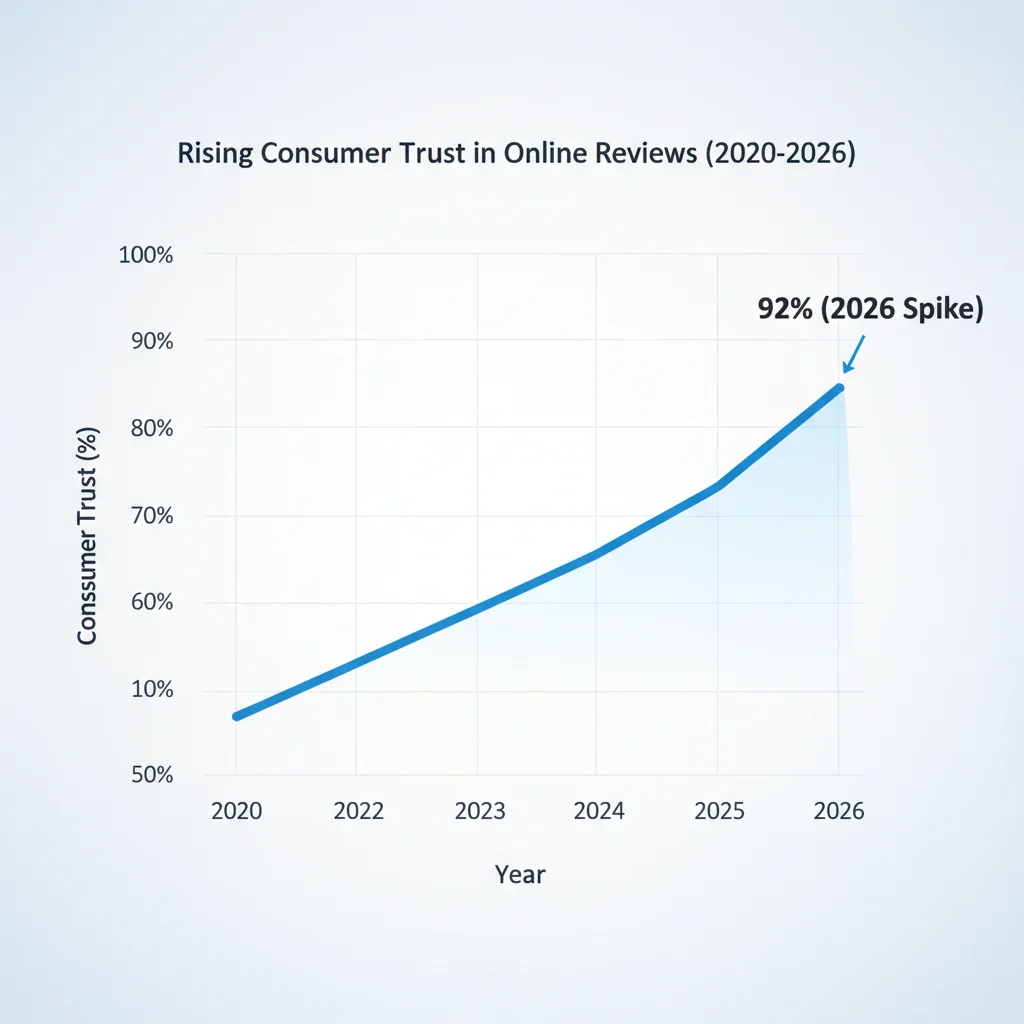
The projection of 92% of US consumers trusting peer reviews by 2026 isn’t a speculative guess; it’s a culmination of years of consistent data demonstrating the escalating importance of these insights. Several studies and surveys consistently reinforce this trend:
1. Local Consumer Review Survey: A Decades-Long Trend
Annual surveys, such as those conducted by BrightLocal, have consistently shown that an overwhelming majority of consumers read online reviews for local businesses. This percentage has steadily climbed over the past decade, indicating a deep-seated and growing reliance. The sheer volume of consumers who consider reviews before visiting a local restaurant, hiring a plumber, or choosing a healthcare provider underscores their pervasive influence on everyday decisions. This trend is a clear indicator of the foundational role consumer trust reviews play in local economies.
2. E-commerce and Product Reviews: The Digital Storefront
In the e-commerce space, product reviews are often as important as the product description itself. Platforms like Amazon have built their success on the back of user-generated content, making reviews a central pillar of the shopping experience. Consumers routinely sort products by rating, read through dozens of comments, and even filter by specific keywords within reviews to find the information they need. For online retailers, a lack of reviews or a prevalence of negative ones can be a death knell, while a robust collection of positive consumer trust reviews is a powerful sales driver.
3. Service Industries: Where Reputation is Everything
For service-based businesses – from financial advisors to home repair services – reviews are paramount. The intangible nature of services means that trust is built on reputation and word-of-mouth. Online reviews serve as the digital equivalent of personal recommendations, providing tangible evidence of reliability, professionalism, and quality. Consumers are increasingly unlikely to engage with a service provider who lacks strong positive consumer trust reviews, making them a critical component of lead generation and client acquisition.
The Impact of Consumer Trust Reviews on Business Growth
The implications of this growing reliance on consumer trust reviews are profound for businesses of all sizes and across all sectors. Ignoring this trend is akin to ignoring your customers’ primary decision-making tool. Conversely, embracing and optimizing for reviews can unlock significant growth opportunities.
1. Increased Sales and Conversions
It’s simple economics: more trust leads to more sales. Studies consistently show that products and services with higher ratings and a greater number of reviews experience significantly higher conversion rates. When consumers feel confident in their purchase decision, they are more likely to click ‘add to cart’ or ‘book now’. Positive consumer trust reviews act as powerful endorsements, pushing hesitant buyers over the finish line. This direct correlation between review quality and sales volume makes them a top priority for revenue generation.
2. Enhanced Brand Reputation and Credibility
A strong collection of positive reviews builds an invaluable asset: brand reputation. In an age of information overload, a business’s reputation is its most powerful differentiator. When potential customers see consistent praise for quality, service, and reliability, it establishes a strong sense of credibility. This trust extends beyond individual purchases, fostering brand loyalty and advocacy. Businesses that actively manage and respond to consumer trust reviews demonstrate transparency and customer care, further solidifying their reputable standing.
3. Improved SEO and Online Visibility
Search engines like Google increasingly factor in online reviews when determining search rankings. A business with numerous positive reviews is often perceived as more relevant and trustworthy, leading to higher placement in local search results and organic rankings. This means that actively soliciting and managing consumer trust reviews is not just a customer service initiative; it’s a vital SEO strategy. More reviews can lead to more visibility, driving more organic traffic to your website and physical locations.
4. Valuable Customer Insights and Product Development
Beyond their direct impact on sales and reputation, consumer trust reviews offer a treasure trove of actionable insights. By analyzing common themes in positive and negative feedback, businesses can identify strengths to highlight and weaknesses to address. This direct customer feedback loop is invaluable for product development, service improvements, and refining overall customer experience. Reviews provide a direct window into customer expectations and satisfaction, informing strategic decisions and fostering continuous improvement.
Strategies for Cultivating and Leveraging Consumer Trust Reviews
Given the undeniable influence of consumer trust reviews, businesses must adopt proactive strategies to encourage, manage, and utilize them effectively. This isn’t about manipulating reviews but rather facilitating genuine feedback and showcasing it prominently.
1. Provide Exceptional Customer Experiences
The foundation of all positive reviews is an exceptional customer experience. No amount of marketing can compensate for a poor product or shoddy service. Focus on delivering quality, responsiveness, and genuine care at every touchpoint. When customers are genuinely delighted, they are far more likely to share their positive experiences. This fundamental principle underpins all efforts to generate strong consumer trust reviews.
2. Make it Easy to Leave Reviews
Don’t make customers jump through hoops to leave feedback. Integrate review requests into your post-purchase or post-service communication. Send follow-up emails with direct links to your preferred review platforms (Google My Business, Yelp, industry-specific sites, your own website). Provide clear, simple instructions. The easier the process, the higher your response rate will be for consumer trust reviews.
3. Ask for Reviews Directly (and Politely)
Many customers are happy to leave a review but simply need to be prompted. Train your staff to politely ask for feedback at the point of sale or service delivery. For online businesses, integrate review requests into transactional emails. Frame the request as an opportunity for them to help other consumers and for you to improve. Personalizing the request can also significantly boost engagement with consumer trust reviews.
4. Monitor and Respond to All Reviews (Positive and Negative)
Actively monitoring review platforms is crucial. Respond to positive reviews with gratitude, reinforcing customer loyalty. More importantly, respond to negative reviews constructively and professionally. Acknowledge the customer’s concerns, apologize if appropriate, and offer solutions or next steps. A thoughtful response to a negative review can often turn a dissatisfied customer into a loyal one and demonstrates to potential customers that you care about feedback. This active engagement with consumer trust reviews builds immense credibility.
5. Showcase Your Best Reviews Prominently
Don’t hide your light under a bushel! Feature glowing testimonials on your website, social media, and marketing materials. Create a dedicated ‘Reviews’ or ‘Testimonials’ page. Use snippets of positive reviews in product descriptions or service pages. This strategic placement of consumer trust reviews acts as powerful social proof, guiding potential customers toward a purchase.
6. Leverage Review Generation Tools and Software
For businesses with a high volume of customers, manual review management can be overwhelming. Invest in review generation software that automates the process of sending review requests, tracking feedback, and even helping you respond. These tools streamline the entire lifecycle of consumer trust reviews, ensuring you’re consistently gathering and leveraging valuable insights.
7. Understand and Mitigate Fake Reviews
While the vast majority of reviews are genuine, the issue of fake reviews does exist. Businesses should be vigilant in identifying and reporting fraudulent reviews to platform administrators. While you can’t control every review, maintaining a high volume of authentic reviews helps dilute the impact of any fakes. Transparency and authenticity are key to maintaining the integrity of consumer trust reviews.
The Future Landscape: Beyond 2026
The trajectory of consumer trust reviews suggests that their influence will only continue to grow beyond 2026. As technology advances, we can anticipate even more sophisticated ways for consumers to share and access feedback:
1. Video Reviews and Rich Media
While text reviews are powerful, video reviews offer an even deeper level of authenticity and engagement. Seeing a real person articulate their experience, demonstrate a product, or showcase a service creates an immediate and compelling connection. Expect to see platforms increasingly support and prioritize rich media reviews, making them an even more potent form of consumer trust reviews.
2. AI-Powered Review Analysis
Artificial intelligence will play an increasingly significant role in helping businesses analyze vast quantities of review data. AI can identify sentiment, pinpoint common pain points, and even suggest improvements based on aggregated feedback. This will allow businesses to extract even more actionable insights from their consumer trust reviews, leading to faster and more effective product and service enhancements.
3. Hyper-Personalized Review Experiences
As consumer data becomes more sophisticated, review platforms may offer increasingly personalized review experiences. Imagine filtering reviews not just by star rating but by demographics, specific use cases, or even personal preferences. This will allow consumers to find feedback that is even more relevant to their individual needs, further solidifying the role of consumer trust reviews in tailored purchasing decisions.
4. Integration with Voice Search and Smart Devices
As voice search and smart home devices become more ubiquitous, consumers will increasingly ask for product recommendations and service providers through these channels. The underlying data for these recommendations will heavily rely on aggregated consumer trust reviews. Businesses need to ensure their review profiles are robust and accessible to these emerging technologies.
Conclusion: Embrace the Voice of the Customer
The projection that 92% of US consumers will trust peer reviews by 2026 is a resounding declaration: the age of the customer is here, and their collective voice is the ultimate authority. For businesses, this is not a challenge to be feared but an opportunity to be embraced. By prioritizing exceptional customer experiences, actively soliciting and managing consumer trust reviews, and showcasing them prominently, companies can build unparalleled credibility, drive significant sales growth, and forge lasting relationships with their customer base.
In a marketplace saturated with choices, trust is the currency that matters most. And in the coming years, that currency will be overwhelmingly minted in the form of authentic, peer-generated reviews. Future-proofing your business means making consumer trust reviews a central pillar of your strategy, ensuring your brand not only survives but thrives in this new era of empowered consumers.