Edge Computing at Home: Boosting Smart Device Performance by 20%
Edge Computing at Home: How This Emerging Tech is Improving Smart Device Performance by Up to 20%
In our increasingly connected world, the smart home has evolved from a futuristic concept into a tangible reality for millions. From smart thermostats that learn our preferences to security cameras that monitor our properties, and voice assistants that manage our daily tasks, smart devices have become integral to modern living. However, as the number of connected gadgets proliferates, so do the demands on our home networks and the underlying infrastructure that powers these intelligent ecosystems. The traditional model of sending all data to distant cloud servers for processing, while robust, is starting to show its limitations in terms of speed, privacy, and efficiency. This is where the groundbreaking concept of home edge computing steps in, promising a significant revolution in how our smart devices operate, potentially boosting their performance by up to 20%.
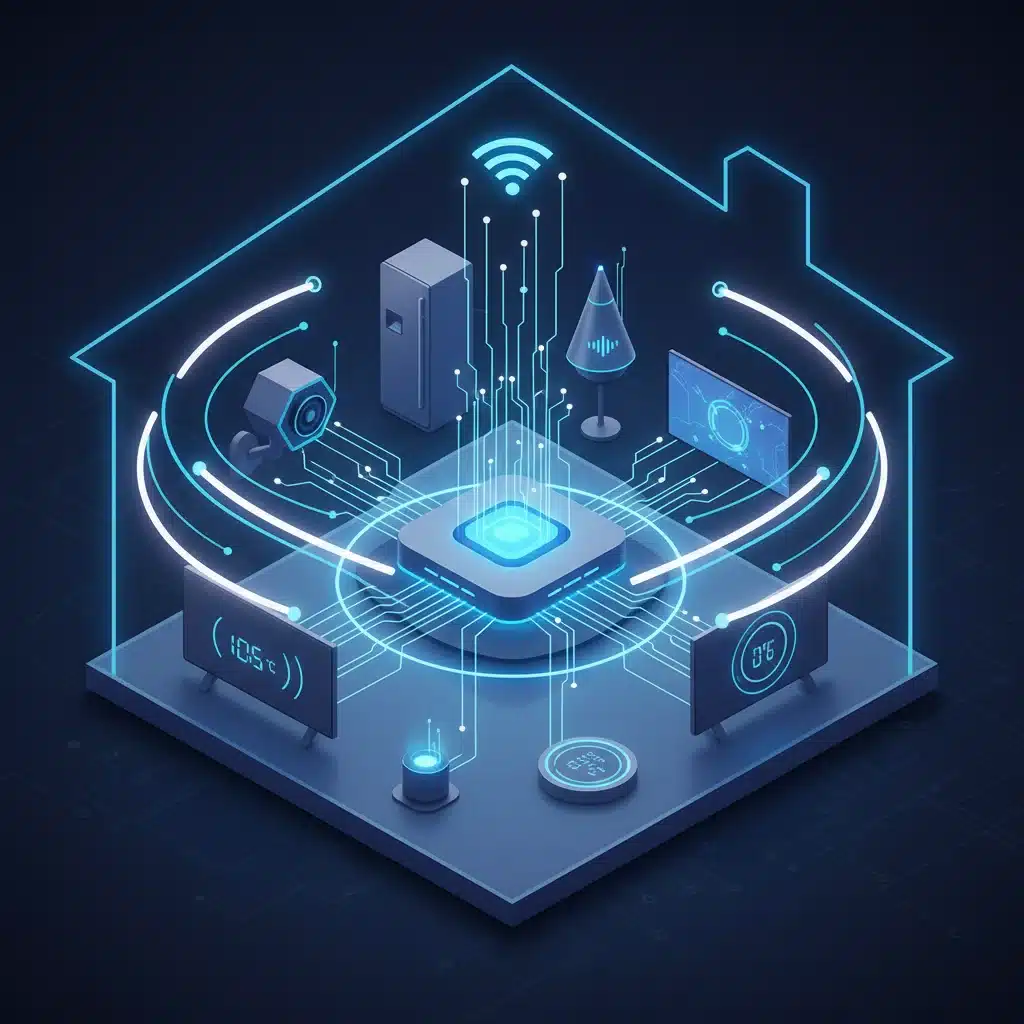
Imagine a scenario where your smart home responds almost instantaneously, where your data remains predominantly within your own four walls, and where your devices operate with unparalleled efficiency even during internet outages. This is the promise of home edge computing. By bringing computational power closer to the source of data – your smart devices themselves or a local hub within your home – edge computing minimizes the need to constantly send vast amounts of information to centralized cloud servers. This localized processing drastically reduces latency, enhances security, and allows for more intelligent, real-time decision-making right where it’s needed most.
This comprehensive guide will delve deep into the world of home edge computing. We will explore what it is, why it’s becoming indispensable for smart homes, its myriad benefits, and how you can prepare your home to harness its power. We’ll also look at the current landscape of edge-enabled devices and the exciting future this technology holds for enhancing our digital lives.
Understanding the Core Concept: What is Home Edge Computing?
Before we dive into the specifics of its application in smart homes, let’s establish a clear understanding of what edge computing truly entails. At its heart, edge computing is a distributed computing paradigm that brings computation and data storage closer to the sources of data. Instead of relying solely on a centralized cloud server located potentially thousands of miles away, edge computing places processing power at the ‘edge’ of the network – closer to where the data is generated and consumed.
In the context of your home, this ‘edge’ could be several things:
- The smart device itself: Many modern smart devices, especially those with advanced functionalities like AI-powered cameras or voice assistants, are increasingly equipped with powerful microprocessors capable of performing local data analysis.
- A local hub or gateway: This could be your Wi-Fi router, a dedicated smart home hub (like a SmartThings hub or Apple HomePod mini), or even a small, low-power computer like a Raspberry Pi acting as a central processing unit for your home network.
- A mini-data center in your home: While less common for the average user, some tech enthusiasts might set up a more robust local server for extensive data processing and storage.
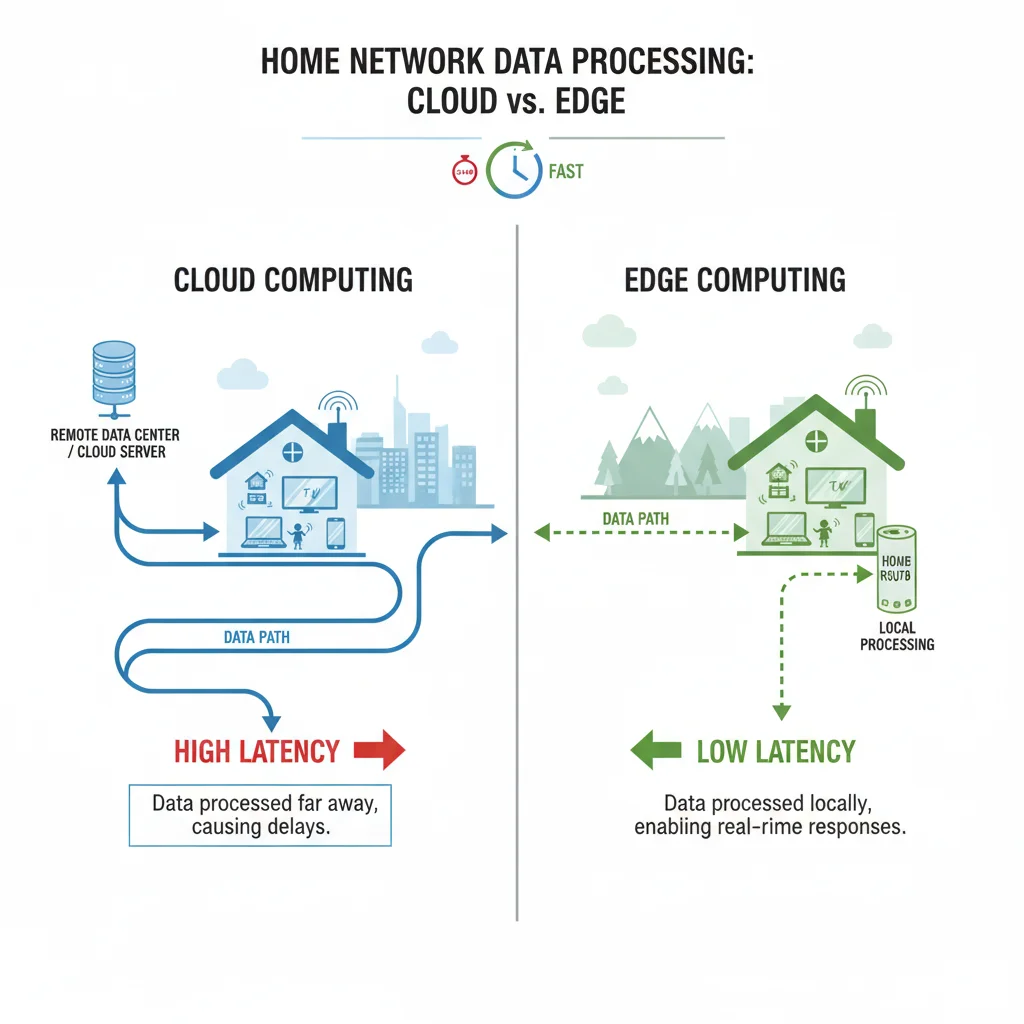
The fundamental idea is to process as much data as possible locally, only sending essential or aggregated information to the cloud. This contrasts sharply with traditional cloud computing, where virtually all data is transmitted to a remote server for processing and then sent back to the device. Think of it like this: instead of mailing every single grocery item to a central sorting facility across the country just to get it back, home edge computing allows you to sort and prepare most of your groceries right in your kitchen, only sending a small summary of your shopping list to the store for reordering.
The Evolution from Cloud to Edge: Why the Shift?
Cloud computing revolutionized the digital world by offering scalable, on-demand computing resources. However, as the Internet of Things (IoT) exploded, with billions of devices constantly generating data, the limitations of a purely cloud-centric model became apparent:
- Latency: The time it takes for data to travel from your device to the cloud and back can introduce noticeable delays, impacting real-time applications like autonomous vehicles, industrial automation, and even smart home responses. For instance, a smart security camera that sends every frame to the cloud for analysis might have a delay in detecting an intruder, whereas an edge-enabled camera can process video locally and send an instant alert.
- Bandwidth: Transmitting vast quantities of raw data (like continuous high-definition video feeds from multiple cameras) to the cloud consumes significant internet bandwidth, leading to congestion and potentially higher data costs. Local processing reduces the volume of data needing to be sent upstream.
- Reliability: Cloud-dependent systems are vulnerable to internet outages. If your internet connection goes down, many smart home functionalities can become unresponsive. Edge computing allows critical functions to continue operating locally, even without an active internet connection.
- Privacy and Security: Sending all data to the cloud raises concerns about data privacy and the potential for breaches. Processing sensitive data (like facial recognition or health metrics) locally keeps it within your control, enhancing privacy and reducing the attack surface.
- Cost: While cloud services offer flexibility, the long-term costs of storing and processing massive amounts of data in the cloud can become substantial for individual users and businesses alike. Edge computing can reduce these operational costs by minimizing cloud resource consumption.
These challenges have paved the way for home edge computing, which addresses these pain points by distributing processing power, making smart homes more responsive, reliable, secure, and ultimately, smarter.
The Tangible Benefits: How Home Edge Computing Improves Performance by up to 20%
The promise of a 20% performance boost isn’t just marketing hype; it’s a realistic outcome of implementing home edge computing. This improvement manifests in several key areas:
1. Reduced Latency and Faster Response Times
One of the most significant advantages of home edge computing is the drastic reduction in latency. When a smart device needs to perform an action or make a decision, sending data to a distant cloud server and waiting for a response introduces a delay. This ’round trip’ can take hundreds of milliseconds, which, while seemingly small, can be critical for certain applications.
Consider a smart light switch. Without edge computing, pressing the switch sends a signal to the cloud, the cloud processes the command, and then sends a signal back to the light. With edge computing, the command is processed almost instantly by a local hub or even the switch itself, resulting in an immediate response. This responsiveness is even more crucial for security systems, where every millisecond counts in detecting and responding to threats.
For applications like real-time video analysis from security cameras, local processing can mean the difference between instantly identifying a package delivery and a noticeable lag that could affect security alerts. The elimination of cloud round-trips can cut response times significantly, leading to a much smoother and more intuitive smart home experience.
2. Enhanced Data Privacy and Security
In an era where data breaches are common and privacy concerns are paramount, home edge computing offers a compelling solution. By processing sensitive data locally, you reduce the amount of personal information that needs to be transmitted to and stored on remote cloud servers. This significantly mitigates the risk of your data being intercepted or compromised during transmission or while residing in a third-party data center.
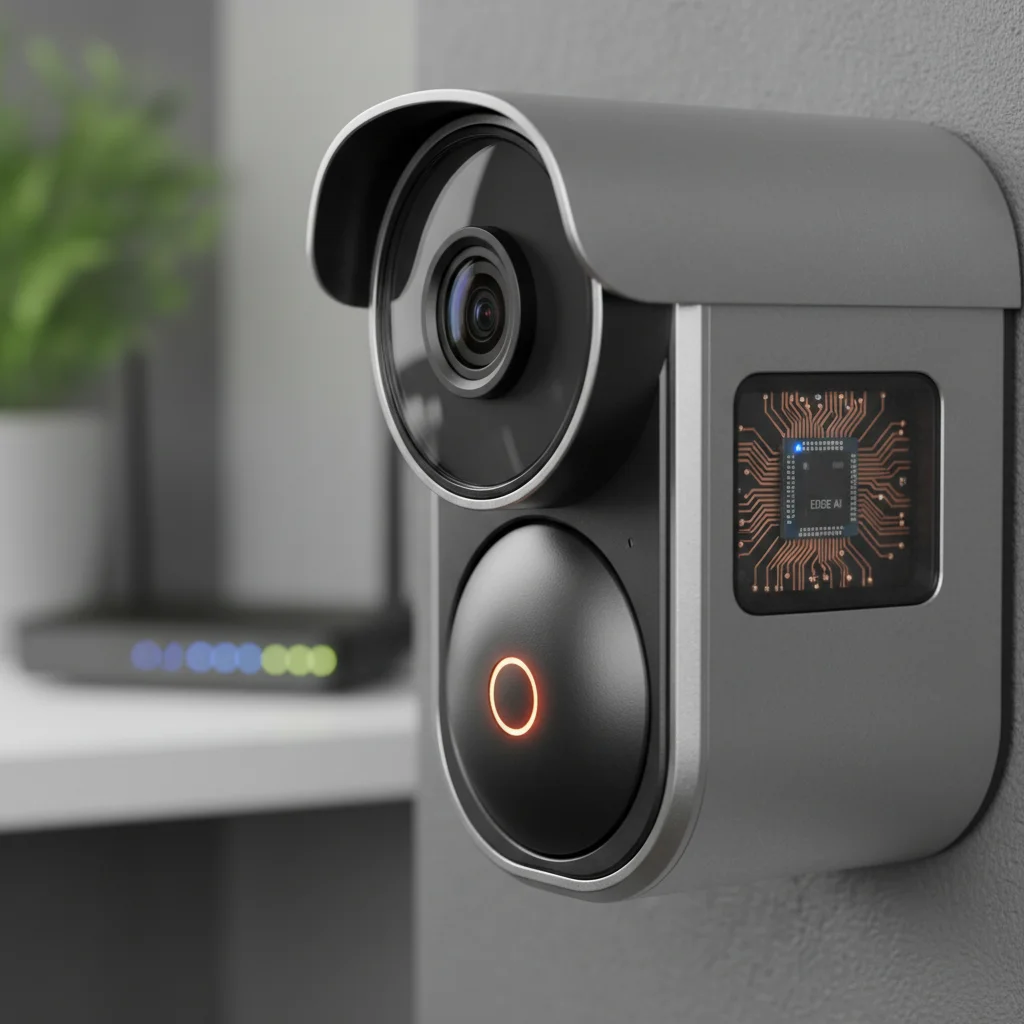
For example, a smart camera with edge capabilities can perform facial recognition or object detection on-device. Only anonymized alerts or specific events (e.g., “person detected at front door”) might be sent to the cloud, rather than continuous video streams. This approach keeps potentially sensitive visual data within your home network, giving you greater control over your personal information. Similarly, voice commands processed locally by a smart speaker reduce the need to send every spoken word to the cloud for interpretation, enhancing user privacy.
3. Greater Reliability and Offline Functionality
How many times has your smart home faltered because your internet connection decided to take a break? Cloud-dependent smart devices often become glorified bricks without an active internet connection. Home edge computing changes this equation by enabling critical functionalities to operate independently of internet availability.
With local processing, your smart lights can still turn on and off, your thermostat can maintain its schedule, and your security system can continue to monitor your home, even if your internet service is down. This resilience ensures that your smart home remains functional and reliable, providing peace of mind and uninterrupted service. Imagine your smart lock relying on the cloud to unlock your door – an internet outage could leave you stranded. Edge computing ensures such essential functions remain robust.
4. Optimized Bandwidth Usage and Reduced Costs
The sheer volume of data generated by a modern smart home can strain internet bandwidth, especially with multiple high-definition cameras, smart doorbells, and other data-intensive devices. Home edge computing alleviates this pressure by processing data locally and only sending relevant, compressed, or aggregated data to the cloud.
Instead of streaming hours of raw video to the cloud, an edge-enabled camera can analyze the footage in real-time, detect motion or specific events, and only upload short clips of those events or simply send an alert. This drastic reduction in upstream data traffic frees up bandwidth for other activities, potentially leading to a smoother overall internet experience and, for those with data caps, significant cost savings on internet bills. It also reduces the computational load and storage requirements on cloud servers, making the entire ecosystem more efficient.
5. Enhanced Scalability and Flexibility
As you add more smart devices to your home, the demands on your network and the cloud infrastructure grow. Edge computing offers a more scalable solution. By distributing processing power, you can add more devices without necessarily bogging down a central cloud server or exceeding your internet bandwidth limits. Each new edge-enabled device or local hub contributes to the overall processing power of your smart home, creating a more robust and flexible ecosystem that can adapt to your growing needs.
Current Applications and Devices Leveraging Home Edge Computing
While the term home edge computing might sound cutting-edge, many devices already incorporate elements of this technology. Here are some common examples:
- Smart Security Cameras: Many modern smart cameras, like those from Arlo, Ring, or Google Nest, now offer on-device AI for motion detection, person detection, and even facial recognition. This local processing reduces false alarms, speeds up alerts, and often allows for some recording even without a cloud subscription or internet connection.
- Smart Speakers and Voice Assistants: Devices like Amazon Echo and Google Home perform some initial voice processing and command recognition locally before sending more complex queries to the cloud. This significantly improves responsiveness for basic commands and enhances privacy.
- Smart Thermostats: Advanced thermostats often learn your habits and optimize heating/cooling schedules locally, only syncing aggregated data with the cloud for remote access or broader energy efficiency insights.
- Smart Home Hubs: Devices like Apple HomePod mini, Samsung SmartThings Hub, or Homey act as local controllers, allowing devices to communicate directly with each other and execute automations without relying on constant cloud connectivity. They can often store rules and execute them locally.
- Gaming Consoles and Streaming Devices: While not traditionally considered ‘smart home’ devices, these often use edge processing to render graphics, buffer content, and manage local network traffic, optimizing the user experience.
The trend is clear: manufacturers are increasingly integrating more powerful processors and AI capabilities directly into consumer devices, pushing more intelligence to the ‘edge’ of your home network. This not only boosts performance but also opens up new possibilities for advanced, context-aware smart home features.
Preparing Your Home for the Edge Computing Revolution
Embracing home edge computing doesn’t necessarily require a complete overhaul of your smart home setup. However, there are steps you can take to optimize your environment and leverage this technology effectively:
1. Invest in Edge-Enabled Devices
When purchasing new smart devices, look for features that indicate local processing capabilities. This might include terms like “on-device AI,” “local storage,” “offline mode,” or “hub-required for local control.” Research product specifications to understand how much processing occurs on the device versus in the cloud. Prioritizing devices with robust local processing will naturally move your smart home towards an edge-centric architecture.
2. Consider a Dedicated Smart Home Hub
If you have a diverse range of smart devices from different manufacturers, a dedicated smart home hub can act as your central edge processing unit. Hubs like Home Assistant (which can run on a Raspberry Pi), Hubitat, or even advanced routers with built-in smart home capabilities can facilitate local communication between devices and execute complex automations without relying on the cloud. This creates a more cohesive and responsive smart home ecosystem.
3. Optimize Your Home Network
While edge computing reduces reliance on internet bandwidth for many tasks, a robust local network is still crucial. Ensure you have a high-quality Wi-Fi router that can handle numerous connected devices. Consider upgrading to Wi-Fi 6 or 6E for better performance and capacity. A strong, stable local network ensures that your edge devices can communicate efficiently with each other and with any local hubs, maximizing the benefits of localized processing.
4. Understand Data Flow and Privacy Settings
Take the time to understand how your smart devices handle data. Review privacy policies and device settings to ensure that sensitive data is processed locally whenever possible. Many devices offer options to limit cloud uploads or disable certain cloud-dependent features in favor of local control. Educating yourself on these aspects empowers you to make informed decisions about your data privacy.
5. Explore DIY Edge Computing Solutions
For the more technically inclined, platforms like Raspberry Pi offer an excellent opportunity to build your own home edge computing server. You can run open-source smart home software like Home Assistant, which allows for deep local integration of devices, custom automations, and robust data processing entirely within your home network. This approach offers maximum control, privacy, and flexibility.
The Future of Smart Homes: A More Intelligent Edge
The trajectory of home edge computing is clear: it’s not just a trend but a fundamental shift in how we build and interact with smart technology. As AI capabilities become more sophisticated and hardware becomes more powerful and energy-efficient, we can expect even more intelligence to migrate to the edge.
Imagine your home becoming an active participant in its own management:
- Predictive Maintenance: Devices with integrated edge AI could analyze their own performance data in real-time, predict potential failures, and even order replacement parts or schedule maintenance proactively.
- Hyper-Personalized Experiences: Local AI could learn individual preferences with incredible granularity, adjusting lighting, temperature, music, and even content recommendations based on who is in the room, their mood, and their activities, all without sending sensitive data to the cloud.
- Advanced Local Security: Edge-enabled security systems could perform highly complex threat analysis, differentiating between pets, known individuals, and potential intruders with greater accuracy and speed, reducing false alarms and enhancing response capabilities.
- Energy Optimization: Entire home energy management systems could run on local edge devices, dynamically adjusting power consumption based on real-time energy prices, solar generation, and household demand, leading to significant savings and a reduced carbon footprint.
- Seamless Device Interoperability: With a powerful local processing hub, the fragmentation often seen in smart home ecosystems could diminish. Devices from different manufacturers could communicate and collaborate more effectively at the edge, leading to a truly unified smart home experience.
The potential for innovation is immense. As home edge computing matures, it will not only make our smart devices faster and more reliable but also fundamentally transform our relationship with technology, making our homes more intuitive, secure, and responsive to our needs than ever before.
Challenges and Considerations
While the benefits of home edge computing are compelling, it’s also important to acknowledge potential challenges and considerations:
- Initial Setup Complexity: For advanced DIY edge solutions, setup can be more complex than simply plugging in a cloud-dependent device. However, commercial edge-enabled devices are designed for ease of use.
- Hardware Costs: Devices with integrated edge processing capabilities might sometimes have a higher upfront cost than their cloud-only counterparts due to the more powerful internal components.
- Firmware Updates and Maintenance: While local processing reduces reliance on the cloud for daily operations, devices and local hubs will still require regular firmware updates to ensure security and access new features.
- Data Management: While less data goes to the cloud, managing local data storage and backups becomes a more significant consideration for the user, especially for video footage or other large datasets.
- Vendor Lock-in: Some manufacturers might still design their ‘edge’ solutions in a proprietary way, limiting interoperability with other brands. Open standards and protocols will be crucial for the widespread adoption of truly flexible edge ecosystems.
Despite these challenges, the industry is rapidly moving towards addressing them, with a focus on user-friendly interfaces, standardized protocols, and more affordable hardware. The long-term advantages of enhanced performance, privacy, and reliability far outweigh these initial hurdles.
Conclusion: The Smart Home’s Intelligent Leap Forward
Home edge computing represents a pivotal evolution in the smart home landscape. By strategically placing computational power closer to where data is generated and consumed, this technology addresses the critical limitations of purely cloud-centric models, delivering tangible benefits that redefine the smart home experience. The promise of up to a 20% improvement in device performance is not just an incremental upgrade; it’s a fundamental shift towards faster responses, greater reliability, enhanced privacy, and more intelligent, autonomous devices.
As we continue to integrate more smart devices into our daily lives, the demand for instant responsiveness and robust security will only grow. Home edge computing is not merely a technical advancement; it’s the foundation for the next generation of smart homes – homes that are more intuitive, more secure, and more attuned to our needs. By understanding and embracing this technology, we can unlock the full potential of our connected environments, making our digital lives more seamless, efficient, and private than ever before.
The future of the smart home is at the edge, and it’s looking remarkably intelligent.