Top 5 Smart Home Security Systems 2026: US Consumer Guide
The Top 5 Smart Home Security Systems to Watch in 2026: An In-Depth Comparison for United States Consumers
As we stride further into the 21st century, the concept of home security has dramatically evolved. Gone are the days when a simple lock and key sufficed. Today, the modern homeowner in the United States seeks comprehensive protection, seamless integration, and intelligent automation – all hallmarks of advanced Smart Home Security 2026 systems. The market is burgeoning with innovative solutions, making the choice for the average consumer both exciting and overwhelming. This guide aims to cut through the noise, offering an in-depth comparison of the top 5 smart home security systems poised to dominate the US market in 2026. We’ll delve into their features, reliability, costs, and what makes each a strong contender for safeguarding your most valuable asset: your home.
Understanding the landscape of Smart Home Security 2026 requires a look at emerging technologies. Artificial intelligence (AI), machine learning (ML), advanced sensor technology, and robust data encryption are no longer futuristic concepts but integral components of today’s leading security offerings. Consumers are demanding systems that not only deter intruders but also offer proactive threat detection, remote monitoring, and intelligent integration with other smart home devices, creating a truly interconnected and secure living environment.
The Evolution of Home Security: What to Expect in 2026
The trajectory of home security is clear: smarter, more integrated, and increasingly user-friendly. By 2026, we anticipate several key trends shaping the Smart Home Security 2026 market:
- Enhanced AI and Machine Learning: Systems will be even better at distinguishing between genuine threats and false alarms, learning household patterns, and predicting potential vulnerabilities. Facial recognition for authorized entry and package delivery verification will be standard.
- Hyper-Personalization: Security settings will adapt dynamically to individual schedules, preferences, and even weather conditions, offering a truly bespoke security experience.
- Advanced Sensor Technology: Beyond motion and contact sensors, expect widespread adoption of environmental sensors (air quality, water leak detection, fire/carbon monoxide) integrated into the core security platform, providing holistic home protection.
- Seamless Smart Home Integration: Deep integration with popular smart home ecosystems (e.g., Apple HomeKit, Google Home, Amazon Alexa) will allow for unified control of lighting, thermostats, entertainment, and security from a single interface.
- Edge Computing and Local Processing: To enhance privacy and reduce latency, more processing of video and sensor data will occur directly on devices (at the ‘edge’) rather than solely in the cloud.
- DIY vs. Professional Installation: While professional installation remains a premium option, DIY systems will continue to improve in ease of setup and reliability, empowering more homeowners to take control of their security.
- Subscription Models: Expect continued reliance on subscription services for professional monitoring, cloud storage, and advanced features, with varied tiers to suit different budgets and needs.
These trends form the backdrop against which we evaluate the top contenders for Smart Home Security 2026.
Methodology for Our Top 5 Selection
To identify the leading Smart Home Security 2026 systems, we considered several critical factors relevant to United States consumers:
- Comprehensive Protection: Does the system offer a full suite of security components, including intrusion detection, environmental monitoring, and video surveillance?
- Reliability and Performance: How consistent and accurate are the system’s sensors, cameras, and monitoring services?
- Smart Home Integration: How well does it integrate with other smart devices and popular ecosystems?
- User Experience (UX): Is the system easy to install, manage, and interact with via apps and control panels?
- Cost-Effectiveness: Evaluation of upfront equipment costs, monthly monitoring fees, and long-term value.
- Customer Support and Warranty: Quality of support, warranty coverage, and overall company reputation.
- Future-Proofing: The system’s capacity for updates, expansions, and adaptability to future technological advancements.
- Privacy and Data Security: How well does the system protect user data and privacy?
Based on these rigorous criteria, let’s dive into the top 5 Smart Home Security 2026 systems.
1. SimpliSafe: The DIY Champion with Professional Monitoring Prowess
SimpliSafe has consistently ranked high for its user-friendly DIY installation coupled with reliable professional monitoring. In 2026, it continues to refine its offerings, making it an excellent choice for homeowners seeking flexibility without compromising on security. SimpliSafe’s commitment to straightforward setup and transparent pricing makes it a standout in the Smart Home Security 2026 landscape.
Key Features for 2026:
- Enhanced Sensor Suite: Beyond standard entry and motion sensors, SimpliSafe will offer advanced glass break sensors with improved acoustic analysis, water leak detectors, and smarter smoke/CO detectors that can differentiate between cooking smoke and actual fires.
- Next-Gen Cameras: Expect higher resolution (4K) indoor and outdoor cameras with improved low-light performance, person detection, and local AI processing for faster alerts and fewer false positives. The SimpliCam and Outdoor Camera will see significant upgrades.
- Deeper Smart Home Integration: While already compatible with Alexa and Google Assistant, 2026 will bring more robust integration with Apple HomeKit and broader IFTTT support, allowing for complex automation routines.
- Improved Professional Monitoring: Faster response times from their 24/7 professional monitoring centers, leveraging AI to prioritize critical alerts.
- Battery Backup and Cellular Redundancy: Continued strong emphasis on ensuring the system remains operational even during power outages or internet disruptions.
Pros:
- Extremely easy DIY installation.
- No long-term contracts for professional monitoring.
- Affordable equipment and monitoring plans.
- Wide range of sensors and components.
- Strong emphasis on reliability and redundancy.
Cons:
- Limited advanced smart home features compared to some competitors.
- Camera quality, while improving, might still lag behind dedicated surveillance systems.
2. Ring Alarm Pro: Amazon’s Ecosystem Powerhouse
Ring, an Amazon company, has leveraged its ecosystem to create a formidable presence in the Smart Home Security 2026 market. The Ring Alarm Pro, in particular, stands out by integrating a professional-grade eero Wi-Fi 6 router directly into its base station, offering not just security but also robust network connectivity and protection. This synergy makes it a compelling option for those already invested in the Amazon ecosystem.
Key Features for 2026:
- Integrated Eero Wi-Fi 6/6E: The base station doubles as a powerful mesh Wi-Fi router, providing secure and fast internet across the home, a unique offering in Smart Home Security 2026.
- Local Storage and Processing: With a Ring Protect Pro subscription, users can enable local video storage for Ring cameras via a microSD card, enhancing privacy and reducing reliance on cloud-only solutions.
- Virtual Security Guard: An innovative optional service where a third-party professional monitoring company can visually verify events using your Ring cameras, dispatching emergency services only when necessary.
- Enhanced Alexa Integration: Deeper voice control capabilities and proactive alerts through Echo devices, creating a truly integrated Amazon smart home experience.
- Diverse Component Range: A broad selection of contact sensors, motion detectors, glass break sensors, smoke/CO listeners, and a variety of Ring cameras (doorbells, floodlights, indoor/outdoor cams).
Pros:
- Excellent integration with Amazon Alexa and other Ring devices.
- Built-in Eero Wi-Fi 6 router provides network security and reliability.
- Local video storage options enhance privacy.
- Competitive pricing for equipment and monitoring.
Cons:
- Can become costly if you invest heavily in many Ring cameras.
- Privacy concerns for some users due to Amazon’s data policies.
- Requires a Ring Protect Pro subscription to unlock all advanced features.
3. ADT Command: The Professional’s Choice Reimagined for 2026
ADT has long been synonymous with professional home security. With ADT Command, the company has successfully modernized its offerings, blending traditional robust security with smart home capabilities. For those who prioritize professional installation, monitoring, and a comprehensive, fully managed system, ADT Command remains a top contender in Smart Home Security 2026.
Key Features for 2026:
- Comprehensive Professional Monitoring: ADT’s legendary 24/7 monitoring service, backed by multiple monitoring centers, ensures rapid response to alarms.
- Advanced Smart Home Hub: The ADT Command panel acts as a central hub, integrating security with Z-Wave smart home devices like smart locks, thermostats, and lighting.
- Video Analytics and AI: Cameras with advanced video analytics can differentiate between people, animals, and vehicles, reducing false alarms and providing more intelligent alerts.
- Voice Control Integration: Seamless integration with Google Assistant and Amazon Alexa for voice-activated control of security and smart home devices.
- Environmental Sensors: Integration of advanced flood, freeze, and carbon monoxide detectors for holistic home protection.
- Cyber Security Protection: Expect ADT to offer integrated cyber security solutions for the home network, safeguarding against digital threats alongside physical ones.
Pros:
- Unmatched professional installation and monitoring.
- Robust, high-quality equipment.
- Comprehensive smart home integration capabilities.
- Excellent customer support and reliability.
Cons:
- Higher upfront costs and longer contracts compared to DIY options.
- Less flexible for users who prefer a completely self-managed system.
- Requires professional installation.
4. Arlo Security System: Video-Centric Smart Protection
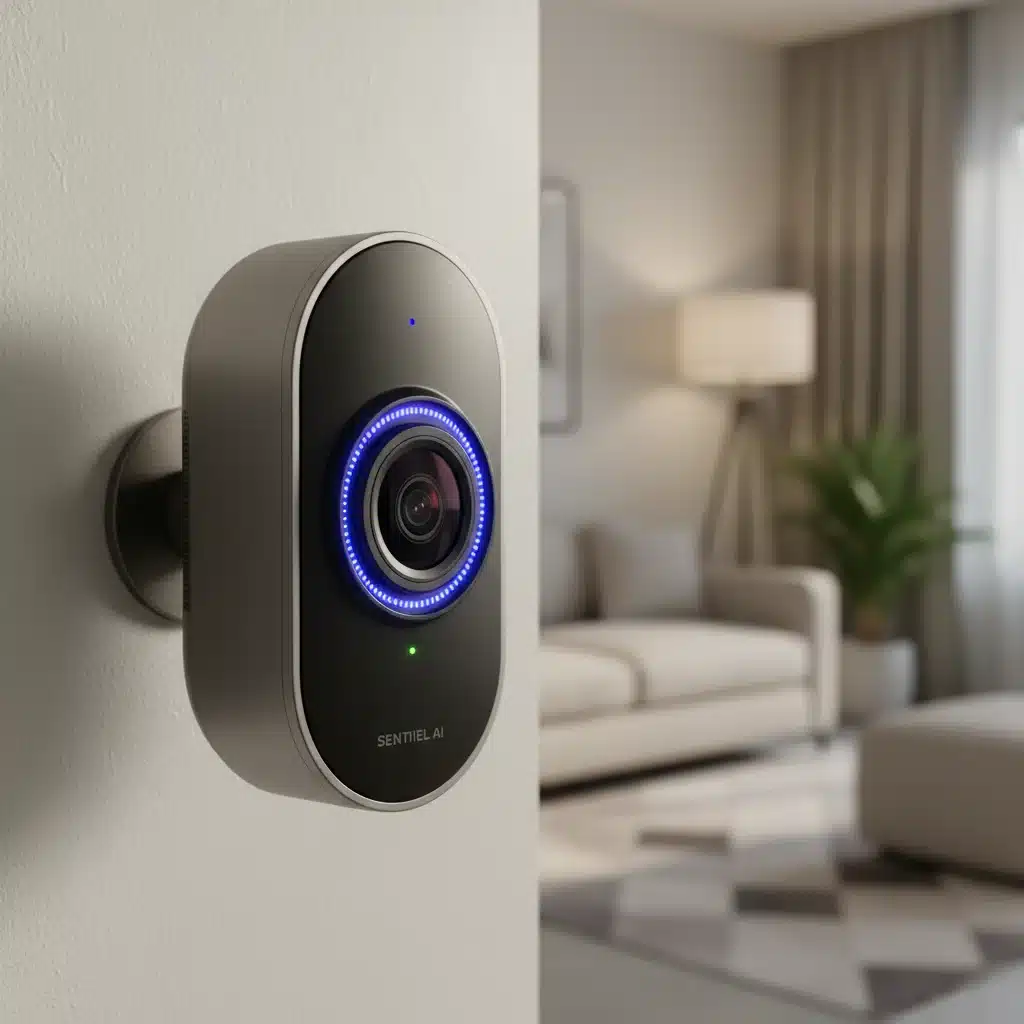
Arlo, renowned for its industry-leading wireless cameras, has expanded its expertise into full-fledged security systems. The Arlo Security System leverages its superior camera technology as the backbone of its offering, making it an ideal choice for consumers for whom video surveillance is paramount in their Smart Home Security 2026 setup.
Key Features for 2026:
- Award-Winning Cameras: Integration with Arlo’s 4K HDR cameras, featuring color night vision, integrated spotlights, and two-way audio, providing unparalleled visual clarity.
- All-in-One Sensor: Arlo’s innovative multi-sensor detects motion, sound, door/window openings, temperature, smoke/CO alarm sounds, and even water leaks, consolidating multiple functions into one compact device.
- Integrated Siren and Keypad: The system includes a powerful siren to deter intruders and a user-friendly keypad for arming/disarming.
- AI Object Detection: Advanced AI identifies people, vehicles, animals, and packages, sending precise alerts and reducing unnecessary notifications.
- Optional Professional Monitoring: While strong for self-monitoring, Arlo offers optional 24/7 professional monitoring plans for added peace of mind.
- Cloud and Local Storage Options: Flexible storage solutions for video recordings, including cloud subscription plans and local storage via the Arlo SmartHub.
Pros:
- Exceptional video quality and camera features.
- Innovative multi-sensor reduces clutter and enhances detection.
- Flexible self-monitoring or professional monitoring options.
- Strong focus on privacy and data encryption.
Cons:
- Can be one of the more expensive systems, especially with multiple cameras.
- Optimal performance often requires an Arlo Secure subscription.
- Battery life of wireless cameras needs occasional recharging.
5. Wyze Home Monitoring: Budget-Friendly Innovation
Wyze has carved a niche for itself by offering high-quality smart home devices at incredibly affordable prices. The Wyze Home Monitoring system extends this philosophy to security, providing a robust, budget-friendly option for Smart Home Security 2026 without skimping on essential features. It’s an excellent entry point for smart home security.
Key Features for 2026:
- Affordable Professional Monitoring: One of the most competitively priced 24/7 professional monitoring services available, making security accessible to more homeowners.
- Wyze Sense Hub: The central hub connects all Wyze sensors and offers a backup battery and cellular connectivity.
- Variety of Sensors: Includes entry sensors, motion sensors, and a keypad, all designed for easy DIY installation.
- Seamless Wyze Ecosystem Integration: Works effortlessly with Wyze cameras (Wyze Cam v3, Pan Cam), smart lights, smart plugs, and other Wyze devices, all managed through a single app.
- Person Detection and Cloud Storage: Wyze Cam Plus subscription enhances camera capabilities with person detection, package detection, and extended cloud storage.
- Voice Control: Compatibility with Amazon Alexa and Google Assistant for convenient voice commands.
Pros:
- Extremely affordable equipment and monitoring fees.
- Easy DIY installation and expansion.
- Excellent value for money, making smart security accessible.
- Strong integration within the Wyze smart home ecosystem.
Cons:
- Equipment might not feel as premium as higher-end systems.
- Advanced smart home integrations beyond Wyze ecosystem are limited.
- Reliance on Wyze Cam Plus for optimal camera features.
Choosing the Right Smart Home Security 2026 System for You
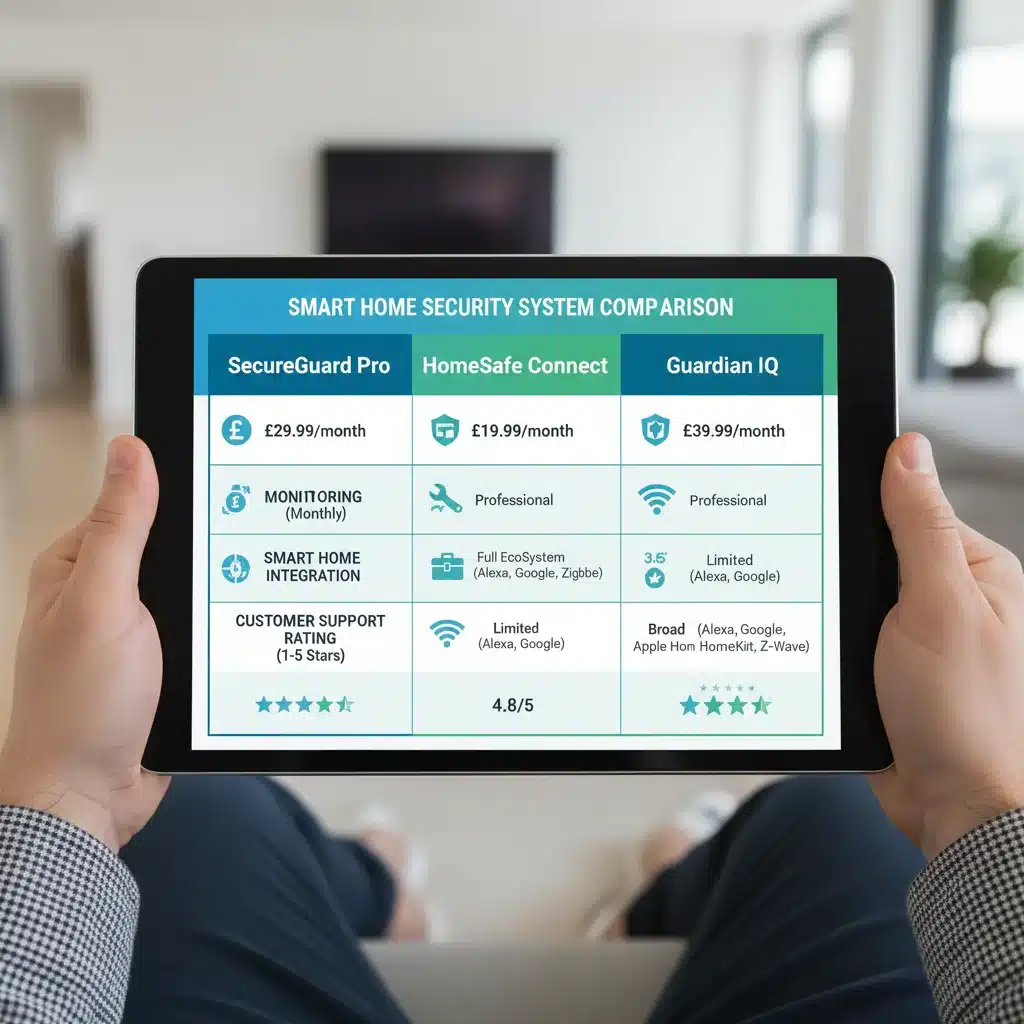
With these top 5 Smart Home Security 2026 systems in mind, how do you make the best choice for your United States home? Consider the following:
1. Your Budget:
- Upfront Costs: How much are you willing to spend on equipment? DIY systems like SimpliSafe and Wyze tend to have lower initial costs, while ADT involves professional installation fees.
- Monthly Monitoring Fees: These vary significantly. Wyze offers the most affordable professional monitoring, while ADT and Arlo (with professional monitoring) can be higher. Ring also offers competitive plans.
2. Installation Preference:
- DIY (Do-It-Yourself): SimpliSafe, Ring Alarm Pro, Arlo, and Wyze are designed for easy self-installation, saving you money and giving you control.
- Professional Installation: ADT specializes in professional installation, ensuring everything is set up correctly and optimized for your home.
3. Smart Home Ecosystem:
- Amazon Alexa Users: Ring Alarm Pro offers unparalleled integration.
- Google Assistant Users: Most systems offer good integration, but ADT and SimpliSafe are strong contenders.
- Apple HomeKit Users: Integration is still evolving across the board, but some systems are making strides.
- Existing Smart Devices: Consider how well the security system will integrate with your current smart locks, thermostats, and lighting.
4. Specific Security Needs:
- Video Surveillance: If high-quality cameras are your priority, Arlo is a clear winner. Ring also offers a robust camera lineup.
- Environmental Monitoring: Most systems offer smoke/CO and water leak detection, but SimpliSafe and ADT have comprehensive options.
- Network Security: Ring Alarm Pro’s integrated eero router is a unique advantage for network protection.
5. Privacy and Data Security:
Always review the privacy policies of any security provider. Look for systems that offer local storage options (like Ring and Arlo) and prioritize end-to-end encryption for data transmission.
Conclusion: Securing Your Future with Smart Home Security 2026
The landscape of Smart Home Security 2026 is dynamic and exciting, offering unprecedented levels of protection and convenience for United States consumers. Whether you’re a DIY enthusiast looking for flexibility, an Amazon loyalist seeking deep ecosystem integration, or someone who prefers the peace of mind of professional installation and monitoring, there’s a top-tier system designed for you.
SimpliSafe continues to impress with its balance of ease-of-use and robust monitoring. Ring Alarm Pro leverages Amazon’s formidable ecosystem to offer a unique blend of security and network protection. ADT Command remains the gold standard for professional, comprehensive service. Arlo excels with its superior video capabilities and innovative multi-sensor technology. And Wyze Home Monitoring makes smart security incredibly accessible without sacrificing essential features.
As you evaluate your options, remember to weigh the equipment costs, monthly fees, installation preferences, and how each system aligns with your existing smart home setup and specific security priorities. Investing in a leading Smart Home Security 2026 system is not just about protecting your property; it’s about embracing a smarter, safer, and more connected lifestyle for years to come.
Stay informed, stay secure, and make an educated decision that brings you ultimate peace of mind in your connected home.