Augmented Reality Shopping Experiences: What 3 Major Retailers are Doing Differently in 2026
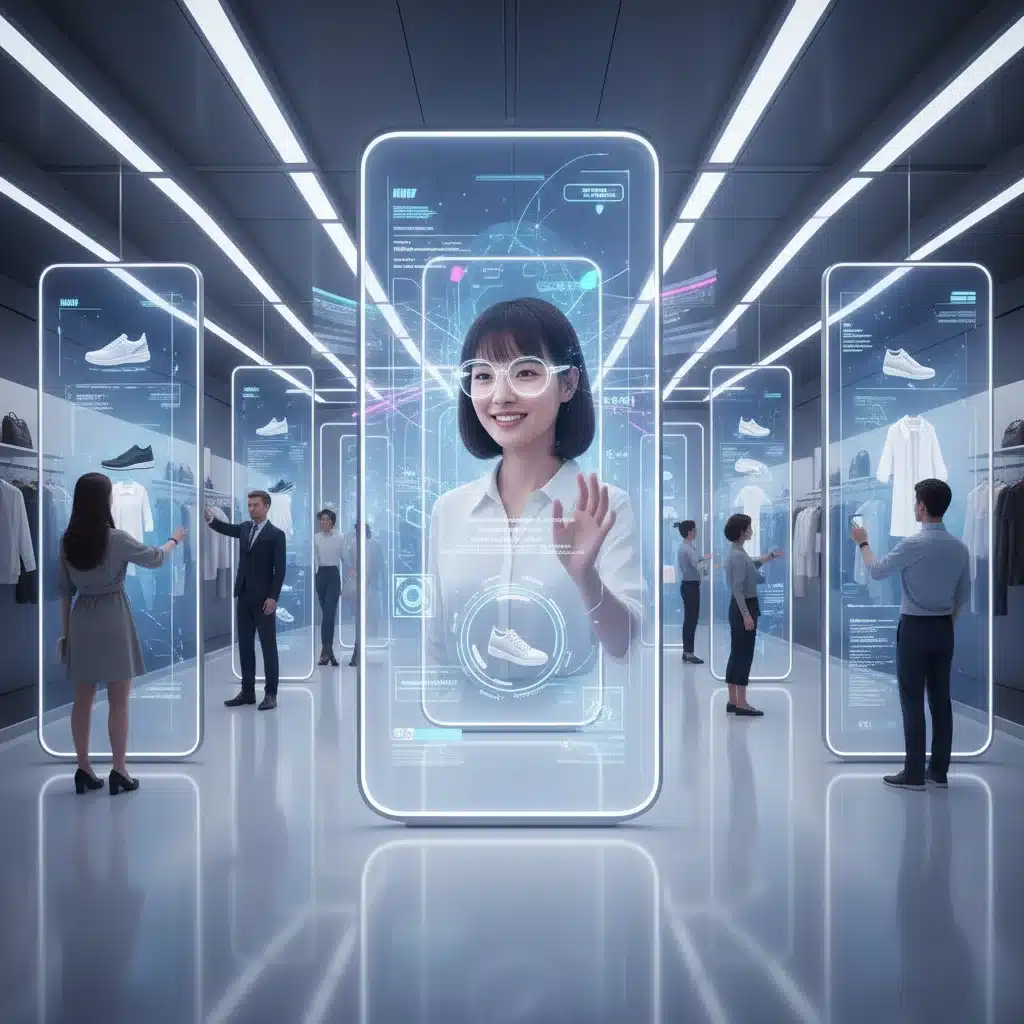
The retail landscape is constantly evolving, driven by technological advancements and shifting consumer expectations. In 2026, one technology stands out as a true game-changer: Augmented Reality (AR). Far from being a mere gimmick, AR is now deeply integrated into the strategies of forward-thinking retailers, offering immersive, personalized, and highly engaging AR retail experiences. This isn’t just about trying on clothes virtually; it’s about transforming every facet of the shopping journey, from product discovery to post-purchase engagement.
As we delve into what three major retailers are doing differently in 2026, it becomes clear that AR is no longer an optional extra but a cornerstone of competitive advantage. These companies are not just adopting AR; they are innovating with it, pushing the boundaries of what’s possible and setting new benchmarks for customer satisfaction and operational efficiency. Their approaches highlight the versatility of AR, demonstrating its power across various retail sectors and consumer touchpoints.
The imperative for retailers to embrace AR stems from several key factors. Firstly, today’s consumers, particularly younger generations, expect seamless integration of digital tools into their physical world. They seek convenience, personalization, and entertainment in their shopping journeys. Secondly, AR addresses critical pain points in traditional retail, such as uncertainty about product fit, difficulty visualizing items in context, and the static nature of online catalogs. By bridging the gap between the digital and physical, AR empowers shoppers with confidence and enriches their decision-making process. Finally, for retailers, AR offers unprecedented opportunities to gather rich data on consumer preferences, optimize inventory, reduce returns, and ultimately, drive sales growth and brand loyalty.
This article will explore the innovative AR strategies of three prominent retailers, dissecting their unique implementations, the benefits they reap, and the lessons others can learn. We will examine how these leaders are not just adapting to the future but actively shaping it, proving that the future of retail is, without a doubt, augmented.
The Rise of Immersive AR Retail Experiences
Augmented Reality has moved beyond its early experimental phases to become a sophisticated tool for enhancing customer engagement. In 2026, retailers are no longer just experimenting with AR; they are building entire ecosystems around it. This evolution is driven by more powerful mobile devices, advanced AR development kits, and a growing consumer appetite for interactive digital content. The core idea behind these AR retail experiences is to overlay digital information onto the real world, creating a blended reality that offers unprecedented levels of interaction and personalization.
Consider the traditional shopping experience: limited product views, static images, and the inability to truly understand how an item will look or fit without physically trying it on. AR shatters these limitations. Shoppers can now virtually try on clothing, visualize furniture in their homes, test makeup shades on their faces, or even explore the intricate mechanics of a product before purchase. This capability not only reduces buyer’s remorse and returns but also transforms the act of shopping into an engaging, almost playful activity.
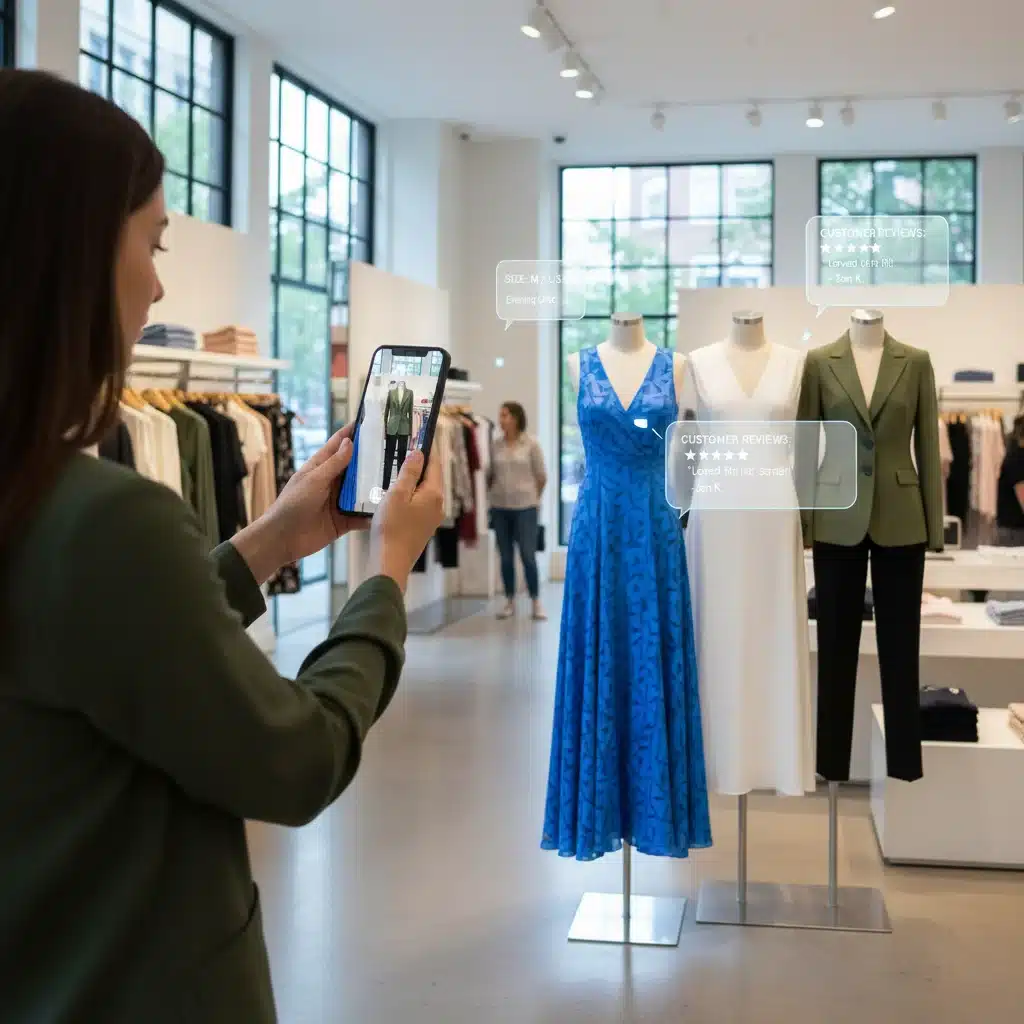
Moreover, the integration of AR extends beyond individual product interaction. Retailers are using AR to create immersive in-store experiences, guiding customers to specific products, providing instant access to reviews and specifications, and even offering personalized recommendations based on their shopping history and preferences. This fusion of the physical and digital creates a seamless journey that caters to the modern consumer’s desire for efficiency and entertainment.
The data collected from these AR interactions is invaluable. Retailers can gain deep insights into customer preferences, popular product features, and even the effectiveness of different virtual placements. This data fuels further personalization, allowing for more targeted marketing campaigns and product development. The continuous feedback loop between customer interaction and data analysis ensures that AR retail experiences are constantly refined and optimized, leading to higher conversion rates and stronger customer loyalty.
The technological backbone supporting these advanced AR applications includes sophisticated computer vision algorithms, real-time 3D rendering, and robust cloud infrastructure. These elements work in concert to deliver a smooth, realistic, and low-latency AR experience, crucial for maintaining user immersion and satisfaction. As these technologies continue to mature, the possibilities for AR in retail will only expand, promising an even more exciting future for shoppers and businesses alike.
Retailer 1: "VirtuFit Apparel" – Revolutionizing Fashion Try-Ons
VirtuFit Apparel, a global fashion giant, has taken the lead in 2026 by completely overhauling the clothing try-on experience using advanced AR. Their "MirrorMe" AR platform is not just a virtual fitting room; it’s a comprehensive styling assistant that has dramatically boosted online sales and reduced return rates. VirtuFit’s strategy centers on hyper-realistic 3D garment rendering and sophisticated body-tracking technology, making their AR retail experiences unparalleled in the fashion industry.
The "MirrorMe" Experience:
- Hyper-Realistic Virtual Try-On: Unlike earlier AR try-on apps that offered flat overlays, MirrorMe uses photorealistic 3D models of clothing that drape and move naturally on a customer’s live video feed. This is achieved through advanced fabric simulation algorithms that account for material properties like elasticity, sheerness, and texture. Customers can see how a dress flows, how a jacket fits across the shoulders, and even how different fabrics react to light.
- Personalized Avatar Creation: Upon first use, customers create a detailed 3D avatar of themselves by scanning their body using their smartphone camera. This avatar captures precise measurements and body shape, ensuring that virtual garments are rendered with an accurate fit. This personalized approach addresses a major pain point in online clothing shopping: uncertainty about sizing.
- AI-Powered Styling Recommendations: MirrorMe integrates an AI stylist that analyzes a customer’s existing wardrobe (uploaded via photos), their purchase history, and even current fashion trends to suggest complementary pieces. This extends beyond individual items, offering complete outfit suggestions and accessories, enhancing the cross-selling potential significantly.
- Social Sharing and Feedback: Users can easily share their virtual try-ons with friends and family for instant feedback, integrating a social commerce element into the AR experience. This peer validation further boosts confidence in purchasing decisions.
- In-Store Integration: Physical VirtuFit stores are equipped with large "Magic Mirrors" that offer the same MirrorMe functionality, allowing in-store shoppers to quickly try on numerous outfits without the hassle of changing rooms. This hybrid approach seamlessly blends the digital and physical shopping worlds.
Impact and Benefits:
VirtuFit Apparel reports a 35% reduction in clothing returns directly attributed to the MirrorMe platform. Online conversion rates have seen a 20% increase, as customers feel more confident in their purchases. The average order value has also risen due to the AI-powered styling recommendations encouraging multi-item purchases. Furthermore, the platform provides VirtuFit with invaluable data on customer preferences, popular styles, and fit issues, informing future design and inventory management. This innovative use of AR retail experiences has solidified VirtuFit’s position as a leader in fashion technology.
Retailer 2: "HomeSpace Furnishings" – Visualizing Home Decor
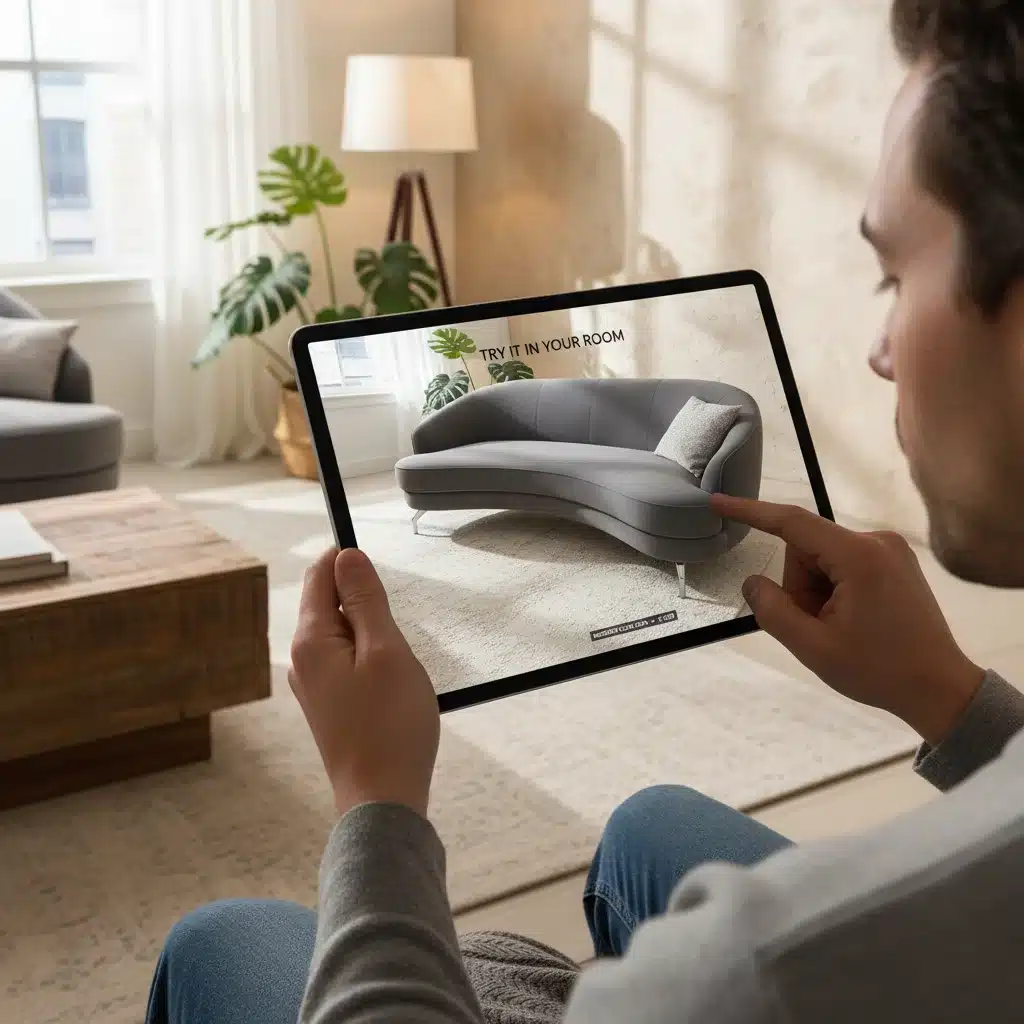
HomeSpace Furnishings, a prominent home goods retailer, has transformed the furniture and decor shopping experience with their "PlaceIt" AR application. Their focus in 2026 is on helping customers visualize products in their own living spaces with unprecedented accuracy, eliminating the guesswork and buyer’s remorse often associated with large purchases. HomeSpace’s AR retail experiences leverage precise spatial mapping and realistic material rendering.
The "PlaceIt" Application:
- True-to-Scale 3D Models: PlaceIt allows customers to virtually place true-to-scale 3D models of furniture, rugs, and decor items into their homes using their smartphone or tablet camera. The models are meticulously crafted to reflect accurate dimensions, textures, and colors, ensuring that what customers see on screen is what they get in reality.
- Environmental Integration: Advanced AR algorithms enable the virtual furniture to interact realistically with the existing environment. This includes accurate shadow casting based on the room’s lighting, occlusion (where virtual objects correctly appear behind real ones), and even reflections on shiny surfaces. This level of realism significantly enhances the immersion and decision-making process.
- Multi-Product Arrangement: Customers can arrange multiple virtual items simultaneously, allowing them to design entire rooms or test different layouts before committing to a purchase. This feature encourages larger purchases and helps customers create cohesive interior designs.
- Material and Color Swapping: Within the AR view, users can instantly swap materials, fabrics, and colors of a chosen item, seeing how a different upholstery or wood finish would look in their space without having to visit a showroom or order swatches.
- Design Collaboration: PlaceIt includes a feature that allows users to share their AR room designs with others, inviting feedback or even enabling collaborative design sessions with friends, family, or professional interior designers.
Impact and Benefits:
HomeSpace Furnishings has reported a substantial 40% decrease in furniture returns, a notoriously costly issue in the industry, since implementing PlaceIt. Customer satisfaction scores related to product accuracy and expectation matching have soared. The ability to "try before you buy" has led to a 25% increase in conversion rates for high-value items, as customers feel more confident in their purchases. Furthermore, the application has become a powerful marketing tool, engaging customers long before they even consider visiting a physical store. These AR retail experiences have positioned HomeSpace as an innovator in the home furnishings market.
Retailer 3: "TechConnect" – Interactive Product Exploration and Support
TechConnect, a leading consumer electronics retailer, has harnessed AR to revolutionize product exploration, comparison, and even post-purchase support in 2026. Their "ExploreTech" AR platform provides an unprecedented level of detail and interactivity, addressing the complexity of modern electronics. TechConnect’s AR retail experiences are designed to educate and empower customers throughout their entire product lifecycle.
The "ExploreTech" Platform:
- Interactive 3D Product Breakdowns: Customers can use ExploreTech to view virtual 3D models of electronics, from smartphones to complex home theater systems, and then "disassemble" them virtually. They can explore internal components, understand how different parts work together, and even see animations of features in action. This is particularly useful for explaining intricate technological specifications in an engaging way.
- Comparative AR Overlays: When browsing in-store or online, customers can point their device at two different products and see an AR overlay that highlights key differences, specifications, and customer reviews side-by-side. This instant comparison feature simplifies complex purchasing decisions.
- Virtual "How-To" Guides and Troubleshooting: Post-purchase, ExploreTech becomes an invaluable support tool. Users can point their camera at a newly purchased device, and AR overlays provide step-by-step setup instructions, troubleshooting tips, and even highlight specific buttons or ports for easy identification. This reduces calls to customer service and improves user satisfaction.
- Personalized Accessory Recommendations: Based on the device being viewed or owned, the AR app suggests compatible accessories (cases, chargers, peripherals) and allows customers to virtually test their fit or appearance before purchase.
- Gamified Learning: For more complex products, TechConnect has integrated gamified AR experiences that teach users about features and functionalities through interactive challenges and rewards, making the learning process enjoyable and effective.
Impact and Benefits:
TechConnect has reported a significant improvement in customer understanding of complex products, leading to a 15% increase in sales of higher-margin, feature-rich electronics. Post-purchase, the AR-powered troubleshooting guides have resulted in a 20% reduction in customer support inquiries related to setup and basic operation. The interactive nature of ExploreTech has also boosted customer engagement, with users spending more time exploring products both online and in-store. These innovative AR retail experiences have cemented TechConnect’s reputation as a tech-savvy and customer-centric retailer.
The Broader Implications for Retail in 2026
The strategies employed by VirtuFit Apparel, HomeSpace Furnishings, and TechConnect underscore a fundamental shift in retail. AR is not merely a tool for novelty; it’s a strategic imperative that addresses core business challenges and unlocks new opportunities. The common threads weaving through these success stories include:
- Enhanced Personalization: AR enables tailored experiences, whether it’s a personalized avatar for clothing or a virtual placement of furniture in a unique home environment. This level of personalization resonates deeply with modern consumers.
- Reduced Uncertainty and Returns: By allowing customers to visualize products accurately in their own context, AR significantly mitigates the risk of buyer’s remorse, leading to fewer returns and happier customers.
- Increased Engagement and Conversion: Interactive AR retail experiences transform passive browsing into active engagement, making shopping more enjoyable and leading to higher conversion rates across both online and physical channels.
- Rich Data Insights: Every AR interaction generates valuable data on customer preferences, product appeal, and usage patterns, which can be leveraged for better inventory management, product development, and targeted marketing.
- Seamless Omnichannel Integration: The most successful AR implementations bridge the gap between online and offline shopping, offering consistent and continuous experiences that cater to how modern consumers move between different touchpoints.
Looking ahead, the widespread adoption of 5G networks and advancements in spatial computing will further enhance the capabilities of AR in retail. We can expect even more sophisticated real-time rendering, multi-user AR experiences where friends can shop together virtually, and AR glasses becoming a common device for hands-free shopping assistance. The integration of AI with AR will also lead to more intelligent and predictive shopping assistants, offering proactive recommendations and anticipating customer needs before they are even articulated.
Challenges and Future Outlook for AR in Retail
While the benefits of AR in retail are compelling, its widespread adoption is not without challenges. These include the cost of developing and maintaining high-quality 3D models and AR applications, ensuring seamless user experience across diverse devices, and educating consumers on how to effectively utilize AR tools. Data privacy and security also remain paramount concerns as more personal information is processed through these interactive platforms.
However, the rapid pace of technological innovation suggests that these hurdles are being overcome. The emergence of more accessible AR development platforms, standardized 3D asset formats, and increasingly powerful, yet affordable, consumer devices will democratize AR technology. As consumers become more accustomed to AR retail experiences in various aspects of their lives, their expectations will drive further investment and innovation from retailers.
The future of retail is undeniably intertwined with augmented reality. Retailers who embrace this technology not only gain a competitive edge but also build stronger, more meaningful relationships with their customers. By offering immersive, personalized, and problem-solving AR solutions, they are transforming shopping from a transactional activity into an enriching and enjoyable experience. The examples of VirtuFit Apparel, HomeSpace Furnishings, and TechConnect in 2026 serve as powerful blueprints for success in this augmented future.
Conclusion: The Augmented Future is Now
The year 2026 marks a pivotal moment in retail, where Augmented Reality has transcended its novelty status to become an indispensable tool for enhancing customer journeys and driving business growth. As demonstrated by VirtuFit Apparel’s hyper-realistic virtual try-ons, HomeSpace Furnishings’ precise home visualization, and TechConnect’s interactive product exploration, the potential of AR to revolutionize shopping is immense.
These leading retailers are not just adopting technology; they are strategically integrating AR to solve real customer pain points, reduce operational inefficiencies, and foster deeper engagement. Their success stories highlight that the future of retail is dynamic, personalized, and inherently interactive. For any retailer looking to thrive in an increasingly competitive market, understanding and implementing robust AR retail experiences is no longer an option, but a necessity.
As AR technology continues to mature, becoming more accessible and sophisticated, we can anticipate an even richer tapestry of augmented shopping experiences. From smart mirrors in fitting rooms to virtual showrooms accessible from anywhere, the line between physical and digital retail will continue to blur, creating a seamless, immersive, and highly personalized shopping universe. The augmented future is not just coming; it is already here, being shaped by the visionary efforts of today’s retail innovators.