Home Networking 2026: Achieving 100% WiFi Coverage & Faster Speeds with Mesh Systems

Home Networking in 2026: Achieving 100% Coverage and Faster Speeds with Mesh WiFi Systems
The year 2026 is upon us, and with it comes an ever-increasing demand for robust, reliable, and lightning-fast home internet. Gone are the days when a single router tucked away in a corner could suffice for an entire household. Today, our homes are teeming with smart devices, from 4K streaming TVs and gaming consoles to smart thermostats, security cameras, and even smart appliances. This proliferation of connected gadgets has put immense pressure on traditional home networking setups, often leading to frustrating dead zones, dropped connections, and sluggish speeds. The solution? Home Mesh WiFi systems, which have emerged as the undisputed champions of modern home networking, promising nothing less than 100% coverage and significantly faster speeds across every inch of your living space.
This comprehensive guide will delve deep into the world of Home Mesh WiFi in 2026, exploring why these systems are not just a luxury but a necessity for the contemporary home. We’ll uncover the technology behind their superior performance, discuss the key features to look for, and provide practical advice on how to optimize your setup for an unparalleled internet experience. Prepare to revolutionize your home connectivity and banish those WiFi woes forever.
The Evolution of Home Networking: Why Traditional Routers Fall Short
For decades, the standard home network consisted of a single wireless router acting as the central hub. While effective for smaller spaces and fewer devices, this architecture has several inherent limitations that become glaringly obvious in larger homes or those with multiple floors and thick walls. The primary culprit is signal degradation. WiFi signals, like any radio waves, weaken as they travel through physical obstructions. Walls, floors, and even large pieces of furniture can absorb or reflect these signals, creating ‘dead zones’ where connectivity is weak or non-existent.
Furthermore, traditional routers often struggle with client capacity. Each connected device demands a share of the router’s resources. As the number of devices grows, the router can become overwhelmed, leading to network congestion and a noticeable drop in speed for all users. This is particularly problematic in 2026, where a typical household might have dozens of active devices simultaneously streaming, gaming, working remotely, and interacting with smart home ecosystems.
Another significant drawback is the limited range of a single router. Even the most powerful standalone routers have a finite reach. Extending coverage often involved using WiFi extenders, which, while seemingly a straightforward solution, came with their own set of problems. Extenders typically create separate networks, requiring devices to manually switch between them. More importantly, they often halve the available bandwidth, as they have to receive and re-transmit data on the same channel, effectively slowing down your connection. This fragmented and often slower experience is a far cry from the seamless, high-speed connectivity that modern homes demand.
What is Home Mesh WiFi and How Does It Work?
Home Mesh WiFi systems represent a paradigm shift in home networking. Instead of a single router, a mesh system comprises multiple interconnected devices, often referred to as ‘nodes’ or ‘satellites.’ One node acts as the main router, connecting directly to your modem, while the other nodes are strategically placed throughout your home. These nodes communicate with each other wirelessly, forming a single, unified network that blankets your entire living space with a strong, consistent WiFi signal.
The core principle behind mesh technology is its intelligent distribution of the WiFi signal. Unlike extenders, which simply repeat a signal, mesh nodes actively collaborate to create a robust and resilient network. They use advanced routing algorithms to determine the best path for data transmission, dynamically switching frequencies and channels to avoid interference and ensure optimal performance. This means your devices automatically connect to the nearest and strongest mesh node, without you ever having to manually switch networks or experience any drop in connectivity.
One of the most significant advantages of Home Mesh WiFi is the creation of a single network name (SSID). Your devices perceive the entire mesh system as one continuous network, allowing them to roam seamlessly from one area of your home to another without losing connection. This ‘seamless roaming’ is crucial for applications like video calls, online gaming, and streaming, where even momentary interruptions can be highly disruptive.
Key Technologies Driving Home Mesh WiFi in 2026
The advancements in Home Mesh WiFi systems by 2026 are built upon several foundational technologies that enhance speed, coverage, and reliability:
WiFi 6 (802.11ax) and WiFi 6E
WiFi 6, also known as 802.11ax, has become the standard for modern mesh systems. It brings significant improvements in efficiency and speed, especially in environments with many connected devices. Key features include OFDMA (Orthogonal Frequency-Division Multiple Access) and MU-MIMO (Multi-User Multiple-Input, Multiple-Output), which allow the router to communicate with multiple devices simultaneously, rather than sequentially. This dramatically reduces latency and increases throughput.
WiFi 6E takes this a step further by introducing the 6 GHz band. This brand-new frequency band is free from the congestion that often plagues the 2.4 GHz and 5 GHz bands, offering wider channels and significantly faster speeds with lower latency. For Home Mesh WiFi, the 6 GHz band is a game-changer, providing a dedicated, super-fast ‘backhaul’ connection between mesh nodes, ensuring that the main internet speed is efficiently distributed throughout the entire system without bottlenecks. This dedicated backhaul is critical for maintaining high speeds even at the edges of your network.
Tri-Band and Quad-Band Systems
Most advanced Home Mesh WiFi systems in 2026 are at least tri-band, meaning they operate on one 2.4 GHz band and two 5 GHz bands. One of these 5 GHz bands is often dedicated to the ‘backhaul’ communication between the mesh nodes, leaving the other bands free for client devices. With WiFi 6E, quad-band systems are becoming more prevalent, adding the 6 GHz band for an even more robust and faster backhaul, further enhancing the overall performance and ensuring that your devices always have access to the fastest possible connection.
Smart Roaming and Band Steering
Modern mesh systems incorporate intelligent features like smart roaming and band steering. Smart roaming ensures that your devices automatically connect to the strongest available mesh node as you move around your home, preventing dropped connections. Band steering, on the other hand, intelligently directs devices to the optimal frequency band (2.4 GHz, 5 GHz, or 6 GHz) based on their capabilities and network conditions, optimizing performance for each device.
Benefits of Home Mesh WiFi for the Modern Household
The advantages of adopting a Home Mesh WiFi system in 2026 are manifold and directly address the challenges of contemporary digital living:
100% Coverage, Eliminating Dead Zones
This is arguably the most compelling benefit. By strategically placing multiple nodes, a mesh system can effectively eliminate WiFi dead zones, ensuring a strong and stable signal in every room, including basements, attics, and outdoor areas like patios or gardens. No more struggling for a signal in your bedroom or experiencing buffering during a video call from your home office.
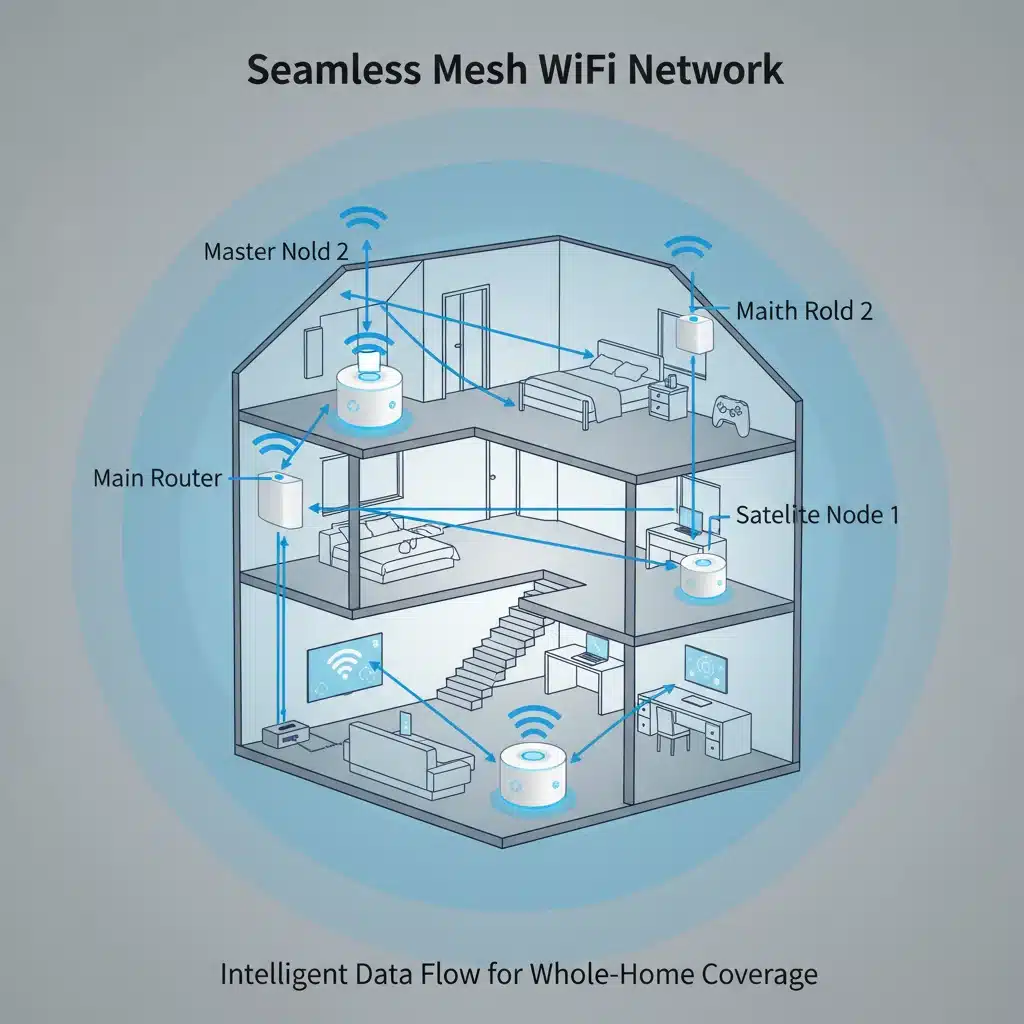
The distributed nature of mesh networks means that the signal strength is far more consistent across your property. Each node acts as a relay, extending the reach of the primary internet connection. This is particularly beneficial for larger homes or those with complex layouts where a single router simply cannot penetrate all areas effectively. The goal of 100% coverage is not just an aspiration but a tangible reality with a well-configured Home Mesh WiFi system.
Faster and More Consistent Speeds
Thanks to technologies like WiFi 6E and dedicated backhaul channels, Home Mesh WiFi systems deliver significantly faster speeds across your entire network. This means faster downloads, smoother 4K/8K streaming, lag-free online gaming, and more efficient remote work. The intelligent routing and load balancing capabilities of mesh networks ensure that bandwidth is optimally distributed among all connected devices, preventing any single device from monopolizing network resources.
The consistency of speed is just as important as the raw speed itself. With traditional setups, speeds often fluctuate wildly depending on your proximity to the router. Mesh systems, by providing multiple access points, ensure that you maintain high speeds regardless of where you are in your home. This reliability is critical for applications that demand constant, high-bandwidth connections.
Seamless Roaming and Single Network Experience
As discussed, the single SSID and seamless roaming capabilities of mesh systems provide an uninterrupted online experience. You can move from your living room to your kitchen, then to your backyard, all while staying connected to the same network without any manual intervention or noticeable drops in performance. This is invaluable for smart homes where devices need to communicate constantly and for users who are always on the go within their property.
Enhanced Capacity for Multiple Devices
With the average household in 2026 boasting an ever-growing number of smart devices, the ability of Home Mesh WiFi to handle multiple connections simultaneously is crucial. WiFi 6 and 6E technologies are specifically designed to improve network efficiency in dense environments, ensuring that every device, from your smart doorbell to your gaming PC, gets the bandwidth it needs without compromising the performance of others.
Simplified Setup and Management
Despite their advanced technology, most Home Mesh WiFi systems are remarkably easy to set up and manage. They typically come with intuitive mobile apps that guide you through the installation process, help you find optimal node placement, and allow you to monitor your network, manage parental controls, create guest networks, and prioritize devices with just a few taps. This user-friendly approach makes advanced networking accessible to everyone.
Scalability and Flexibility
Mesh systems are inherently scalable. If you move to a larger home or find that you need more coverage in a specific area, you can easily add more mesh nodes to your existing system. This flexibility ensures that your network can grow and adapt to your changing needs, making it a future-proof investment.
Choosing the Right Home Mesh WiFi System in 2026
With a plethora of Home Mesh WiFi systems available in 2026, selecting the right one can seem daunting. Here are key factors to consider:
1. WiFi Standard: WiFi 6 or WiFi 6E?
For future-proofing and optimal performance, especially if you have a multi-gigabit internet connection or many devices, a WiFi 6E system is highly recommended. The 6 GHz band offers unparalleled speed and low latency, making it ideal for the backhaul connection between nodes and for new, compatible client devices. If your budget is tighter and your internet speed is below gigabit, a robust WiFi 6 system can still offer excellent performance.
2. Number of Nodes Required
The number of nodes you need depends on the size and layout of your home. Most manufacturers provide guidelines based on square footage. For example, a 2-pack might be suitable for up to 3,000 sq ft, while a 3-pack could cover up to 5,000-6,000 sq ft. Consider factors like multiple floors, thick walls, and the presence of signal-blocking materials (e.g., concrete) when estimating. It’s often better to have one more node than you think you need to ensure truly 100% coverage.
3. Tri-Band vs. Quad-Band
As mentioned, tri-band systems are good, but quad-band systems (with WiFi 6E) offer a dedicated 6 GHz band for backhaul, which significantly improves overall network efficiency and speed, particularly in larger homes or those with high bandwidth demands. If performance is paramount, lean towards quad-band.
4. Ethernet Ports
While mesh systems are primarily wireless, having a good number of Ethernet ports on each node can be beneficial. These ports allow you to hardwire devices like gaming consoles, desktop PCs, or smart TVs for the most stable and fastest connection, reducing wireless congestion. Some nodes might also offer multi-gigabit Ethernet ports for incredibly fast wired connections.
5. Advanced Features and Software
Look for systems with robust mobile apps that offer intuitive control over your network. Features like advanced parental controls, network security (e.g., built-in antivirus/malware protection), QoS (Quality of Service) for prioritizing traffic, and guest network creation are valuable additions. Some systems also offer advanced analytics and diagnostic tools.
6. Brand Reputation and Support
Stick with reputable brands known for their reliability, performance, and customer support. Reading reviews and comparing different models can provide valuable insights into real-world performance and user satisfaction.
Optimizing Your Home Mesh WiFi Setup for Peak Performance
Once you’ve chosen your Home Mesh WiFi system, a few optimization tips can help you achieve the absolute best performance:
Strategic Node Placement
This is crucial. Place the main router node where your internet service enters your home. Then, distribute the satellite nodes evenly throughout your home, ensuring that each node is within good signal range of at least one other node (ideally the main router). Avoid placing nodes behind large appliances, in closets, or near sources of interference like microwaves or cordless phones. The goal is to create overlapping coverage zones, not just extend the signal in a straight line. Many mesh apps offer tools to help you find optimal placement.
Firmware Updates
Regularly update the firmware on your mesh system. Manufacturers frequently release updates that improve performance, add new features, and patch security vulnerabilities. Most modern systems can be configured to update automatically.
Leverage Ethernet Backhaul (If Available)
If your home is wired with Ethernet, consider using an Ethernet cable to connect some of your mesh nodes to the main router node. This creates a wired backhaul, which is even faster and more reliable than a wireless backhaul, freeing up wireless bandwidth for your devices. This is particularly effective for nodes placed far from the main router or in areas with heavy network traffic.
Prioritize Critical Devices with QoS
Use the Quality of Service (QoS) settings in your mesh system’s app to prioritize bandwidth for critical devices or applications. For example, you can give higher priority to your work laptop during business hours or to your gaming console during peak gaming times, ensuring a smooth experience even when the network is busy.
Utilize Guest Networks
Create a separate guest network for visitors. This keeps your main network secure and prevents guests’ devices from potentially slowing down your primary network. Most mesh systems make this incredibly easy to set up and manage.
Minimize Interference
While mesh systems are designed to mitigate interference, it’s still good practice to minimize potential sources. Keep your mesh nodes away from other electronics that emit radio waves, such as microwaves, baby monitors, and older cordless phones.
The Future of Home Mesh WiFi Beyond 2026
As we look beyond 2026, the evolution of Home Mesh WiFi is set to continue at a rapid pace. We can anticipate even more sophisticated AI-driven network management, where systems will proactively learn your usage patterns, predict potential bottlenecks, and optimize performance in real-time without any manual intervention. Integration with smart home platforms will become even deeper, allowing for seamless control and automation of your entire connected ecosystem.
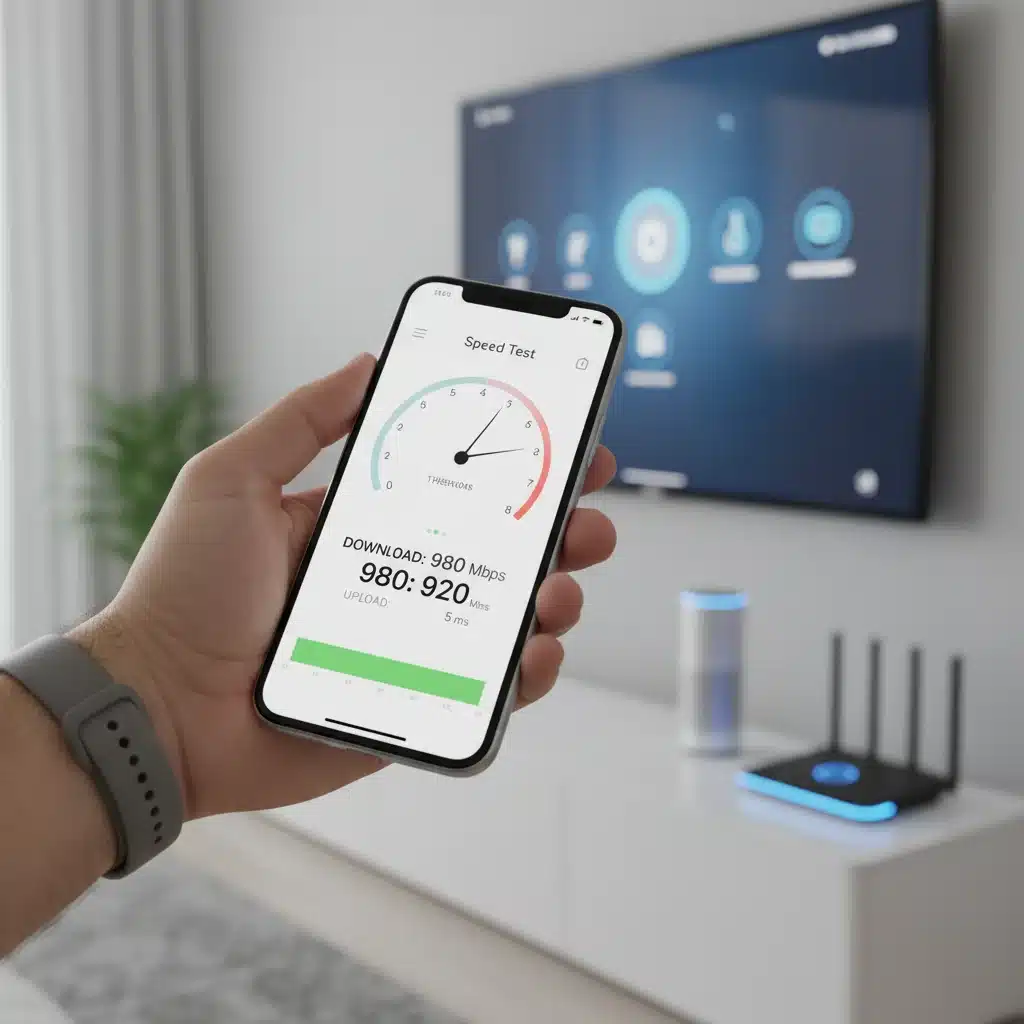
The advent of WiFi 7 (802.11be), also known as Ultra High Reliability (UHR), is on the horizon. This next-generation standard promises even greater speeds, lower latency, and enhanced capacity, pushing the boundaries of what’s possible with wireless connectivity. WiFi 7 will introduce features like Multi-Link Operation (MLO), which allows devices to simultaneously use multiple frequency bands (2.4 GHz, 5 GHz, and 6 GHz) to send and receive data, dramatically increasing throughput and reliability. This will further solidify the position of mesh systems as the backbone of the hyper-connected homes of tomorrow.
Security will also remain a paramount focus, with mesh systems incorporating ever more advanced threat detection, intrusion prevention, and privacy features to protect your digital life from evolving cyber threats. The seamless integration of security features directly into the network infrastructure will provide a robust first line of defense for all your connected devices.
Conclusion: Embrace the Power of Home Mesh WiFi
In 2026, Home Mesh WiFi systems are no longer a niche product but an essential component of any modern, connected household. They offer the definitive solution to the challenges of achieving 100% WiFi coverage and delivering faster, more consistent speeds across your entire property. By understanding the underlying technologies, choosing the right system for your needs, and optimizing its setup, you can transform your home networking experience from frustrating to flawless.
Invest in a quality Home Mesh WiFi system, and you’re not just buying a router; you’re investing in a future-proof foundation for your smart home, ensuring that every device, every stream, and every connection is as fast, reliable, and seamless as possible. Say goodbye to dead zones and buffering, and hello to a truly connected home where the internet works exactly as it should – everywhere, all the time.