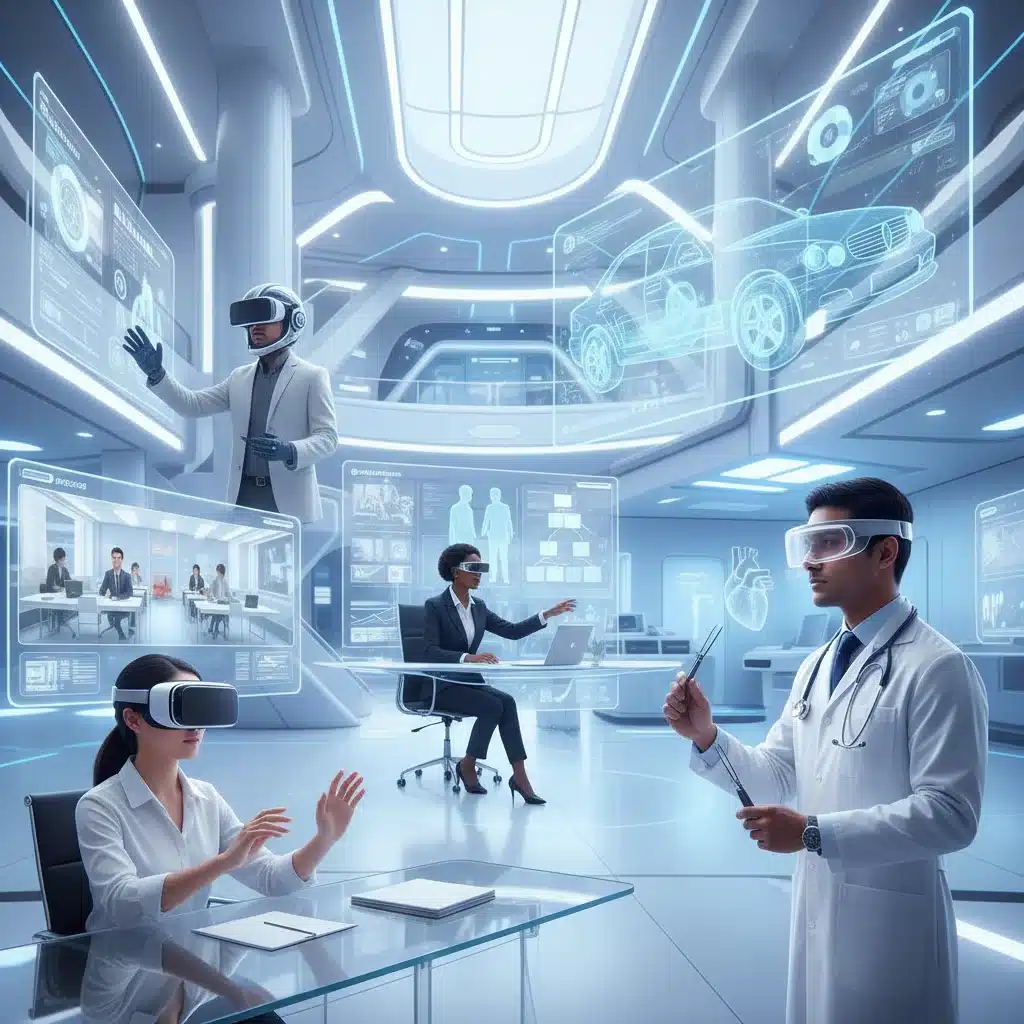
For many, the mention of Virtual Reality (VR) immediately conjures images of immersive gaming or futuristic sci-fi narratives. While VR has undoubtedly made significant strides in the entertainment sector, its true potential extends far beyond the realm of pixels and fantastical worlds. As we approach 2026, VR technology is maturing at an astonishing pace, shedding its novelty status to become a transformative tool across a multitude of industries. The evolution of VR hardware, coupled with sophisticated software development, is paving the way for practical applications that promise to redefine how we learn, work, heal, and create.
This article aims to peel back the layers of misconception surrounding VR, showcasing its burgeoning role as a utility rather than just a luxury. We will delve into four pivotal sectors where VR is not just making an impact, but actively revolutionizing methodologies and outcomes. From democratizing education to enhancing medical training, fostering seamless remote collaboration, and streamlining complex design processes, the practical applications of VR are vast and growing. Get ready to explore how this groundbreaking technology is shaping our everyday lives and preparing us for a future where the virtual and physical worlds seamlessly intertwine.
Understanding the current landscape of VR requires acknowledging its journey. Early iterations were often clunky, expensive, and limited in fidelity, restricting their widespread adoption. However, advancements in display technology, processing power, and haptic feedback have dramatically improved the user experience. Lighter, more affordable headsets, coupled with increasingly realistic virtual environments, have opened doors for developers to create compelling and truly useful applications. The focus has shifted from mere escapism to providing tangible benefits, addressing real-world challenges with innovative virtual solutions. This paradigm shift is what fuels the rapid integration of VR into critical areas of our society, making VR practical applications a hot topic for innovation and investment.
The year 2026 is not arbitrarily chosen; it represents a near-future horizon where current trends and technological roadmaps suggest a significant maturation and widespread adoption of these advanced VR functionalities. By then, many of the experimental projects we see today will have evolved into robust, commercially viable, and indispensable tools. This article will provide a forward-looking perspective, grounded in current technological capabilities and future projections, to illustrate the transformative power of VR.
Let’s embark on this journey to discover how virtual reality is stepping out of the shadows of gaming and into the spotlight of practical utility, fundamentally altering how we interact with information, each other, and the world around us. The future is not just virtual; it’s practically virtual, and it’s arriving sooner than you think.
Revolutionizing Education and Training with VR
One of the most profound and impactful VR practical applications lies within the realm of education and training. Traditional learning environments, while foundational, often struggle to provide truly immersive and experiential learning opportunities. VR, however, shatters these limitations, offering students and trainees unparalleled access to scenarios that would otherwise be impossible, dangerous, or prohibitively expensive to replicate in the real world.
Immersive Learning Experiences
Imagine a history student not just reading about ancient Rome, but walking through its streets, interacting with gladiators in the Colosseum, or witnessing a senatorial debate. Or a biology student dissecting a virtual frog repeatedly without ethical concerns or material costs. VR transforms passive learning into active exploration. By 2026, VR classrooms will be a reality, allowing students to embark on virtual field trips to distant galaxies, explore the human body at a cellular level, or even experiment with complex chemical reactions in a safe, controlled virtual lab.
This immersive quality significantly enhances engagement and retention. Studies have shown that experiential learning, where individuals actively participate in a simulated environment, leads to deeper understanding and better recall. VR provides precisely this, making abstract concepts concrete and distant realities accessible. The ability to manipulate virtual objects, receive immediate feedback, and repeat complex tasks until mastery is achieved makes VR an incredibly potent educational tool.
Advanced Vocational and Professional Training
Beyond traditional academic settings, VR is poised to revolutionize vocational and professional training across countless industries. Consider the complexities of training medical professionals, airline pilots, or heavy machinery operators. These fields demand practical experience in high-stakes environments, where mistakes can have severe consequences. VR offers a safe, repeatable, and scalable solution.
In healthcare, for instance, surgeons can practice intricate procedures hundreds of times in a virtual operating room, honing their skills without risk to actual patients. Nurses can train for emergency scenarios, responding to virtual patients with varying conditions, improving their decision-making under pressure. This translates to better-prepared professionals and, ultimately, improved patient outcomes. The detailed haptic feedback systems currently under development will further enhance this realism, allowing trainees to feel the resistance of tissue or the subtle vibrations of machinery.
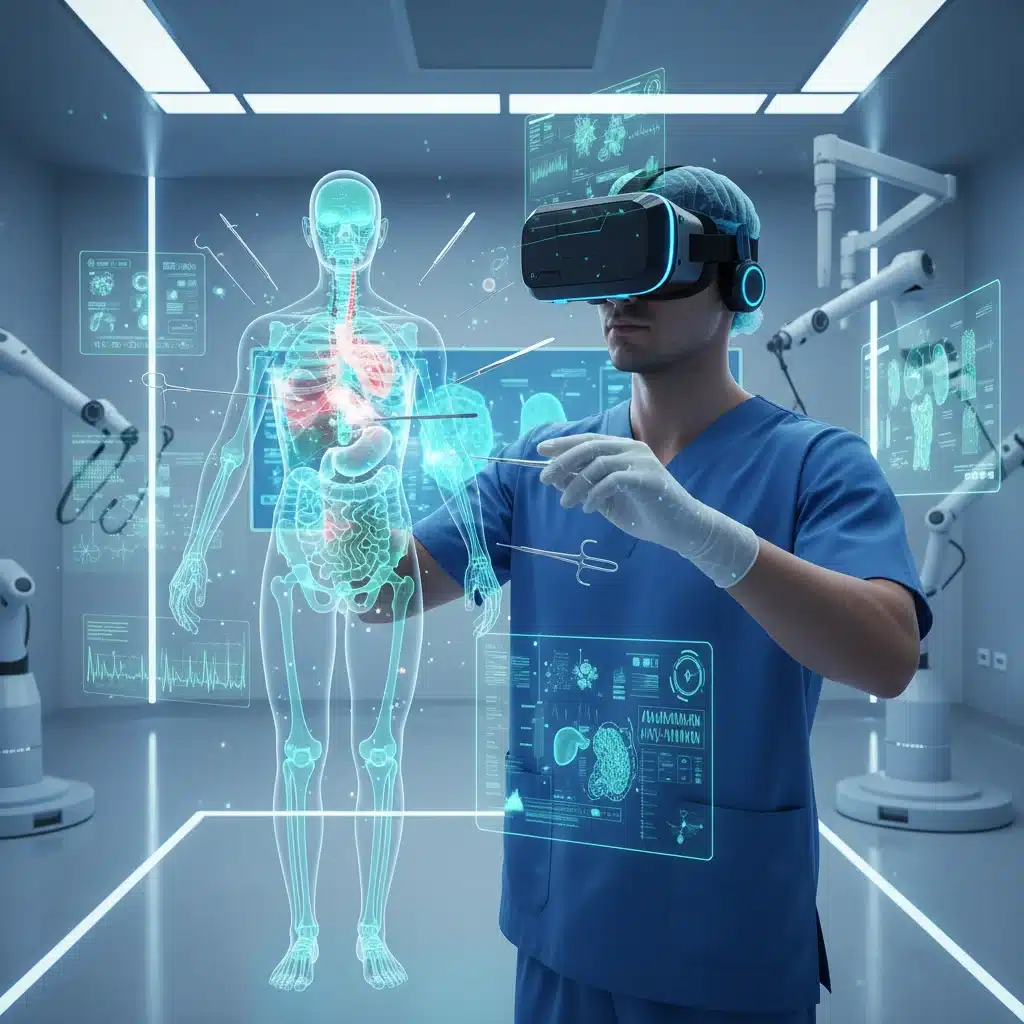
Similarly, in aviation, pilots can simulate various flight conditions, emergency landings, and system malfunctions, gaining invaluable experience without the immense costs and risks associated with real-world flight hours. Manufacturing workers can learn to operate complex machinery, practice assembly lines, or troubleshoot equipment in a virtual factory, reducing downtime and improving safety in physical plants. These are just a few examples of how VR practical applications are making training more effective, efficient, and accessible.
Transforming Healthcare and Wellness with VR
The healthcare sector is another domain where VR practical applications are making a profound difference, extending far beyond the training mentioned above. From pain management to mental health therapy and rehabilitation, VR offers innovative solutions to long-standing challenges, enhancing patient care and improving quality of life.
Pain Management and Therapy
One of the most compelling uses of VR in healthcare is in pain distraction and management. For patients undergoing painful procedures, such as burn wound care, chemotherapy, or physical therapy, VR can provide a powerful analgesic effect. By immersing patients in engaging virtual environments – perhaps a serene beach, an exciting game, or a calming forest – their attention is diverted from the pain, reducing anxiety and the perception of discomfort. This can lead to a decreased reliance on opioid medication, a significant benefit in today’s healthcare landscape.
Beyond distraction, VR is also being used in cognitive behavioral therapy (CBT) for chronic pain conditions. Patients can learn coping mechanisms and practice mindfulness techniques in a controlled virtual setting, helping them to better manage their pain over the long term. The ability to customize these virtual environments to individual patient needs makes VR a highly personalized therapeutic tool.
Mental Health and Rehabilitation
Mental health treatment is experiencing a quiet revolution thanks to VR. Exposure therapy, a common treatment for phobias and PTSD, can be safely and effectively conducted in virtual environments. Patients can gradually confront their fears – whether it’s heights, public speaking, or social situations – in a controlled setting, with the guidance of a therapist. This allows for repeated exposure without the logistical challenges or safety concerns of real-world scenarios, making therapy more accessible and less intimidating.
Moreover, VR is proving invaluable in rehabilitation. Stroke patients, for example, can perform repetitive physical therapy exercises in engaging virtual games, making the often tedious process more enjoyable and motivating. This gamification of therapy encourages consistent effort, leading to faster and more effective recovery. For individuals with mobility challenges, VR can provide virtual travel experiences, offering a sense of exploration and freedom that might otherwise be unattainable.
The data collected from these VR therapy sessions can also provide therapists with valuable insights into patient progress, allowing for more tailored and effective treatment plans. By 2026, we can expect to see VR integrated into routine mental health and rehabilitation protocols, offering a new frontier in patient-centered care and expanding the reach of critical therapeutic interventions.
Enhancing Remote Work and Collaboration with VR
The global shift towards remote work has highlighted both its immense benefits and its inherent challenges, particularly concerning collaboration and fostering a sense of team cohesion. Enter VR, which is rapidly emerging as a game-changer for enhancing remote work environments, creating immersive virtual workspaces that bridge geographical divides and foster more natural interaction. The future of work is increasingly virtual, and VR practical applications are at its forefront.
Immersive Virtual Workspaces
Traditional video conferencing, while functional, often lacks the spatial presence and non-verbal cues that are crucial for effective collaboration. VR virtual workspaces, however, allow remote teams to meet in a shared 3D environment, represented by realistic avatars. This provides a sense of co-presence that mimics in-person meetings far more effectively than a grid of faces on a screen.
Imagine conducting a brainstorming session where team members can physically move around a virtual room, interact with shared 3D models, write on virtual whiteboards, and even gesture to emphasize points, all while sitting in their respective home offices. This level of immersion fosters stronger communication, reduces feelings of isolation, and can significantly boost creative problem-solving. Companies are investing heavily in platforms that offer persistent virtual offices, where teams can gather, work, and socialize, blurring the lines between physical and virtual presence.
Streamlined Design and Prototyping
For industries involved in design, engineering, and architecture, VR offers a revolutionary approach to prototyping and review processes. Instead of relying on 2D drawings or expensive physical models, designers can create and interact with their creations in full 3D virtual reality. This allows for immediate feedback, identification of flaws, and iterative improvements at a much faster pace.
Architects can walk clients through a virtual building before it’s even constructed, allowing them to experience the space, check sightlines, and make design adjustments in real-time. Product designers can manipulate virtual prototypes, test ergonomics, and collaborate with engineers on design modifications, all within an immersive VR environment. This not only saves significant time and resources but also leads to better, more user-centric designs. The ability for globally distributed teams to simultaneously review and modify a virtual prototype further accelerates development cycles, making VR practical applications indispensable for modern product development.

By 2026, these virtual collaboration tools will be standard in many industries, transforming how businesses operate and how individuals connect to their work. The ability to create a shared sense of space and presence, regardless of physical location, will redefine productivity and team dynamics in the remote work era.
Innovating Design and Engineering with VR
Beyond the collaborative aspects of remote work, VR is fundamentally changing the way designers and engineers approach their craft. The capacity to visualize, interact with, and modify complex 3D models in an immersive environment is unlocking new levels of creativity, efficiency, and precision. The impact of VR practical applications in this field is profound and continues to grow.
Accelerated Prototyping and Visualization
Traditionally, bringing a new product or architectural design to life involved a lengthy and resource-intensive process of creating physical prototypes or rendering intricate 2D drawings. VR eliminates many of these bottlenecks by allowing designers to move directly from concept to interactive 3D model. Engineers can test the structural integrity of a bridge or the airflow dynamics of a car in a simulated environment, identifying potential issues long before any physical materials are used.
This acceleration in the prototyping phase means faster design iterations, reduced material waste, and a significant decrease in time-to-market. Industrial designers can sculpt virtual objects with their hands, feeling the contours and proportions in a way that a flat screen cannot replicate. This tactile interaction, often enhanced by haptic feedback, provides a more intuitive and natural design experience, leading to more innovative and functional solutions.
Enhanced Client and Stakeholder Engagement
One of the most challenging aspects of design and engineering is effectively communicating complex ideas to non-technical stakeholders or clients. VR bridges this gap by allowing anyone to step into a virtual representation of a product, building, or environment. Clients can experience a new car interior, walk through a proposed office layout, or inspect the intricate details of a machine, providing feedback that is far more informed and specific than what can be gleaned from blueprints or static renderings.
This immersive visualization fosters better understanding and alignment between designers and clients, leading to fewer misunderstandings and costly revisions down the line. The ability to make real-time changes within the VR environment during a client review session further streamlines the approval process, making the entire design lifecycle more efficient and collaborative. By 2026, the use of VR for client presentations and design reviews will be standard practice across industries, from automotive to real estate, solidifying the role of VR practical applications in professional communication.
Training and Maintenance for Complex Systems
Beyond initial design, VR also plays a crucial role in the lifecycle management of complex engineered systems. Training technicians to maintain and repair intricate machinery, for example, can be done in a virtual replica of the equipment. This allows for hands-on practice with dangerous or delicate components without risk. Technicians can learn assembly, disassembly, and troubleshooting procedures in a safe, repeatable environment, improving their proficiency and reducing errors in the field.
Furthermore, VR can be used for remote assistance. An expert located thousands of miles away can guide a technician on-site through a complex repair, overlaying instructions and diagnostics directly into the technician’s field of view through an augmented reality (AR) or mixed reality (MR) headset, which often leverages VR technologies. This capability minimizes downtime and ensures that critical equipment can be serviced efficiently, regardless of the physical location of the expert. The integration of VR into these operational aspects demonstrates its versatility and long-term value beyond initial design and development.
The Road Ahead: Challenges and Opportunities for VR Practical Applications
While the future of VR practical applications looks incredibly promising, it’s essential to acknowledge that the journey is not without its challenges. However, these challenges also present significant opportunities for innovation and growth within the VR ecosystem.
Overcoming Technical Hurdles
Despite rapid advancements, issues such as hardware cost, processing power requirements, and the need for ever-higher resolution displays still exist. Wider adoption hinges on making VR more accessible and affordable for both businesses and individual users. Battery life, comfort during extended use, and the prevention of motion sickness are also areas that continue to receive significant research and development attention. As these technical hurdles are overcome, the barrier to entry for practical VR solutions will continue to lower, accelerating adoption.
Content Development and Interoperability
The creation of high-quality, industry-specific VR content requires specialized skills and resources. Developing realistic simulations for surgical training or detailed virtual prototypes for engineering demands significant investment in 3D modeling, animation, and software engineering. Ensuring interoperability between different VR platforms and software applications is also crucial for seamless collaboration and data exchange, preventing fragmentation within the industry.
However, these challenges also represent massive opportunities. The demand for VR content creators, developers, and platform architects is booming, fostering a new wave of technological innovation and job creation. Standards for VR content and hardware are slowly emerging, which will help streamline development and deployment.
User Adoption and Integration
Beyond technological readiness, successful integration of VR practical applications into everyday workflows requires user acceptance and effective change management. Training employees, students, or patients on how to effectively use VR tools, and demonstrating their tangible benefits, is key to overcoming initial resistance. The design of intuitive user interfaces and experiences will be paramount to ensure that VR tools are not just powerful, but also easy and enjoyable to use.
As VR becomes more commonplace, its integration into existing systems and workflows will also become smoother. Think of how smartphones integrated into our daily lives; VR will follow a similar trajectory, becoming an indispensable tool that we barely notice as separate technology. The development of robust analytics within VR environments will also help organizations measure the effectiveness of their VR deployments, proving ROI and driving further investment.
Conclusion: The Practical Future of Virtual Reality
The narrative of Virtual Reality is rapidly shifting from a niche entertainment gadget to a powerful, practical tool for solving real-world problems. By 2026, the VR practical applications we’ve explored – in education, healthcare, remote work, and design – will not be hypothetical scenarios but established realities, fundamentally changing how we interact with the world, learn new skills, and conduct business.
VR’s ability to create immersive, experiential, and interactive environments provides unparalleled opportunities for growth and innovation. It democratizes access to high-quality education and training, offers new avenues for therapeutic intervention and rehabilitation, enables seamless and productive remote collaboration, and revolutionizes the entire design and engineering lifecycle. The benefits extend beyond efficiency and cost-saving, touching upon improved safety, enhanced engagement, and ultimately, a better quality of life for many.
As hardware becomes more sophisticated yet affordable, and as content creation tools become more accessible, we can expect the adoption of VR in these practical domains to accelerate even further. The challenges that remain, while significant, are actively being addressed by a global community of researchers, developers, and entrepreneurs, all committed to unlocking the full potential of this transformative technology.
The future is not just about experiencing virtual worlds; it’s about leveraging them to build a better, more connected, and more capable real world. Virtual Reality, once a futuristic dream, is now a practical reality, and its impact will only continue to grow, shaping our everyday lives in ways we are only just beginning to comprehend. Get ready for a future where VR is not just seen, but truly utilized.