Data Privacy Concerns: Consumer Online Shopping Adaptation 2026

Navigating Data Privacy Concerns: How 70% of US Consumers Are Adapting Their Online Shopping by 2026
In an increasingly interconnected world, where every click, search, and purchase leaves a digital footprint, the concept of data privacy has moved from a niche concern to a mainstream imperative. As we approach 2026, a significant shift is underway in consumer behavior, particularly concerning online shopping. Projections indicate that a staggering 70% of US consumers will have fundamentally altered their online shopping habits due to escalating data privacy concerns. This isn’t merely a statistical blip; it represents a profound re-evaluation of trust, convenience, and control in the digital marketplace. The implications for businesses, policymakers, and individual consumers are immense, necessitating a deep dive into the underlying factors driving this change and the strategies required to navigate this new landscape effectively.
For years, consumers have enjoyed the unparalleled convenience of online shopping, often at the unspoken cost of their personal data. However, a series of high-profile data breaches, increasing awareness of data monetization practices, and the introduction of stricter regulations like GDPR and CCPA have collectively raised the alarm. Consumers are no longer passively accepting the terms; they are actively seeking greater transparency and control over their personal information. This article will explore the multifaceted nature of this shift, examining the core reasons behind heightened consumer data privacy concerns, the specific ways in which shopping habits are evolving, and the critical strategies businesses must adopt to not only survive but thrive in a privacy-first digital economy. Understanding this dynamic is crucial for anyone operating in or engaging with the digital commerce ecosystem, as the future of online retail will undoubtedly be shaped by the imperative of robust consumer data privacy.
The Escalating Landscape of Consumer Data Privacy Concerns
The journey to 2026, marked by a 70% consumer adaptation in online shopping due to data privacy, is built upon a foundation of evolving awareness and increasing apprehension. What exactly is fueling this surge in consumer data privacy concerns? It’s a confluence of factors, each contributing to a growing sense of unease about how personal information is collected, used, and protected online. Historically, many consumers traded convenience for data, often without fully grasping the implications. That era is rapidly drawing to a close.
One of the primary drivers is the sheer volume and sensitivity of data being collected. From browsing history and purchase patterns to location data and even biometric information, the digital ecosystem captures an intimate portrait of our lives. When this data is mishandled, exposed, or used in ways consumers didn’t anticipate, it erodes trust. High-profile data breaches involving major retailers, social media platforms, and financial institutions have served as stark reminders of the vulnerability of personal information. These incidents, widely reported in the media, have moved data security from an abstract concept to a tangible threat in the public consciousness. Consumers are now acutely aware that their names, addresses, credit card numbers, and even health information could be compromised, leading to identity theft, financial fraud, or unwanted solicitation.
Beyond breaches, the increasing sophistication of targeted advertising and personalization, while often lauded by marketers, has also contributed to a sense of being constantly monitored. When an ad for a product you only briefly considered appears on multiple platforms, it can feel less like helpful personalization and more like an invasion of privacy. The opaque nature of data sharing between third parties further exacerbates this concern. Consumers often have little insight into which companies have access to their data, how it’s being shared, or for what purposes. This lack of transparency breeds suspicion and a feeling of losing control over one’s digital identity.
Moreover, regulatory shifts have played a pivotal role in empowering consumers. The implementation of the General Data Protection Regulation (GDPR) in Europe and the California Consumer Privacy Act (CCPA) in the United States, among others, has set new benchmarks for data protection and consumer rights. These regulations have not only imposed stricter obligations on businesses but have also educated consumers about their rights, such as the right to access, rectify, or erase their data. This newfound awareness has emboldened consumers to demand more from the companies they interact with, fostering a more critical approach to online interactions. The cumulative effect of these factors – data breaches, pervasive tracking, lack of transparency, and regulatory empowerment – has created an environment where consumer data privacy is no longer a secondary consideration but a core determinant of online behavior, especially in the realm of shopping. 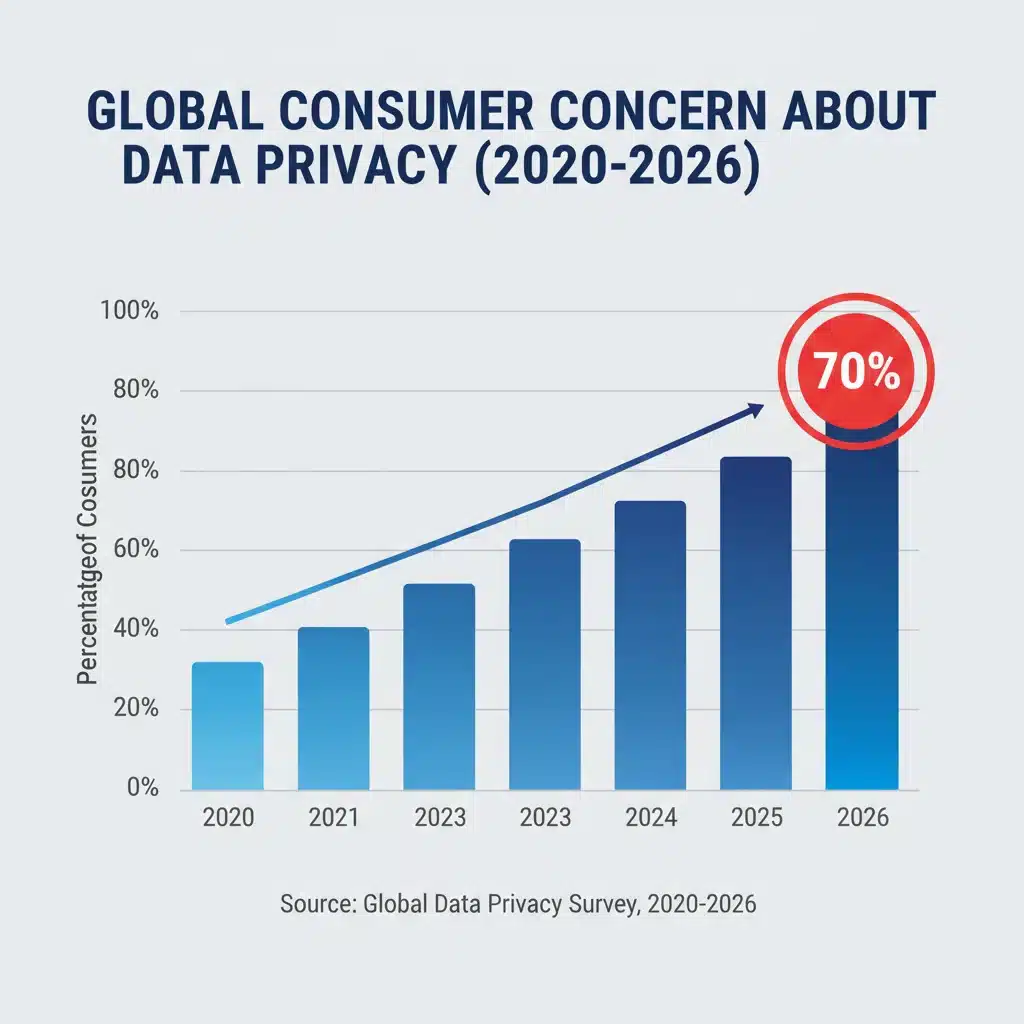
Evolving Online Shopping Habits: What 70% Adaptation Looks Like
The forecast of 70% of US consumers adapting their online shopping habits by 2026 due to data privacy concerns isn’t just a number; it represents a tangible shift in how people approach e-commerce. This adaptation manifests in various ways, from subtle changes in interaction to more drastic decisions about where and how consumers spend their money online. Understanding these evolving habits is crucial for businesses aiming to remain relevant and trustworthy in the digital marketplace.
One of the most evident adaptations is a heightened scrutiny of privacy policies and terms of service. Where once these lengthy documents were largely ignored, a growing segment of consumers now actively seeks out and reads privacy statements, looking for clear language on data collection, usage, and sharing. They are becoming more discerning about which permissions they grant, often opting out of non-essential data sharing or personalized advertising. This means businesses can no longer afford to bury critical information in legalese; transparency and clarity are paramount.
Another significant change is the increasing preference for retailers and platforms with strong, demonstrable privacy practices. Consumers are actively seeking out brands that not only promise data protection but also have a track record of upholding it. This might involve choosing a less convenient or slightly more expensive option if it offers superior privacy assurances. Trust becomes a powerful differentiator, and companies that prioritize privacy are likely to gain a competitive edge. This includes a preference for payment methods that offer enhanced security features or anonymity, such as certain digital wallets or one-time use virtual cards, over direct credit card inputs.
Furthermore, consumers are becoming more proactive in managing their digital footprint. This includes regularly reviewing and adjusting privacy settings on websites and apps, using privacy-enhancing tools like VPNs (Virtual Private Networks) and ad blockers, and being more selective about the information they share on social media and other online platforms. They are also increasingly aware of the value of their data and are less willing to give it away freely without perceived benefits or guarantees of protection. Some consumers might even reduce their overall online purchasing or shift certain transactions offline if they feel their data is too exposed in the digital realm.
The adaptation also extends to the types of information consumers are willing to provide. They might useburner email addresses for non-essential sign-ups, provide minimal personal details for guest checkouts, or even avoid creating accounts altogether if not strictly necessary. This reluctance to share extensive personal data challenges traditional e-commerce models that rely heavily on detailed customer profiles for targeted marketing and loyalty programs. Businesses must find new ways to engage and understand their customers that are less data-intensive and more privacy-respecting.
Finally, there’s a growing demand for data portability and the right to be forgotten. Consumers want the ability to easily access their data, transfer it to other services, or have it permanently deleted. This power shift puts more control in the hands of the individual, forcing companies to re-evaluate their data retention policies and develop user-friendly mechanisms for data management. In essence, the 70% adaptation signifies a more informed, cautious, and empowered consumer base that prioritizes data privacy as a core component of their online shopping experience, fundamentally reshaping the expectations and dynamics of e-commerce.
The Imperative for Businesses: Adapting to a Privacy-First World
The profound shift in consumer data privacy concerns, leading to 70% adaptation in online shopping habits by 2026, presents both significant challenges and unparalleled opportunities for businesses. Ignoring this trend is no longer an option; adapting to a privacy-first world is an imperative for long-term success and customer loyalty. Companies that embrace this shift proactively will not only mitigate risks but also build stronger, more trustworthy relationships with their customer base.
The foundational step for any business is to cultivate a culture of privacy by design. This means integrating privacy considerations into every stage of product development, service delivery, and data handling, rather than treating it as an afterthought. It involves re-evaluating data collection practices: asking whether every piece of data is truly necessary, ensuring consent is explicit and informed, and minimizing data retention periods. The principle of data minimization – collecting only what is essential for a specific purpose – should guide all operations. This approach not only aligns with consumer expectations but also reduces the attack surface for potential data breaches.
Transparency and clear communication are no longer just good practices; they are essential for building trust. Businesses must simplify their privacy policies, making them easily understandable and accessible to the average consumer. Gone are the days of dense legal jargon; consumers want plain language explanations of what data is collected, why, how it’s used, and with whom it’s shared. Providing clear opt-out mechanisms and user-friendly dashboards for managing privacy settings empowers consumers and demonstrates a commitment to their rights. This transparency can transform a potential area of friction into a point of differentiation.
Investing in robust cybersecurity measures is non-negotiable. While no system is entirely impervious, businesses must commit to state-of-the-art encryption, multi-factor authentication, regular security audits, and employee training on data protection best practices. Proactive threat detection and rapid response plans for data incidents are critical. Beyond technical safeguards, establishing clear internal policies for data access and handling is vital to prevent internal misuse or accidental exposure. A single data breach can irrevocably damage a brand’s reputation and erode years of built-up trust.
Furthermore, businesses should explore and adopt privacy-enhancing technologies (PETs). These can include anonymization techniques, differential privacy, and secure multi-party computation, which allow for data analysis and insights without compromising individual privacy. Moving away from over-reliance on third-party data tracking and exploring first-party data strategies, where customer relationships are directly managed, can also enhance privacy and build stronger direct connections. This might involve innovative approaches to personalization that rely less on invasive tracking and more on explicit user preferences or aggregated, anonymized data.
Finally, businesses must recognize that privacy can be a competitive advantage. Companies that genuinely prioritize consumer data privacy, communicate it effectively, and demonstrate it through their practices will differentiate themselves in a crowded marketplace. This commitment can foster deeper customer loyalty, attract privacy-conscious consumers, and ultimately drive sustainable growth. Adapting to this privacy-first world isn’t merely about compliance; it’s about building a future-proof business model centered on trust and respect for the individual’s digital autonomy. 
Strategies for Consumers: Empowering Your Online Shopping Experience
As 70% of US consumers adapt their online shopping habits by 2026 due to data privacy concerns, it’s clear that individuals are taking a more active role in protecting their digital footprint. For consumers, this shift isn’t about abandoning online shopping altogether, but rather about empowering themselves to navigate the digital marketplace with greater awareness and control. Understanding and implementing effective strategies can significantly enhance your online privacy and security.
One of the most fundamental strategies is to be a critical consumer of privacy policies. While it might seem daunting, take the time to read and understand the privacy statements of the websites and apps you use frequently, especially for online shopping. Look for clear language regarding what data is collected, how it’s used, whether it’s shared with third parties, and how long it’s retained. If a policy is vague, overly complex, or seems to hide information, consider it a red flag. Prioritize retailers who are transparent and offer easily digestible privacy information.
Actively manage your privacy settings on all online platforms. Most browsers, social media sites, and e-commerce platforms offer robust privacy controls, but they are often set to less private defaults. Regularly review and adjust these settings to limit data collection, prevent personalized advertising, and control who can see your activity. This includes disabling third-party cookies, opting out of interest-based ads, and adjusting location services permissions. The more granular control you exercise, the less data you inadvertently share.
Consider using privacy-enhancing tools and services. Virtual Private Networks (VPNs) can encrypt your internet connection and mask your IP address, making it harder for websites to track your location and browsing habits. Ad blockers can prevent third-party trackers from collecting data as you browse. Privacy-focused browsers or browser extensions can offer additional layers of protection. While these tools aren’t foolproof, they significantly reduce your exposure to pervasive tracking and data collection.
Be mindful of the information you share. Before making a purchase or signing up for a service, ask yourself if the requested information is truly necessary. For instance, do they really need your birthday or phone number for a simple purchase? Provide only the essential details. Consider using unique, strong passwords for each online account and employing a password manager to securely store them. For non-essential sign-ups, use a secondary email address or a service that generates temporary email aliases to protect your primary inbox from spam and potential data breaches.
When it comes to payment, explore more secure options. Instead of directly inputting your credit card details on every site, consider using trusted digital wallets like PayPal, Apple Pay, or Google Pay, which often tokenize your payment information, adding an extra layer of security. Some banks also offer virtual card numbers that can be used for single transactions, limiting exposure if a retailer’s system is compromised. Regularly monitor your financial statements for any suspicious activity.
Finally, exercise your data rights. Familiarize yourself with regulations like CCPA, which grant you the right to know what data companies have collected about you, to request its deletion, or to opt-out of its sale. Don’t hesitate to exercise these rights. By being proactive, informed, and strategic, consumers can significantly enhance their online data privacy, transforming what might feel like a vulnerable experience into an empowered and secure online shopping journey.
The Future of E-commerce: Trust as the New Currency
As the 2026 milestone approaches, with 70% of US consumers adapting their online shopping due to privacy concerns, it becomes unequivocally clear that the future of e-commerce hinges on a single, invaluable asset: trust. In an era where data is often referred to as the new oil, trust emerges as the new currency – a more precious and harder-earned commodity. Businesses that fail to recognize and prioritize this fundamental shift risk obsolescence, while those that embrace it will unlock unprecedented levels of customer loyalty and growth.
The traditional e-commerce model, built on convenience and aggressive data collection for hyper-personalization, is facing a reckoning. Consumers are no longer willing to trade their privacy for a slightly more tailored ad or a marginal discount. They are demanding transparency, control, and respect for their digital autonomy. This means that merely complying with regulations is no longer enough; businesses must go above and beyond, embedding privacy into their core values and operational DNA. This proactive approach builds genuine trust, which is far more enduring than fleeting transactional convenience.
For businesses, building this trust involves several key transformations. Firstly, it requires a paradigm shift from viewing customer data as a resource to be exploited to viewing it as a responsibility to be protected. This mental model reorientation influences every decision, from product design to marketing strategies. Secondly, it necessitates clear, unambiguous communication. Companies must articulate their data practices in simple terms, without hidden clauses or deceptive patterns. This transparency fosters confidence and allows consumers to make informed choices, rather than feeling manipulated or deceived.
Thirdly, investing in robust security infrastructure and practices is no longer a cost center but a core investment in brand reputation. A single data breach can undo years of marketing efforts and customer goodwill. Demonstrating a proactive stance on cybersecurity, coupled with clear incident response plans, reassures consumers that their information is in safe hands. Furthermore, businesses must empower consumers with granular control over their data, offering easy-to-use dashboards for managing preferences, opt-outs, and data deletion requests. This sense of control is a powerful trust-builder.
The competitive landscape will increasingly be defined by a brand’s privacy posture. Companies that are perceived as privacy-champions will attract and retain customers who are wary of data exploitation. This doesn’t mean abandoning personalization entirely, but rather finding innovative ways to deliver value that are privacy-preserving. Contextual advertising, first-party data strategies built on explicit consent, and aggregated, anonymized insights can still drive effective marketing without infringing on individual privacy. The focus shifts from ‘knowing everything about everyone’ to ‘providing value while respecting individual boundaries.’
Ultimately, the future of e-commerce is about forging a new social contract between businesses and consumers. This contract is founded on mutual respect, transparency, and a shared understanding of the value and sensitivity of personal data. Businesses that embrace trust as their new currency will not only thrive in the evolving digital landscape but will also contribute to a more ethical and sustainable online ecosystem, one where innovation coexists harmoniously with individual rights and privacy.
Conclusion: Embracing the Privacy Revolution in Online Shopping
The journey towards 2026 marks a pivotal moment in the evolution of online shopping, with 70% of US consumers poised to adapt their habits in response to escalating data privacy concerns. This isn’t a fleeting trend but a fundamental recalibration of priorities, where the convenience of digital commerce is increasingly weighed against the imperative of personal data protection. The era of passive data collection and opaque practices is giving way to a new paradigm where transparency, control, and trust are paramount.
For consumers, this shift represents an empowering opportunity to reclaim agency over their digital lives. By becoming more informed, actively managing privacy settings, utilizing privacy-enhancing tools, and critically evaluating the data practices of online retailers, individuals can shape a more secure and respectful online shopping experience. This collective consumer awakening is a powerful force, driving necessary changes across the entire e-commerce ecosystem.
For businesses, the message is clear: adapt or risk being left behind. The companies that will thrive in this privacy-first world are those that embed data protection into their core values and operations, not just as a compliance checkbox but as a competitive differentiator. This involves transparent communication, robust cybersecurity investments, a commitment to data minimization, and the implementation of privacy-by-design principles. By treating customer data as a sacred trust, businesses can foster loyalty, enhance brand reputation, and unlock new avenues for sustainable growth in a market increasingly valuing ethical data stewardship.
The forecasted 70% adaptation rate is a powerful indicator that the digital economy is maturing. It signifies a transition from a wild frontier to a more regulated and consumer-centric landscape. The future of online shopping is not just about what you buy, but how your data is treated in the process. As we move closer to 2026, the imperative for both consumers and businesses is to embrace this privacy revolution, fostering an online environment where convenience and innovation can flourish hand-in-hand with robust data protection and unwavering trust.