Beyond the Hype: What 3 New Technologies Are Truly Influencing US Consumer Decisions in 2026?
The pace of technological advancement is nothing short of breathtaking. What was once science fiction is now an everyday reality, and the United States consumer market, ever-eager for innovation, is a prime testing ground for these new frontiers. As we hurtle towards 2026, the digital landscape continues to evolve, reshaping not just how products are made, but fundamentally how consumers discover, evaluate, and ultimately decide to purchase. The question isn’t whether technology will influence consumer decisions, but rather which specific technologies will wield the most significant power. This deep dive focuses on three pivotal technologies poised to redefine the US consumer experience by 2026: AI-powered personalization, immersive Augmented Reality (AR) and Virtual Reality (VR), and the burgeoning trend of sustainable smart devices. These aren’t mere fleeting fads; they represent foundational shifts that will embed themselves deeply into the fabric of daily life, influencing everything from the mundane to the monumental purchasing choices.
Understanding the impact of these technologies is crucial for businesses aiming to stay competitive and relevant in a rapidly changing market. For consumers, it’s about recognizing the forces at play that are subtly, and sometimes not so subtly, guiding their choices. The future of commerce is intrinsically linked to technological adoption, and by 2026, the influence of these three areas will be undeniable. Let’s unravel the intricate ways in which these innovations are set to shape the future tech consumer impact.
The Rise of Hyper-Personalization: AI’s Guiding Hand in Consumer Choices
Artificial Intelligence (AI) has been a buzzword for years, but by 2026, its application in consumer-facing industries will move far beyond simple recommendations. We are entering an era of hyper-personalization, where AI algorithms, fueled by vast troves of data, will anticipate consumer needs and desires with unprecedented accuracy. This isn’t just about suggesting products you might like based on past purchases; it’s about creating entirely bespoke experiences, from product discovery to post-purchase support, all tailored to the individual. The future tech consumer impact will be heavily influenced by this AI evolution.
Predictive Analytics and Proactive Engagement
Imagine a world where your smart home system, powered by AI, notices your coffee machine is running low on beans and automatically adds your preferred brand to your grocery list, or even orders it for delivery. This level of proactive engagement, driven by predictive analytics, will become commonplace. AI will analyze your browsing history, purchase patterns, social media activity, and even biometric data (with consent, of course) to build a comprehensive profile of your preferences. This allows brands to not only recommend products but to anticipate when you’ll need them, what price point you’re willing to pay, and even the optimal time to present an offer.
For example, a clothing retailer might use AI to track your style evolution, suggesting new outfits that align with your current aesthetic and upcoming events on your calendar. An entertainment platform could curate a playlist or movie selection so perfectly aligned with your mood and taste that you spend less time searching and more time enjoying. This seamless, almost intuitive interaction is a core component of the future tech consumer impact.
Dynamic Pricing and Personalized Offers
AI will also revolutionize pricing strategies. Dynamic pricing, where prices fluctuate based on demand, inventory, and individual consumer profiles, will become more sophisticated. While this raises ethical considerations around fairness and transparency, it also allows for highly personalized offers. A loyal customer might receive a discount on an item they’ve been eyeing, while a new customer might be offered an incentive to make their first purchase. The key is that these offers are not generic; they are meticulously crafted by AI to resonate with the individual consumer, maximizing the likelihood of conversion.
The implications for customer loyalty are profound. When consumers feel understood and valued, they are more likely to return. AI-driven personalization fosters this sense of connection, transforming transactional relationships into more enduring ones. This shift from mass marketing to a ‘segment of one’ approach is a testament to the power of AI in shaping future tech consumer impact.
Ethical Considerations and Data Privacy
Of course, the widespread adoption of AI-powered personalization is not without its challenges. Data privacy and security will remain paramount concerns. Consumers will demand transparency about how their data is collected, used, and protected. Companies that fail to uphold these standards risk alienating their customer base. Ethical AI development, focusing on fairness, accountability, and explainability, will be crucial for building trust and ensuring that personalization serves to empower consumers rather than manipulate them. The future tech consumer impact hinges on responsible AI implementation.
Immersive Experiences: AR and VR Redefining Shopping and Engagement
Augmented Reality (AR) and Virtual Reality (VR) have long been touted as the next big thing, and by 2026, they will finally move beyond niche gaming applications to become powerful tools influencing US consumer decisions across various sectors. These immersive technologies offer unparalleled opportunities for consumers to interact with products and services in ways previously unimaginable, blurring the lines between the physical and digital worlds. The future tech consumer impact of AR and VR will be transformative.
Augmented Reality: Try Before You Buy, Anywhere
AR allows digital information to be overlaid onto the real world, enhancing our perception of reality. For consumers, this translates into incredibly practical applications. Imagine trying on clothes virtually without stepping into a fitting room, or seeing how a new piece of furniture looks in your living room before making a purchase. Retailers like IKEA and Sephora have already begun experimenting with AR apps that allow customers to visualize products in their own environments, and by 2026, this will be a standard expectation.
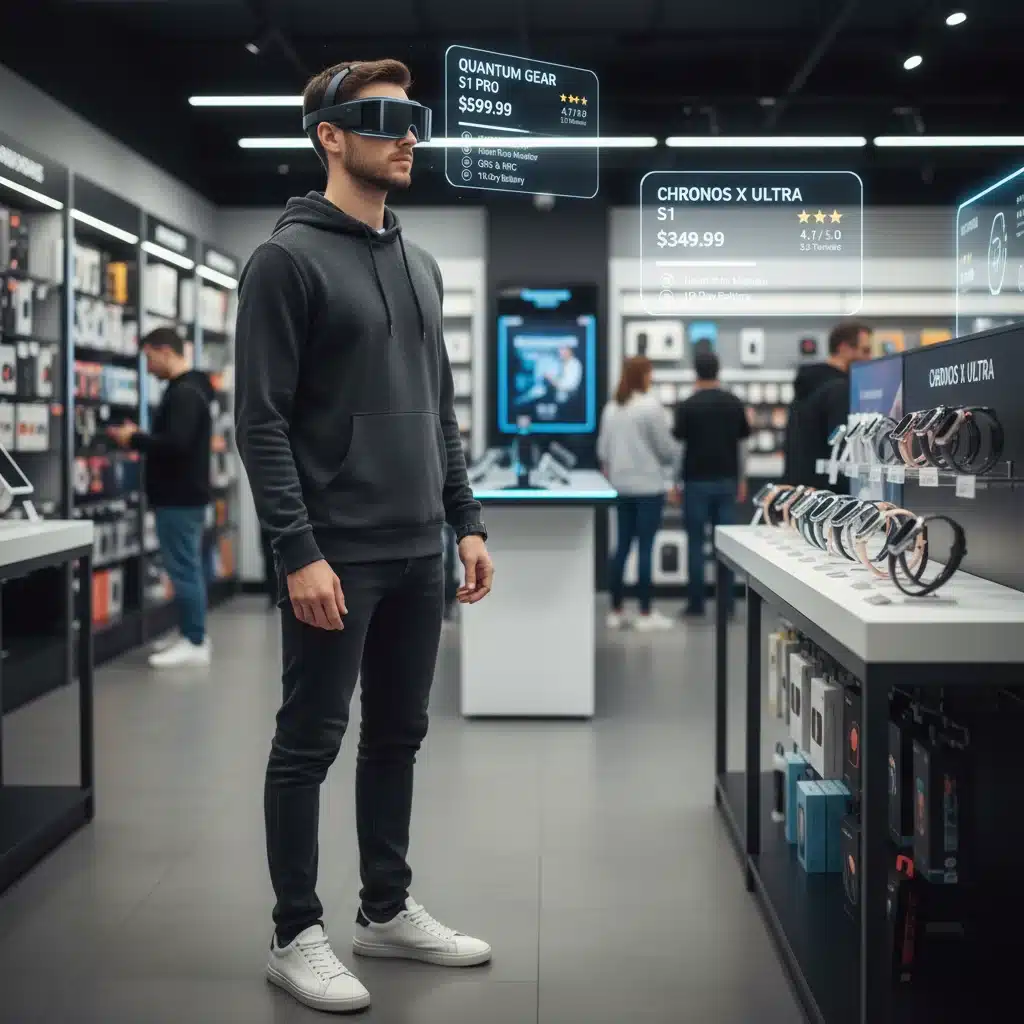
Beyond visualization, AR will facilitate more informed decision-making. Imagine scanning a food product in a grocery store and instantly seeing its nutritional information, allergen warnings, and even reviews from other consumers pop up on your phone or AR glasses. Car dealerships could offer AR test drives, allowing potential buyers to explore different models and features from the comfort of their home. This ability to ‘try before you buy’ without physical constraints significantly reduces purchase friction and boosts consumer confidence, making AR a key driver of future tech consumer impact.
Virtual Reality: Experiential Commerce and Escapism
VR, which creates fully immersive simulated environments, offers a different but equally powerful influence on consumer behavior. While AR enhances reality, VR transports users to entirely new ones. This opens up possibilities for experiential commerce that goes far beyond traditional online shopping.
Consider virtual showrooms for luxury goods, where consumers can explore products in stunning detail, interact with virtual sales assistants, and even customize items in a fully immersive 3D space. Travel companies could offer virtual tours of destinations, allowing potential tourists to experience hotels, attractions, and local culture before booking. The entertainment industry is also poised for a massive VR revolution, offering immersive concerts, sporting events, and interactive storytelling experiences that redefine how consumers engage with content.
The emotional connection fostered by VR is a significant influencer. When consumers can virtually ‘feel’ a product or ‘experience’ a service, their desire to purchase increases. This emotional engagement, combined with the novelty and convenience of immersive shopping, positions VR as a major force in shaping future tech consumer impact.
Accessibility and Hardware Evolution
For AR and VR to truly become mainstream, hardware needs to become more accessible, affordable, and less cumbersome. By 2026, we anticipate significant advancements in lightweight AR glasses and more comfortable, standalone VR headsets. The integration of these technologies into everyday devices, like smartphones that offer robust AR capabilities, will further accelerate their adoption, cementing their role in future tech consumer impact.
Sustainable Smart Devices: Conscious Consumption Meets Connectivity
The third major technological trend influencing US consumer decisions by 2026 is the convergence of smart device technology with a growing consumer demand for sustainability. Consumers are becoming increasingly aware of their environmental footprint, and they are actively seeking products and services that align with their values. Sustainable smart devices cater to this demand by offering connectivity, efficiency, and environmental responsibility in one package. This represents a significant shift in future tech consumer impact, moving beyond mere convenience to ethical purchasing.
Energy Efficiency and Resource Management
Smart homes are evolving to be not just convenient but also eco-friendly. Smart thermostats that learn your habits and optimize energy usage, smart lighting systems that adjust based on natural light, and smart appliances that monitor and reduce water or electricity consumption will become standard. Consumers will increasingly prioritize devices that offer tangible savings on utility bills while simultaneously reducing their environmental impact. The ability to monitor and control resource usage from a smartphone app empowers consumers to make more conscious choices, directly influencing their purchasing decisions towards greener alternatives.
Beyond individual devices, entire smart home ecosystems will be designed with sustainability in mind. This includes integration with renewable energy sources, smart grids, and even systems that optimize waste management. The narrative around smart technology is shifting from pure convenience to responsible living, a powerful driver of future tech consumer impact.
Durability, Repairability, and Circular Economy Principles
The concept of a ‘circular economy’ – designing products for longevity, repair, and recycling – is gaining traction. Consumers are growing tired of planned obsolescence and are actively seeking durable goods that can be repaired rather than replaced. Smart devices that are designed with modular components, easy-to-access repair guides, and readily available spare parts will appeal to this segment of conscious consumers.
Furthermore, smart devices can facilitate the circular economy by tracking product lifecycle, reminding users when maintenance is due, or even guiding them through repair processes. Brands that embrace these principles, offering transparent information about their products’ environmental impact and commitment to longevity, will gain a significant competitive advantage. This focus on long-term value and reduced waste is a crucial aspect of future tech consumer impact.

Ethical Sourcing and Transparency
The sustainability trend extends beyond the operational efficiency of devices to their entire supply chain. Consumers are increasingly scrutinizing the ethical sourcing of materials, labor practices, and carbon footprint of manufacturing. Smart devices that offer transparency about their origins, from raw materials to assembly, will resonate strongly with environmentally and socially conscious buyers. Blockchain technology, for instance, could play a role in providing immutable records of a product’s journey, offering consumers unprecedented levels of transparency.
Brands that can demonstrate a genuine commitment to ethical and sustainable practices throughout their product lifecycle will build trust and loyalty among a growing segment of the US consumer base. This holistic approach to sustainability, powered by smart technology, will profoundly influence future tech consumer impact and purchasing decisions.
The Interconnected Future: Synergy of Technologies
While we’ve discussed AI-powered personalization, immersive AR/VR, and sustainable smart devices as distinct categories, their true power lies in their synergy. By 2026, these technologies will not operate in isolation but will increasingly converge to create even more seamless and influential consumer experiences. This interconnectedness will amplify the future tech consumer impact.
AI Enhancing AR/VR Experiences
Imagine an AR shopping experience where AI not only overlays products onto your environment but also intelligently suggests items based on your personalized profile, current trends, and even your mood. AI could power virtual sales assistants within VR showrooms, offering tailored recommendations and answering questions in real-time. The predictive capabilities of AI will make immersive experiences more relevant, engaging, and effective at driving conversions.
Sustainable Choices Driven by AI and Smart Devices
AI will play a crucial role in optimizing the sustainability of smart devices. It can analyze energy consumption patterns, identify areas for improvement, and even suggest behavioral changes to reduce environmental impact. Your smart home, guided by AI, could automatically adjust heating and cooling based on weather forecasts, occupancy, and your personal comfort preferences, all while minimizing energy waste. This intelligent automation of sustainable living choices will make eco-friendly options more accessible and appealing to the average consumer.
Personalized Sustainability Messaging
AI-powered personalization can also be used to deliver tailored sustainability messaging. Instead of generic environmental appeals, consumers could receive information about the specific impact of their purchasing choices, personalized tips for reducing their carbon footprint, or even suggestions for local sustainable businesses, all delivered through their smart devices or AR interfaces. This targeted communication will be far more effective in influencing consumer behavior towards greener choices, demonstrating the multifaceted nature of future tech consumer impact.
Navigating the New Consumer Landscape: Implications for Businesses and Consumers
The profound influence of these three technologies by 2026 necessitates a proactive approach from both businesses and consumers. For businesses, ignoring these trends is no longer an option; embracing them is key to survival and growth. For consumers, understanding these technological forces empowers them to make more informed and intentional decisions.
For Businesses: Adapt or Be Left Behind
- Invest in AI Infrastructure: Companies must invest in robust AI capabilities for data analysis, personalization engines, and predictive modeling. This includes hiring AI talent and adopting scalable AI platforms.
- Develop Immersive Experiences: Brands need to explore how AR and VR can enhance their product discovery, customer service, and overall brand engagement. This could involve developing AR apps, creating VR showrooms, or experimenting with interactive digital content.
- Embrace Sustainability Holistically: Beyond marketing, businesses must embed sustainability into their product design, supply chain, and operational practices. Communicating these efforts transparently will build trust and attract conscious consumers.
- Prioritize Data Ethics and Privacy: With increased data collection for personalization, ethical data handling and transparent privacy policies are non-negotiable. Building consumer trust in data usage is paramount.
- Foster Interoperability: As technologies converge, businesses should strive for interoperability between their various smart products and services, creating a seamless ecosystem for consumers.
For Consumers: Empowered Choices in a Tech-Driven World
- Demand Transparency: Consumers should actively seek out brands that are transparent about their data usage, sustainability practices, and product origins.
- Explore New Experiences: Embrace AR and VR to enhance shopping and entertainment. These tools can provide valuable insights and reduce purchase regret.
- Prioritize Sustainable Options: Actively choose smart devices and products that align with your environmental values, considering energy efficiency, durability, and ethical sourcing.
- Manage Your Digital Footprint: Be mindful of the data you share and understand how it’s being used to personalize your experiences. Leverage privacy settings and tools.
- Stay Informed: Keep abreast of technological advancements to understand how they are shaping the market and influencing your choices.
Conclusion: The Future is Now, and It’s Technologically Driven
By 2026, the landscape of US consumer decisions will be irrevocably altered by the pervasive influence of AI-powered personalization, immersive AR/VR experiences, and the growing demand for sustainable smart devices. These aren’t just isolated trends; they are interconnected forces that will collectively redefine how we interact with brands, discover products, and make purchasing choices. The future tech consumer impact will be characterized by a blend of hyper-convenience, emotional engagement, and ethical consciousness.
For businesses, the challenge and opportunity lie in strategically integrating these technologies to create value, build trust, and foster lasting relationships with consumers. For consumers, the future promises a more tailored, engaging, and potentially more responsible purchasing journey. As we move closer to 2026, staying attuned to these technological shifts will be key to thriving in an increasingly sophisticated and digitally driven marketplace. The evolution of the future tech consumer impact is not a distant concept; it’s happening now, shaping every click, every view, and every purchase decision.